
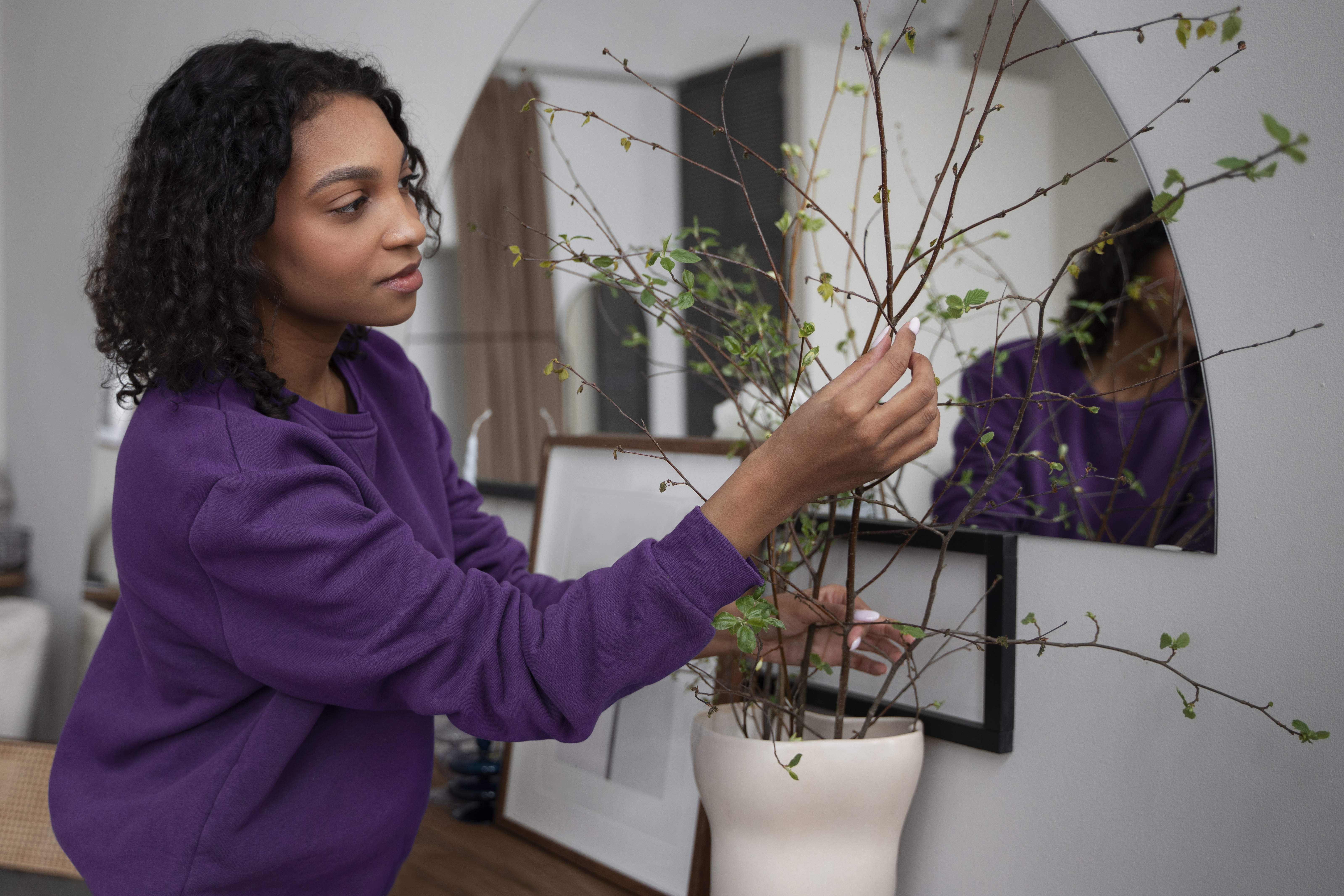
A key but often overlooked part of biophilic design is using natural textures, materials, and patterns in art and décor. These features can bring the calming feel of nature indoors without needing lots of plant care or big changes to the building.
Wood sculptures, stone-like wall art, organic patterns, and woven fiber pieces are just a few ways biophilic art can make spaces feel more comfortable, creative, and welcoming.
Understanding Biophilic Art
Biophilic art takes inspiration from nature’s shapes, materials, colors, and patterns. Instead of showing nature exactly as it is, it uses features that remind us of natural places and processes. This might mean flowing lines, textured surfaces, earthy colors, or designs based on things found in nature.
The aim is not just to make a space look better, but to create an environment that helps people feel and think better. Research shows that being around natural elements can lower stress, boost mood, and help us focus. Biophilic art brings these benefits inside through what we see and touch.
The Power of Natural Patterns
In nature, you rarely see straight lines or perfect shapes. Instead, there are flowing curves, branching forms, and repeating patterns called fractals. You can spot these patterns in leaves, coastlines, clouds, tree branches, and rivers.
When artists use these natural shapes in their work, it makes people feel at ease. Studies show that we naturally like fractal patterns because they have always been part of our surroundings. Looking at these patterns can help us relax and feel less mentally tired.
Examples of nature-inspired patterns in art include:
- Tree branch motifs
- Ocean wave designs
- Leaf vein structures
- Mountain contours
- Organic geometric abstractions
These designs bring a sense of balance to a room and gently remind us of our link to nature.
Natural Materials as Artistic Elements
The materials used in biophilic art play an equally important role. Unlike synthetic materials, natural components. The materials chosen for biophilic art matter just as much. Natural materials add texture, a real feel, and warmth to a room, unlike synthetic ones. Natural color variations and tactile qualities make every piece distinctive. Wood wall sculptures, carved panels, and reclaimed wood installations add character while introducing organic textures.
Reclaimed wood is especially attractive because it is both eco-friendly and interesting to look at. Its weathered look and small flaws give it a story, helping people feel more connected to the art.
Stone and Mineral-Inspired Art
Stone conveys permStone gives a sense of lasting strength and stability. Art that uses stone-like textures can make homes and businesses feel calm and grounded. canvases, textured wall panels, and mixed-media pieces incorporating natural minerals can introduce sophisticated organic aesthetics.
These elements work particularly well in minimalist interiors where texture becomes a focal point.
Fiber and Textile Art
Woven wall art, macramé, and fiber sculptures add another layer to biophilic design. Their handmade look and feel bring warmth and a soft touch to a room.
Natural fibers such as cotton, jute, wool, and hemp contribute to sustainable design. Natural fibers like cotton, jute, wool, and hemp help make designs more eco-friendly and add textures that man-made materials usually don’t have. relationships with natural materials. Handcrafted ceramic pieces introduce earthy tones and organic shapes that complement modern and traditional interiors alike.
The small flaws in handmade ceramics often make them more charming, showing their realness and the skill of the maker.
Benefits of Biophilic Art in Interior Spaces
Stress Reduction
Today, we are surrounded by screens, noise, and artificial spaces. Biophilic art brings in visuals that help us relax and recharge.Natural textures and patterns can help lower stress by making spaces feel more balanced and inviting. Creative thinking often flourishes in environments that provide both stimulation and comfort.
Nature-inspired artwork offers visual complexity without overwhelming the senses, making it particularly beneficial in creative workplaces and home offices.
Improved Mood
Colors often used in biophilic art, like greens, browns, blues, and earthy shades, are linked to good feelings. When paired with natural textures, they help create a brighter, more positive mood.
Stronger Sense of Place
Biophilic art helps transform generic interiors into meaningful ones. Biophilic art can turn plain rooms into special places. Using natural materials makes spaces feel more real and unique, helping people feel more connected to where they are.
In homes, biophilic art can serve as a focal point while enhancing comfort and relaxation. Large wood installations, textured landscape pieces, or woven wall art can create a welcoming atmosphere in living rooms and bedrooms.
Corporate Offices
Many companies now use biophilic design to help employees feel better at work. Art inspired by nature can lower stress, help people focus, and make the workplace healthier.
Hospitality Environments
Hotels, spas, and restaurants often use biophilic art to make visits more memorable. Natural textures and patterns help these places feel relaxing, special, and tied to the local area. care Facilities
Hospitals and wellness centers are seeing how helpful nature-inspired design can be. Biophilic art can make patients feel more comfortable and help create a better healing space.
Future Trends in Biophilic Art
As people care more about sustainability, artists and designers are finding new ways to create biophilic art. Some new trends are:
- Artwork made from recycled natural materials
- Living art installations incorporating preserved moss
- Interactive nature-inspired digital displays
- Locally sourced material collections
- Mixed-media pieces combining technology and organic elements
These new ideas show that biophilic art is always changing, but its main goal stays the same:
helping people feel closer to nature.
Biophilic design is about more than just adding houseplants. By using natural textures, materials, and patterns, biophilic art can turn rooms into places that support well-being, creativity, and emotional balance.
Whether it’s reclaimed wood, woven fiber, ceramics, or abstract designs, these art forms help us reconnect with nature, even in busy cities. Businesses continue to prioritize wellness-focused interiors, and biophilic art will remain a powerful tool for creating spaces that are not only visually appealing but also deeply restorative and human-centered.