
Kenya SHA Registration and Coverage Status Reference
A practical documentation reference for keeping Kenya Social Health Authority registration, household, contribution, dependent, and coverage-status records in order.
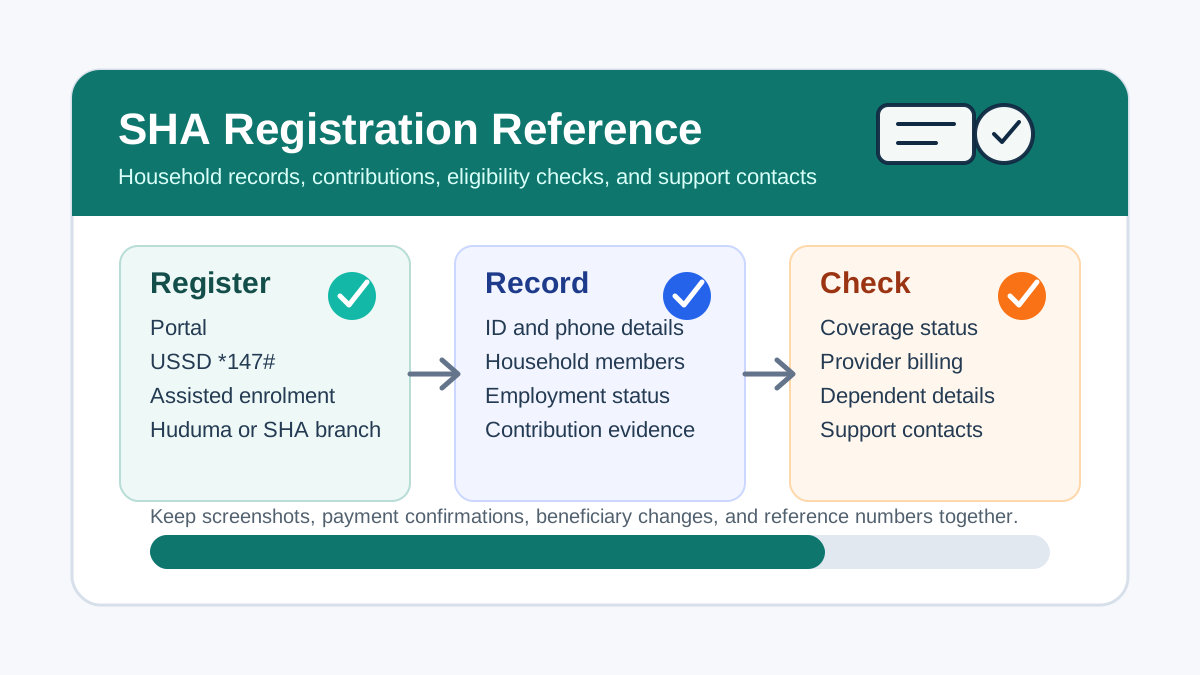
Kenya’s Social Health Authority is now the central public health insurance body that replaced NHIF and manages social health insurance registration, contribution records, and eligibility checks. The official SHA website gives three main registration routes: individual self-registration, employer registration, and assisted registration. It also links directly to a separate eligibility tool for checking coverage status.
This reference is for individuals, households, employers, community support workers, and office administrators who need one clean record of what to capture, where to check it, and what evidence to keep. It is not a substitute for legal, payroll, medical, or tax advice, but it can reduce confusion when a household member is registering, changing details, confirming coverage, or trying to resolve a service issue.
Core Record
Create one SHA record for the household or employment file. Keep it in a secure place because it may contain identity, health, and payroll information.
At minimum, record:
- Registered person’s full name
- Identification type and number used for SHA registration
- Phone number used for verification
- SHA household or member reference, if issued
- Registration route used: portal, USSD, employer portal, assisted registration, SHA branch, or Huduma Centre
- Date of registration or update
- Dependents listed under the household
- Employment status declared during registration
- Contribution category or payroll deduction basis
- Screenshots, SMS confirmations, receipts, or employer remittance references
- Date coverage status was last checked
The Ministry of Health’s SHA registration guide says any person who lives in Kenya should register, including Kenyan citizens, residents, and refugees. The same guide identifies self-registration through USSD, the SHA portal, assisted registration by Community Health Promoters, and visits to SHA branches or Huduma Centres as registration options.
Registration Entry Points
Use official entry points rather than links forwarded by strangers, agents, or social media posts. The SHA homepage links to individual registration, employer registration, assisted registration, sign-in, resources, and the eligibility service.
For individual registration, the Ministry of Health guide says users can dial *147# and follow the prompts. The USSD flow asks for the Kenyan ID number, account security PIN setup, terms and privacy choices, employment status, civil status, and disability declaration. If a household uses USSD, record the phone number used and keep the welcome message or confirmation SMS.
For web registration, start from the official SHA website or the Afya Yangu registration page it links to. For employer registration and remittance administration, use the SHA Employer Portal linked from the SHA homepage. Assisted registration should be treated as sensitive: the helper may guide the process, but the household should still retain its own confirmation records.
Household and Beneficiary Details
SHA registration is not only an individual account task. It can affect household members and dependents, so the household record should show who is covered and when details changed.
For each listed dependent, record:
- Full name
- Relationship to the contributor or household
- Identification type, birth certificate number, birth notification number, or other accepted identifier
- Date added or updated
- Any temporary dependent identifier issued during registration
- Whether additional verification or biometric registration has been requested
The Ministry of Health reported in June 2026 that SHA biometric registration for dependents aged 7 to 17 had been launched as part of digital health system improvements. If a dependent falls in that age range, keep a note of any official biometric-registration instruction, appointment, facility visit, or confirmation.
Contributions
Contribution records should be separated from the basic registration record because payment status may change monthly.
The Social Health Insurance (General) Regulations, 2024 state that a household with income from salaried employment pays a monthly statutory deduction to the Social Health Insurance Fund at 2.75% of gross salary or wage, with a minimum of KSh 300 per month, by the ninth day of each month. The same regulations set a 2.75% annual contribution basis for households whose income is not from salaried employment, using the means-testing process, with the same monthly minimum.
For salaried employees, keep payslips, employer deduction records, and any remittance confirmation the employer provides. For employers, keep the payroll month, employee identifiers, gross pay basis, deduction amount, remittance date, portal confirmation, and correction history. For non-salaried households, keep the assessment result, amount due, payment confirmation, and next due date.
Do not rely on a verbal assurance that contributions are up to date. The operational record should show the month, amount, payer, confirmation reference, and date checked.
Coverage Status Checks
The official SHA eligibility site allows a coverage check using identification types such as National ID, Alien ID, Refugee ID, Temporary ID, Temporary Dependant ID, CR Number, Passport Number, Mandate Number, Household Number, Birth Certificate Number, and Birth Notification.
Record every coverage check that matters. A simple log is enough:
- Date and time checked
- Identifier used
- Result shown
- Name of the person checking
- Screenshot or reference number, if available
- Next action required
Check coverage before planned care when possible, after adding dependents, after changing employment status, after employer remittance issues, and when a facility says the record is inactive or incomplete. If a provider’s system result differs from the household’s record, save both results and escalate through SHA support or the employer rather than guessing which one is correct.
Provider and Billing Notes
Keep treatment and billing records separate from registration records, but connect them with dates and reference numbers. If a facility requests a payment that the household believes should be covered, record the facility name, service date, service description, amount requested, reason given, and the person or desk that handled the query.
The Ministry of Health stated in June 2026 that agreed tariffs under the public officers medical scheme were intended to eliminate unauthorised co-payments for covered services and cautioned facilities against unlawful charges for beneficiaries in that scheme. That update is scheme-specific, but the documentation habit is broader: whenever a provider says a service is not covered, ask for the reason in writing or record the explanation accurately before escalating.
Support Contacts and Escalation
The Ministry of Health SHA registration guide lists the toll-free number 0800 720 601 and the email address customercare@sha.go.ke for SHA support. Keep those contacts in the record, along with any employer HR contact, payroll contact, facility billing office, community health promoter, or branch office used during registration.
For each support issue, log:
- Date opened
- Channel used
- Case or ticket number
- Person or office contacted
- Summary of the issue
- Documents shared
- Promised action
- Follow-up date
- Date resolved
Avoid sending identity documents, PINs, one-time passwords, or medical details to unofficial contacts. If a message claims to be from SHA but pressures the household to click a link, pay immediately, or disclose a PIN, go back to the official SHA site or support channel.
Review Schedule
Review the SHA record whenever there is a major household, employment, or care event. Useful triggers include a new job, job loss, self-employment change, marriage, divorce, birth, death, a dependent turning seven, a dependent needing biometric registration, a new payslip deduction, a failed coverage check, or a planned hospital visit.
For ordinary maintenance, a quarterly review is practical for most households and small employers. Confirm that household members are listed correctly, the phone number still works, contributions are current, support cases are closed or followed up, and the latest coverage check matches the expected status.
The goal is not to create paperwork for its own sake. The goal is to make SHA registration and coverage evidence easy to retrieve before a clinic visit, payroll query, household update, or billing dispute.