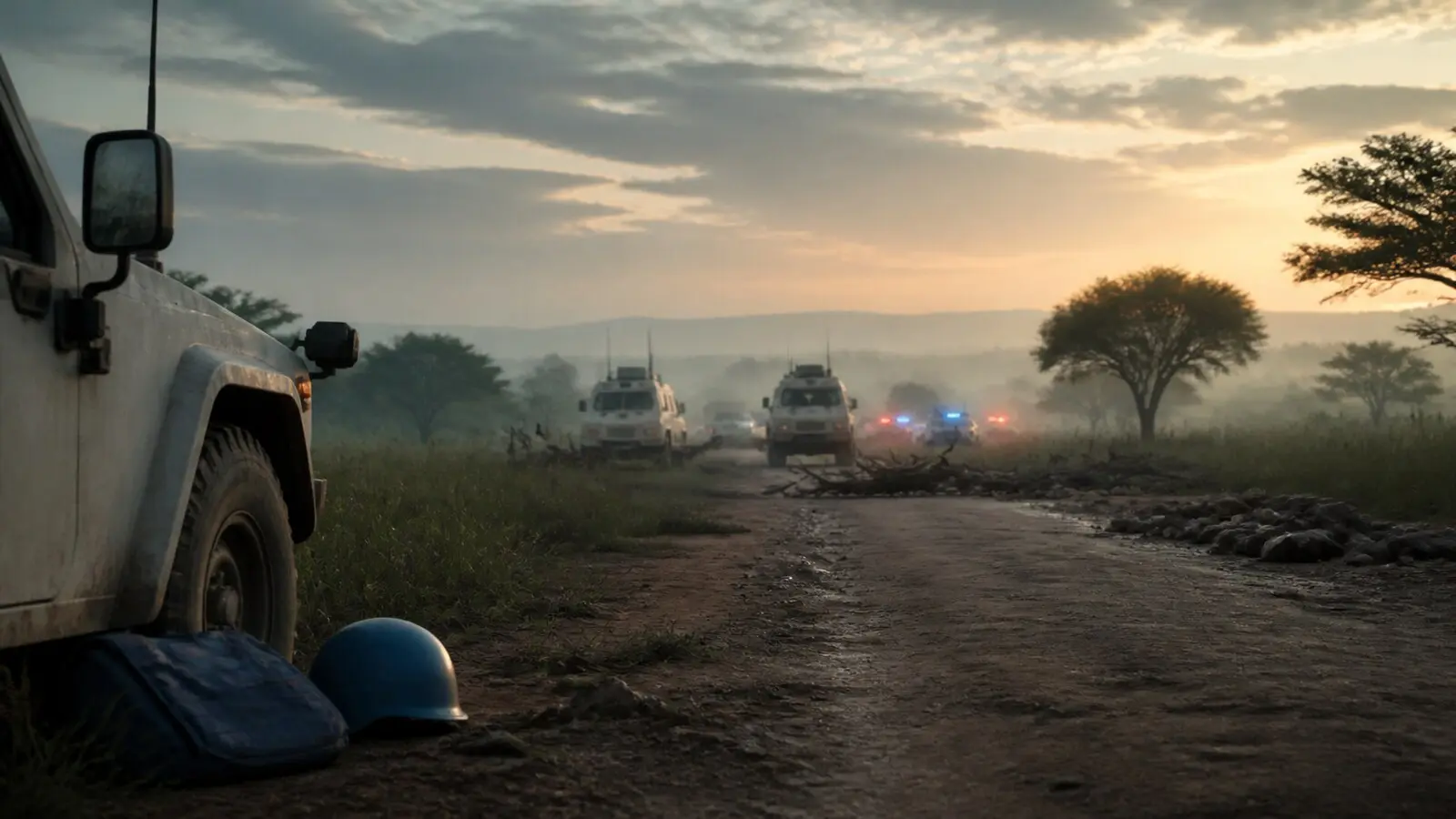
Two Ethiopian United Nations peacekeepers were killed in South Sudan after unidentified armed men ambushed a UNMISS patrol travelling toward Pajut in Jonglei State, according to the United Nations Mission in South Sudan and international reports.
The attack wounded seven other people: three peacekeepers, two South Sudanese police officers and two civilian staff attached to the mission. UNMISS said it sent a quick reaction force to secure the area and support the emergency response after the patrol came under attack.
The South Sudan UN peacekeepers killed in Jonglei add a serious security warning to a country already facing renewed fighting, humanitarian-access pressure and growing fears that its 2018 peace deal is no longer holding. Attacks on aid workers have surged this year, but direct attacks on peacekeepers remain rarer and carry wider international consequences.
UN Secretary-General Antonio Guterres condemned the ambush and called for a prompt investigation leading to prosecution of those responsible, according to UN reporting and AP. UNMISS also warned that attacks against UN peacekeepers may constitute war crimes under international law.
What UNMISS Says Happened
UNMISS said the patrol was travelling toward Pajut, a remote area in Jonglei State, when unidentified gunmen attacked. The mission has not publicly identified the attackers, and no group immediately claimed responsibility.
Anita Kiki Gbeho, the head of UNMISS, said the attack on personnel serving in support of peace in South Sudan was unacceptable and called for those responsible to be brought to justice. The mission said the quick reaction force was deployed after the ambush to help stabilize the area and assist the emergency response.
AP reported that UN spokesperson Stephane Dujarric identified the two peacekeepers killed and three wounded as Ethiopian. Reuters, reported through syndication, also cited the UN in saying the casualties bring the number of peacekeepers killed in the line of duty worldwide this year to nine.
The confirmed facts remain limited: the patrol was ambushed in Jonglei, two peacekeepers were killed, seven other people were injured, the attackers have not been publicly identified, and the UN has called for an investigation. That uncertainty is important because South Sudan’s conflict environment includes armed youth groups, intercommunal violence, local militias and forces aligned with national political factions.
Why Jonglei Matters
Jonglei has repeatedly been one of South Sudan’s most volatile states. Its remote roads, contested local power structures, cattle-raiding conflicts, ethnic tensions and armed mobilizations make civilian-protection and humanitarian operations difficult even in calmer periods.
The latest ambush occurred while South Sudan’s national peace process is under heavy strain. AP reported that government forces have been fighting groups and militias loyal to opposition leader Riek Machar, who was suspended from the vice presidency last year and is under house arrest while facing treason and other charges. Machar says the charges are politically motivated.
The 2018 power-sharing agreement between President Salva Kiir and Machar was designed to prevent a return to full civil war after the country’s devastating 2013-2018 conflict. International concern has grown as fighting and political deadlock have intensified, especially in areas where local violence can quickly merge with national power struggles.
That is why the ambush is more than a single security incident. It tests whether UNMISS can continue patrols, protect civilians, support humanitarian access and monitor human-rights risks in areas where armed actors may treat neutral international personnel as targets.
Humanitarian Access Is Already Under Pressure
South Sudan is among the world’s most difficult operating environments for humanitarian agencies. UN figures cited by AP and Al Jazeera show more than 450 incidents of violence against humanitarian workers and assets between January and July, more than double the number recorded in the same period last year.
At least 36 humanitarian workers and contractors have been killed in South Sudan this year, surpassing the 31 killed during all of 2025. Those figures point to a broader erosion of safe access for organizations trying to reach civilians affected by conflict, displacement, hunger, disease risk and flooding.
When peacekeepers are attacked, the impact can spread beyond the immediate casualties. Patrol routes may be reassessed. Movements may require heavier security. Aid convoys can face longer delays. Communities already cut off by violence may become harder to reach.
For civilians, that can mean fewer protection patrols, slower medical evacuation, delayed food assistance, less monitoring of abuses and reduced confidence that armed groups will face consequences. The cost is measured not only in mission security, but in the daily risk faced by communities beyond large towns.
International Stakes
UNMISS was established after South Sudan’s 2011 independence and is mandated to protect civilians, facilitate humanitarian access, monitor human-rights violations and support the peace process. Those responsibilities give the mission a central role in preventing local violence from widening into a national crisis.
The attack will also be watched by troop-contributing countries. Peacekeeping missions depend on governments willing to send personnel into dangerous areas. When peacekeepers are killed, contributing countries often seek answers on command decisions, route security, intelligence, medical evacuation and accountability.
Ethiopia’s role matters because the casualties were Ethiopian personnel. Regional countries have long been central to South Sudan diplomacy through the Intergovernmental Authority on Development and through direct political pressure on Juba’s rival factions. A fatal attack on Ethiopian peacekeepers may therefore carry diplomatic weight beyond the UN system.
The United States has also urged South Sudan’s leaders to return to dialogue and uphold the 2018 agreement, according to AP. That outside pressure reflects the fear that the conflict could again destabilize a region already affected by Sudan’s war, refugee flows, food insecurity and fragile cross-border trade.
What To Watch Next
The first question is whether UNMISS and South Sudanese authorities identify who carried out the ambush. Attribution will shape whether the attack is treated primarily as local armed violence, organized anti-UN hostility, or part of the wider political conflict.
The second is whether the investigation leads to arrests or prosecutions. UNMISS and the secretary-general have both called for accountability, but South Sudan’s justice system has often struggled to deliver credible consequences in conflict-related cases.
The third is whether the mission changes patrol patterns in Jonglei and other high-risk areas. A reduction in movement could leave civilians more exposed, while a heavier security posture could make humanitarian work slower and more expensive.
For global readers, the core development is stark: two UN peacekeepers were killed while serving in a country where the peace process is already under pressure. The ambush does not by itself prove that South Sudan is returning to full civil war, but it is a warning that the space for peacekeeping and humanitarian protection is narrowing at a dangerous moment.