
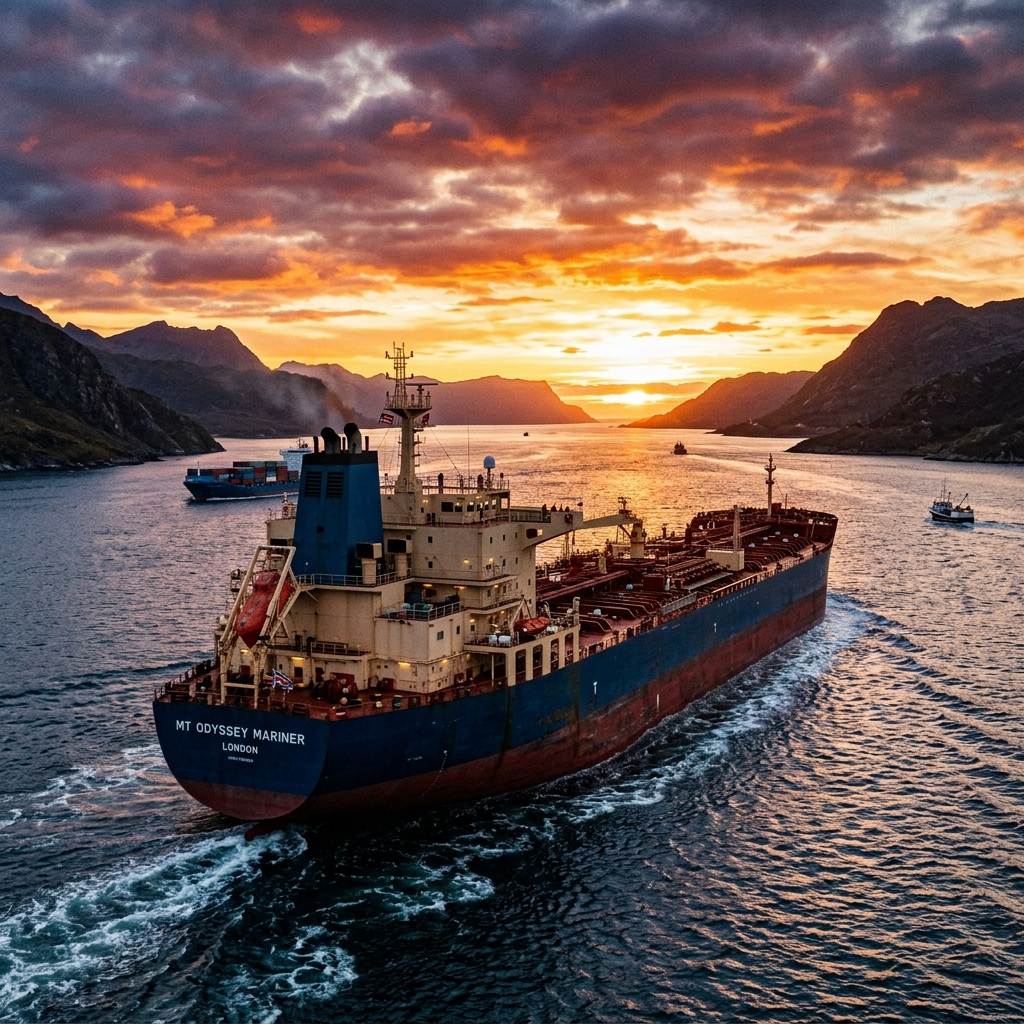
Oil moved back to the center of the global economy on Thursday after Brent crude briefly rose above $100 a barrel, a level that turns a regional security crisis into a wider cost-of-living and policy problem. The immediate trigger was renewed concern over Middle East shipping routes after reports of attacks on Saudi-linked tankers in the Red Sea and wider tension around Iran, the Houthis, and Gulf energy exports.
The market reaction matters because oil is not just a commodity price on a trading screen. It feeds into diesel, gasoline, jet fuel, shipping costs, food distribution, fertilizer, plastics, public transport budgets, airline margins, and inflation expectations. When the oil price jumps fast, households feel it at pumps and fares, businesses feel it in logistics bills, and central banks have to decide whether the shock is temporary or becoming embedded in broader prices.
What happened today
The Associated Press reported on July 23 that Brent crude topped $100 per barrel as fighting and shipping threats in the Middle East raised fears that the flow of crude could slow. The same market session also saw pressure on U.S. equities, with technology shares hit by company-specific earnings concerns while energy anxiety pushed bond yields higher.
In a separate AP explainer, the risk around the Bab el-Mandeb Strait was framed as a second chokepoint problem. The Houthis do not need to control every mile of coastline to raise the cost of insurance, rerouting, naval protection, and delivery timing. In energy markets, credible disruption risk can move prices before a physical shortage appears.
That is why the oil-price move should be read as a warning signal, not simply as a finished event. A one-day spike can fade if ships keep moving and diplomacy lowers risk. It can also become more expensive if shipping firms, insurers, refiners, and governments start planning for longer disruption.
Why chokepoints make the shock global
The Strait of Hormuz and Bab el-Mandeb are narrow passages, but their economic impact is wide. The U.S. Energy Information Administration has described Hormuz as one of the world’s most important oil chokepoints, with 2024 flows averaging about 20 million barrels per day, roughly one-fifth of global petroleum liquids consumption. EIA also noted that oil moving through Hormuz represented more than one-quarter of global seaborne oil trade in 2024 and early 2025.
Bab el-Mandeb connects the Arabian Sea and the Red Sea, making it important for traffic toward the Suez Canal and European and Asian markets. If ships avoid the area, they may need longer routes around Africa. That adds fuel, crew time, insurance costs, and delays. Those costs can reach consumers even if the original conflict is geographically far away.
The key point is that alternative routes exist for some volumes, but not cheaply, quickly, or completely. Pipelines can bypass parts of the Gulf route, but they have capacity limits and can still leave cargoes exposed to other chokepoints. Liquefied natural gas is harder to reroute through pipeline substitutes, which is why energy security concerns can spread beyond crude oil alone.
Why central banks care
Energy shocks create a difficult problem for central banks. Higher oil prices can lift headline inflation quickly, but rate hikes cannot produce more oil or secure a shipping lane. The policy question is whether higher energy costs start changing wages, service prices, business contracts, and consumer expectations.
The European Central Bank kept its three key interest rates unchanged on July 23, while acknowledging that the outlook for energy prices remained highly volatile and above levels seen before the Middle East conflict. That decision shows the balancing act: policymakers do not want to overreact to a price shock that could reverse, but they also cannot ignore a sustained rise in fuel costs.
The U.S. Federal Reserve’s next scheduled policy meeting is July 28-29, according to its published calendar. That timing makes the oil move especially relevant for global markets, because investors will be watching whether the Fed treats energy prices as a short-term external shock or as a risk to the path of inflation.
What readers should watch next
The first signal is shipping behavior. If tankers continue using the Red Sea and Gulf routes with manageable insurance costs, the price shock may be contained. If more vessels pause, reroute, or require military escort, the market will likely price in a bigger disruption premium.
The second signal is refined fuel, not just crude. Diesel, gasoline, and jet fuel can move differently from crude depending on refinery capacity, inventories, sanctions, and transport routes. Consumers often feel the refined-product move more directly than the Brent benchmark.
The third signal is central-bank language. If officials describe the oil jump as temporary, markets may calm. If they warn about second-round inflation, borrowing costs could rise further, affecting mortgages, corporate debt, public budgets, and emerging-market currencies.
The fourth signal is diplomacy around the shipping corridors. Even limited de-escalation can lower insurance and route-risk costs. Escalation, especially around tankers or ports, would have the opposite effect.
The durable lesson
This episode is a reminder that globalization depends on a small number of physical corridors. Digital payments, AI supply chains, food imports, airline schedules, and household budgets all still rely on fuel moving through narrow maritime routes.
Oil above $100 is not only an energy-market headline. It is a stress test for inflation management, shipping resilience, and the ability of governments to stop a regional conflict from becoming a global economic tax.