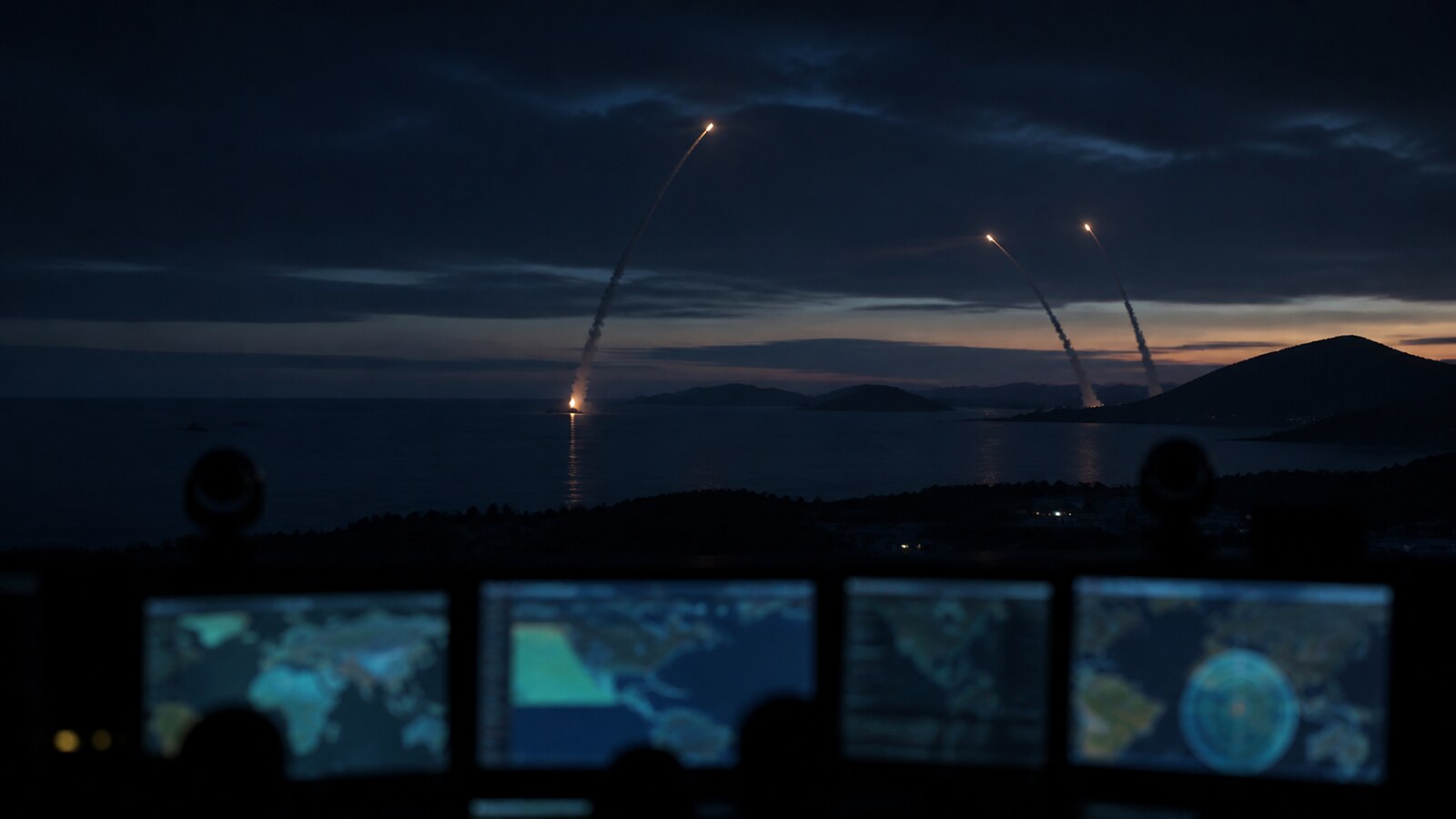
Russia’s overnight barrage on Kyiv killed at least 12 people and wounded dozens more, turning another night of air alerts into a wider test of Ukraine’s ability to protect major cities from ballistic missiles, cruise missiles and drones.
Local authorities and Ukraine’s emergency service reported strikes across several districts of the capital after explosions sounded through the night into Thursday morning. Associated Press reported at least 12 deaths and 33 wounded, while the Kyiv Independent, citing city and emergency officials, said the attack lasted for more than eight hours and hit at least 12 sites.
The confirmed damage included residential buildings, warehouses, a medical facility and an educational institution. In the Solomianskyi district, officials said upper floors of a nine-storey residential block were destroyed and fires broke out. Rescue crews were still working through debris as casualty figures were being updated.
That makes the immediate story painfully clear: civilians in Ukraine’s capital were again killed at home during a long-range Russian attack. The larger strategic question is why Kyiv remains so exposed after more than four years of full-scale war and repeated requests for more air defense interceptors.
What Happened Overnight
The barrage began shortly after midnight local time and continued into the morning. Reports from Kyiv described repeated explosions, shaking buildings, fires and emergency crews moving between attack sites while the air raid alert remained active.
The Kyiv City Military Administration reported damage in Darnytskyi, Sviatoshynskyi and Solomianskyi districts. Those areas are not symbolic military targets on a distant frontline; they are urban districts where apartment blocks, schools, hospitals, roads and businesses sit close together. When high-speed missiles or debris hit such neighborhoods, the civilian risk is immediate even before the full target list is known.
Al Jazeera, citing Ukrainian officials and Reuters, reported that Russian ballistic missile attacks hit at least three districts, collapsing buildings and causing fires. The Guardian’s Ukraine war briefing said Kyiv was under missile attack and reported that residential areas and warehouses had been hit, with Mayor Vitali Klitschko warning that people were trapped in buildings.
The figures may change as recovery work continues. Early reports from major urban attacks often move from incomplete counts to higher confirmed totals as rescue teams reach collapsed floors, basements and shelters. For that reason, the most accurate framing is “at least” 12 dead, not a final toll.
Why The Air Defense Question Matters
Kyiv has survived repeated Russian missile and drone waves because Ukraine has built a layered defense system around the capital. That defense includes mobile teams, electronic warfare, Western-supplied systems and Soviet-era equipment adapted under pressure. It has saved lives many times.
But the most dangerous incoming weapons are not all equal. Ballistic missiles are harder to intercept because they travel fast and leave defenders with little time to react. Ukraine has repeatedly said it needs more Patriot-class systems and interceptors to reduce that risk.
That shortage is not an abstract procurement issue. It determines whether a city can stop enough incoming missiles before they hit apartment blocks, power infrastructure, hospitals or transport nodes. When stocks are tight, commanders must decide which sites to defend, which salvos to engage and how long existing supplies can last.
Ukraine’s air-defense need also connects to wider alliance policy. GDU reported this week on the U.S.-South Korea drills dispute, where missile defense and readiness were central to alliance planning. In Europe, the same basic problem appears in a different form: partners have to decide how much scarce air-defense inventory they can send to Ukraine while protecting their own forces and territory.
The Political Timing
The attack came as Ukraine faces both battlefield pressure and political strain at home. AP separately reported that President Volodymyr Zelenskyy dismissed a senior aide amid a graft probe, while a former defense minister has called for wartime elections despite martial law. Those domestic debates do not change responsibility for the attack, but they complicate the political environment in which Ukraine asks allies for more weapons, money and patience.
Russia, meanwhile, has been under pressure from Ukrainian long-range strikes on energy and logistics targets. The Guardian, citing Reuters and industry data, reported that Russia has started importing gasoline after Ukrainian attacks hit refineries and depots. That points to a war increasingly fought through long-range pressure on cities, fuel systems, warehouses and defense production rather than only through movement on the front line.
For civilians, the strategic language can sound distant. In practice, it means nights of sirens, fires, interrupted power, damaged hospitals, closed schools, and families waiting for rescue teams to find people under rubble.
Global Stakes
The Kyiv barrage matters beyond Ukraine because it tests whether Western support can keep pace with Russia’s long-range strike campaign. Air defense is expensive, technically demanding and politically sensitive. Missiles that are fired tonight must be replaced later. Launchers need crews, maintenance, radar coverage and spare parts. Interceptors compete with other global security demands, including the Middle East and Indo-Pacific.
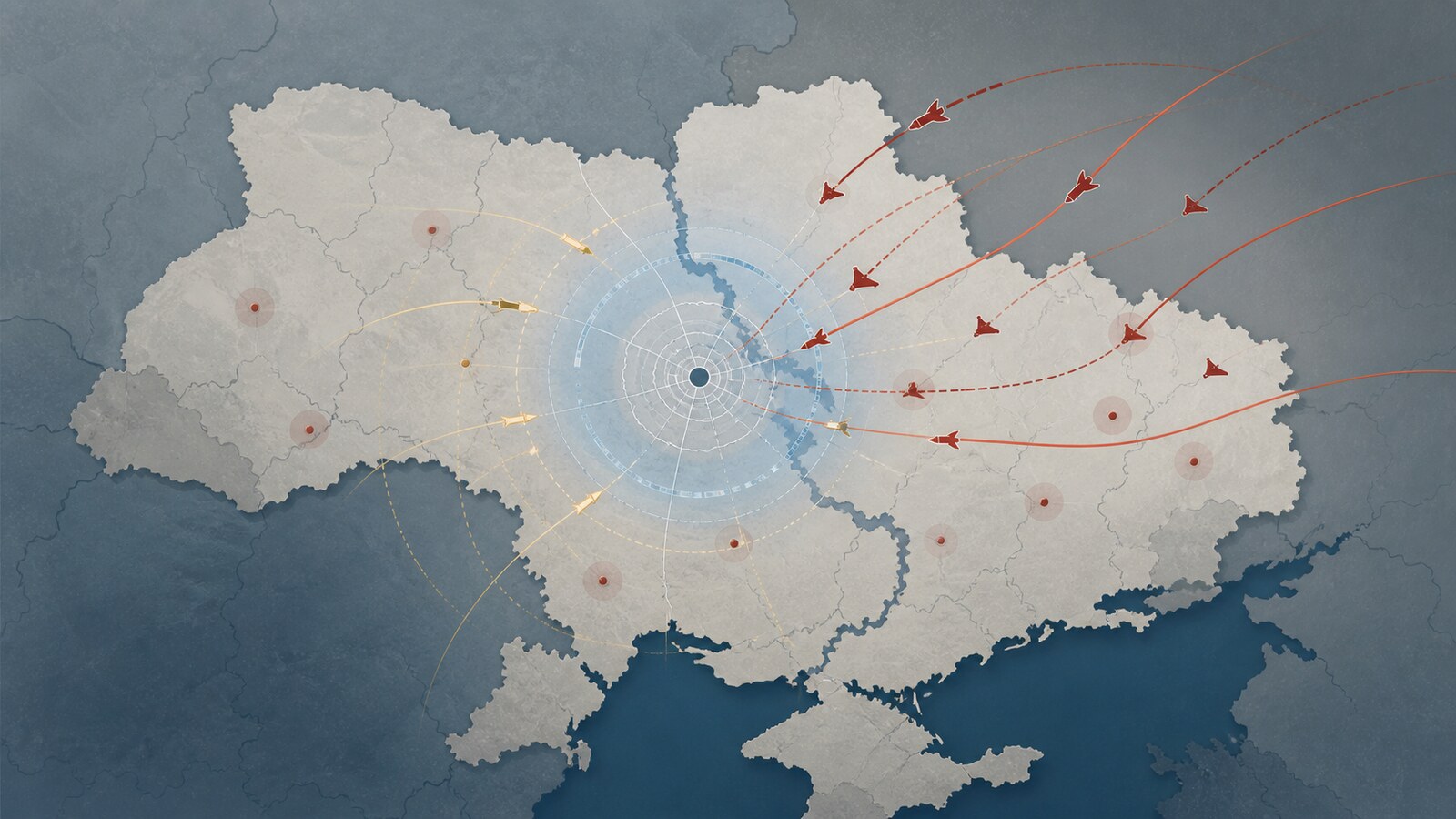
That scarcity gives Moscow an incentive to keep launching mixed attacks. Drones can force Ukraine to reveal air-defense positions or spend ammunition. Cruise missiles can approach from different directions. Ballistic missiles compress decision time. Even when many incoming weapons are intercepted, enough can get through to cause casualties and infrastructure damage.
The attack also lands in the wider diplomatic context of stalled peace efforts. An earlier GDU report on Trump and Putin’s Alaska talks explained how far apart Moscow and Kyiv remain on territory, security guarantees and the future of Ukraine’s armed forces. Each major strike makes the political space for compromise narrower, especially when civilians are killed in the capital.
What To Watch Next
The first issue is the final casualty and damage assessment from Kyiv authorities and Ukraine’s emergency service. A higher confirmed toll would sharpen international pressure and may prompt new requests for air-defense deliveries.
The second is whether Ukraine’s allies announce additional interceptors, launchers or financing for air-defense production. Public promises matter less than delivery schedules, because missile defense depends on available ammunition, not only diplomatic support.
The third is Russia’s next target pattern. If attacks continue against Kyiv, energy assets and transport infrastructure, Ukraine will enter the coming months under heavier strain before winter. If Russia broadens attacks across multiple regions, the challenge becomes national distribution: protecting the capital, frontline cities, power systems, ports and defense factories at the same time.
The immediate human fact remains the center of the story. Kyiv residents were killed and wounded in their own city during an overnight attack. The policy question is whether Ukraine and its partners can close enough of the air-defense gap to make the next barrage less deadly.