The world’s most powerful solar telescope has opened a sharper window onto the Sun, revealing tiny swirling structures on its visible surface that could help scientists understand how solar storms gather energy before they disrupt technology on Earth.
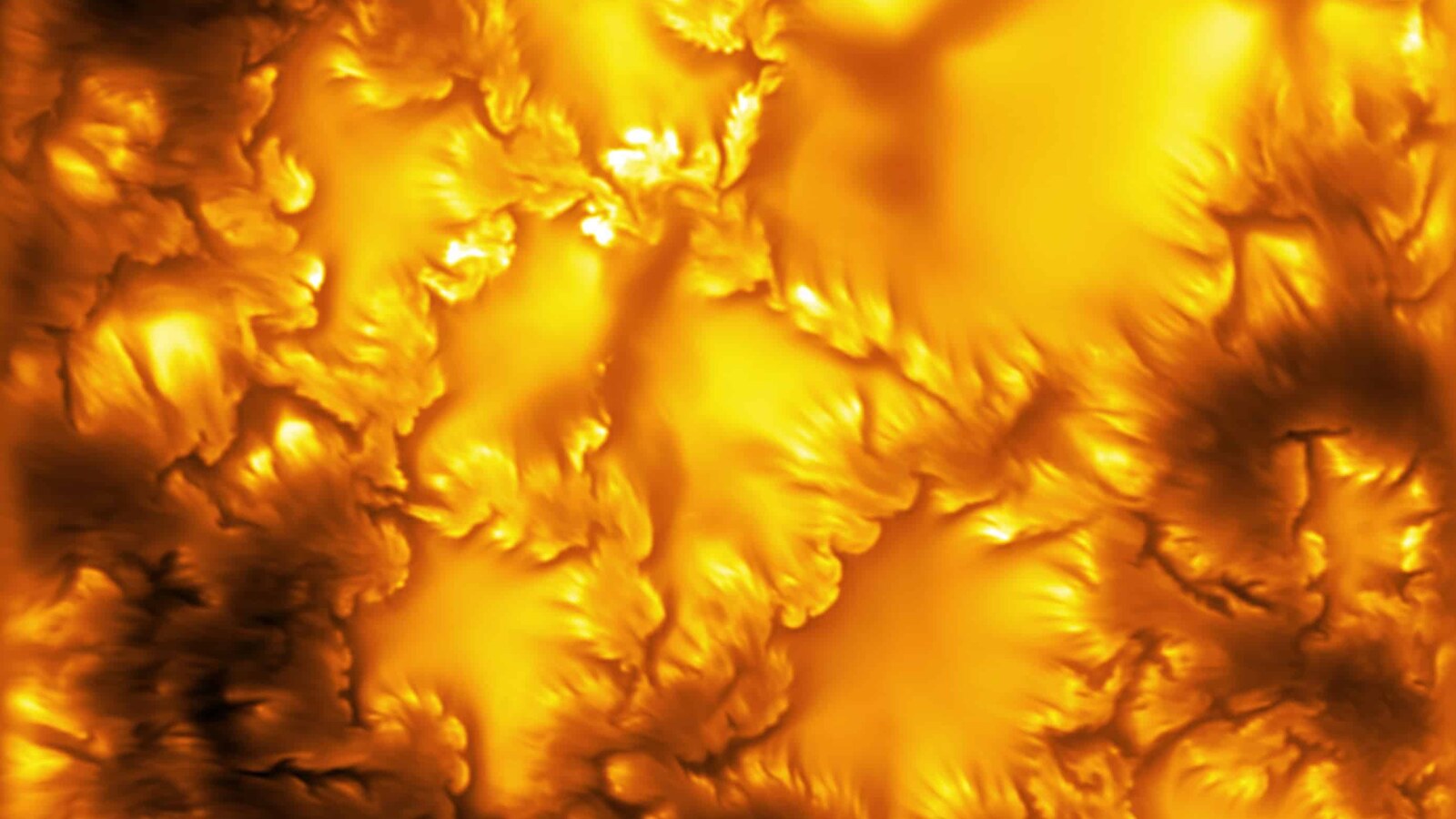
The discovery comes from the U.S. National Science Foundation’s Daniel K. Inouye Solar Telescope on Haleakala in Hawaii. Researchers using the telescope captured the highest-resolution observations yet of the Sun’s photosphere, the bright layer visible from Earth, and identified fine plasma vortices along the edges of solar granules.
The National Solar Observatory said the features are signatures of Kelvin-Helmholtz instability, a fluid-dynamics process that forms when layers of gas or plasma move past each other at different speeds. The same broad pattern can appear in ocean waves, cloud bands and planetary atmospheres, but the new work confirms it on the Sun’s surface at a level of detail that had previously been beyond reach.
The finding was published Wednesday in Nature and quickly drew international attention because it connects a beautiful image story with a practical space-weather problem. Solar eruptions can disturb satellites, radio signals, GPS, aviation operations and power grids. Better observations of how magnetic energy moves through the Sun are therefore not only a scientific advance, but also part of the long effort to improve warnings before powerful eruptions reach Earth.
What The Telescope Saw
The Inouye telescope observed a magnetically active region around a sunspot and resolved features only about 20 kilometers wide, according to the research team and collaborating institutions. That is exceptionally small by solar standards. The Sun’s diameter is about 1.39 million kilometers, while the structures now visible in the new data sit at the scale where plasma flows, magnetic fields and turbulence interact.
In the images, the Sun’s surface does not look smooth. It appears divided into granules, which are cells of hot plasma rising, cooling and sinking again. Around parts of those granules, researchers found fringed, curling forms that resemble tiny breaking waves. Their shape and movement matched the Kelvin-Helmholtz process seen in simulations.
That match matters. Solar physicists had theoretical reasons to suspect that such instabilities could occur in the photosphere, but direct confirmation required both unusually sharp telescope data and detailed computer modeling. The Max Planck Institute for Solar System Research said the observations and simulations lined up closely enough to show the physical origin of the vortices.
The result is a rare case where a new image does more than impress the public. It gives researchers a measurable pattern to study in a region of the Sun that helps feed larger and more disruptive activity above it.
Why Tiny Vortices Matter
The central question is energy. The Sun’s atmosphere is far hotter than its visible surface, and scientists are still working through how small-scale magnetic processes contribute to that imbalance. The corona, the Sun’s outer atmosphere, can reach millions of degrees, while the photosphere is far cooler by comparison.
The newly observed vortices may be one route by which energy moves upward. As plasma flows twist around magnetic structures, they can bend and tangle magnetic field lines. When magnetic stress builds and later releases, it can contribute to flares, coronal heating and eruptions that send charged particles through space.
That does not mean one small whirlpool triggers a global solar storm by itself. The significance is cumulative. If these instabilities are common wherever conditions are right, they may act like many small drivers constantly mixing magnetized and non-magnetized plasma. Over time, that mixing may influence how the Sun stores and releases magnetic energy.
Nature’s publication of the research gives the observation a peer-reviewed foundation, while the official NSO release frames the result as a major step in understanding hidden solar processes. Independent coverage from Associated Press, The Guardian and science outlets emphasized the same point: researchers now have direct visual evidence of a process that may help explain how the Sun turns small-scale turbulence into larger-scale activity.
The Space Weather Link
Space weather is often treated as a specialist topic until it affects daily systems. A strong geomagnetic storm can interfere with satellites, navigation, high-frequency radio, pipeline operations and electrical infrastructure. Airlines, grid operators, satellite companies and space agencies all watch solar activity because a burst from the Sun can reach Earth’s space environment with real operational consequences.
Forecasting those events is difficult because the chain from magnetic buildup to eruption is complex. Scientists can observe sunspots, magnetic regions and coronal mass ejections, but the earlier processes that load energy into the solar atmosphere remain harder to track. The Inouye observations push closer to that root layer.
The discovery does not immediately create a new forecast product. It gives researchers a better target for models. If future observations show how often the vortices form, how they interact with magnetic fields, and how they connect to activity higher in the atmosphere, models of solar eruptions could become more physically grounded.
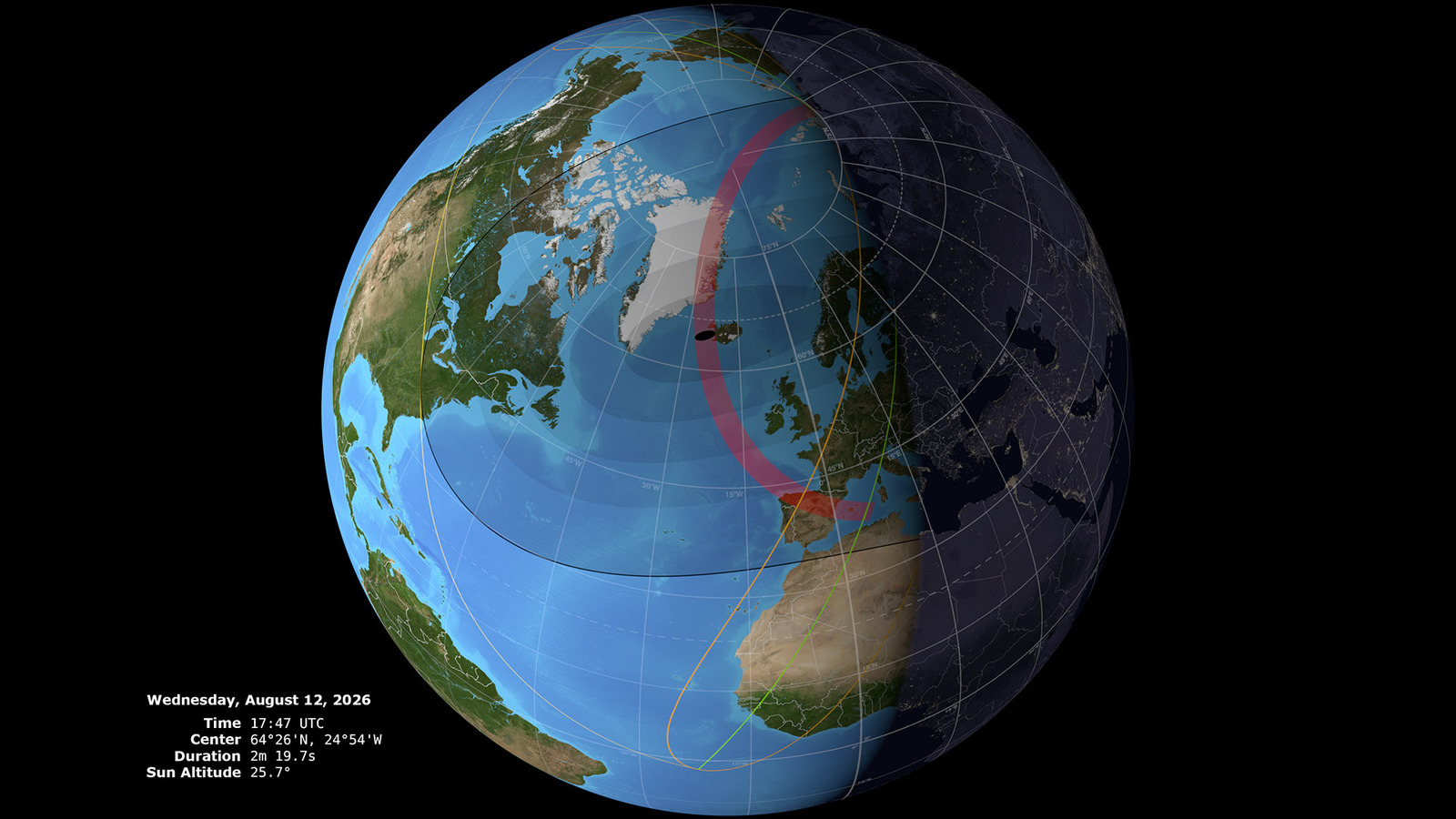
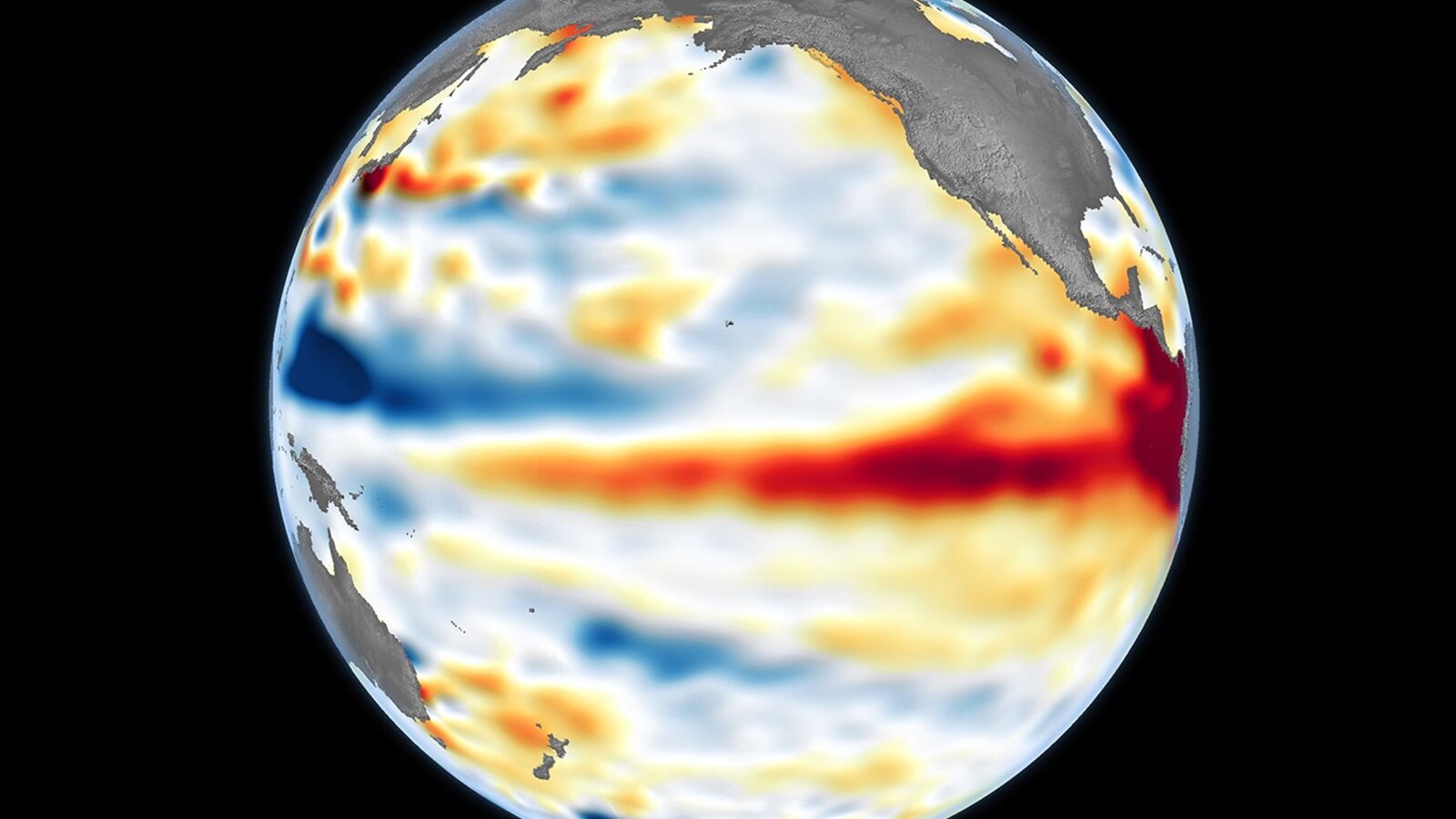
That is why the story belongs in the same global science conversation as recent warnings about El Nino and ocean heat and the countdown to the August 2026 solar eclipse. Better observation changes public risk planning. Sometimes that means tracking ocean temperatures. Sometimes it means using a four-meter telescope to see motions on the surface of the nearest star.
What Comes Next
The next phase is repetition. Scientists will want to see whether the same signatures appear across different solar regions, at different stages of the Sun’s activity cycle, and under varying magnetic conditions. A single discovery image is powerful, but a forecasting improvement needs repeated measurements and model testing.
The Inouye Solar Telescope is built for that kind of work. Its large mirror and adaptive optics are designed to correct for distortions in Earth’s atmosphere and reveal details that smaller or older instruments cannot resolve. As more instruments and observing modes come online, researchers expect sharper measurements of magnetic fields, plasma motions and the layers that connect the photosphere to the corona.
The timing is also useful. The Sun’s current cycle has already produced intense auroras and technology concerns in recent years, reminding governments and companies that space weather is not abstract. A clearer view of the small processes below solar eruptions could help forecasters understand which active regions deserve the closest attention.
For now, the breakthrough is both visual and practical. The Inouye telescope has shown the Sun’s surface as a place of fine, restless structure, not a flat disk of light. Those small structures may be part of the machinery that powers the solar events capable of reaching Earth.