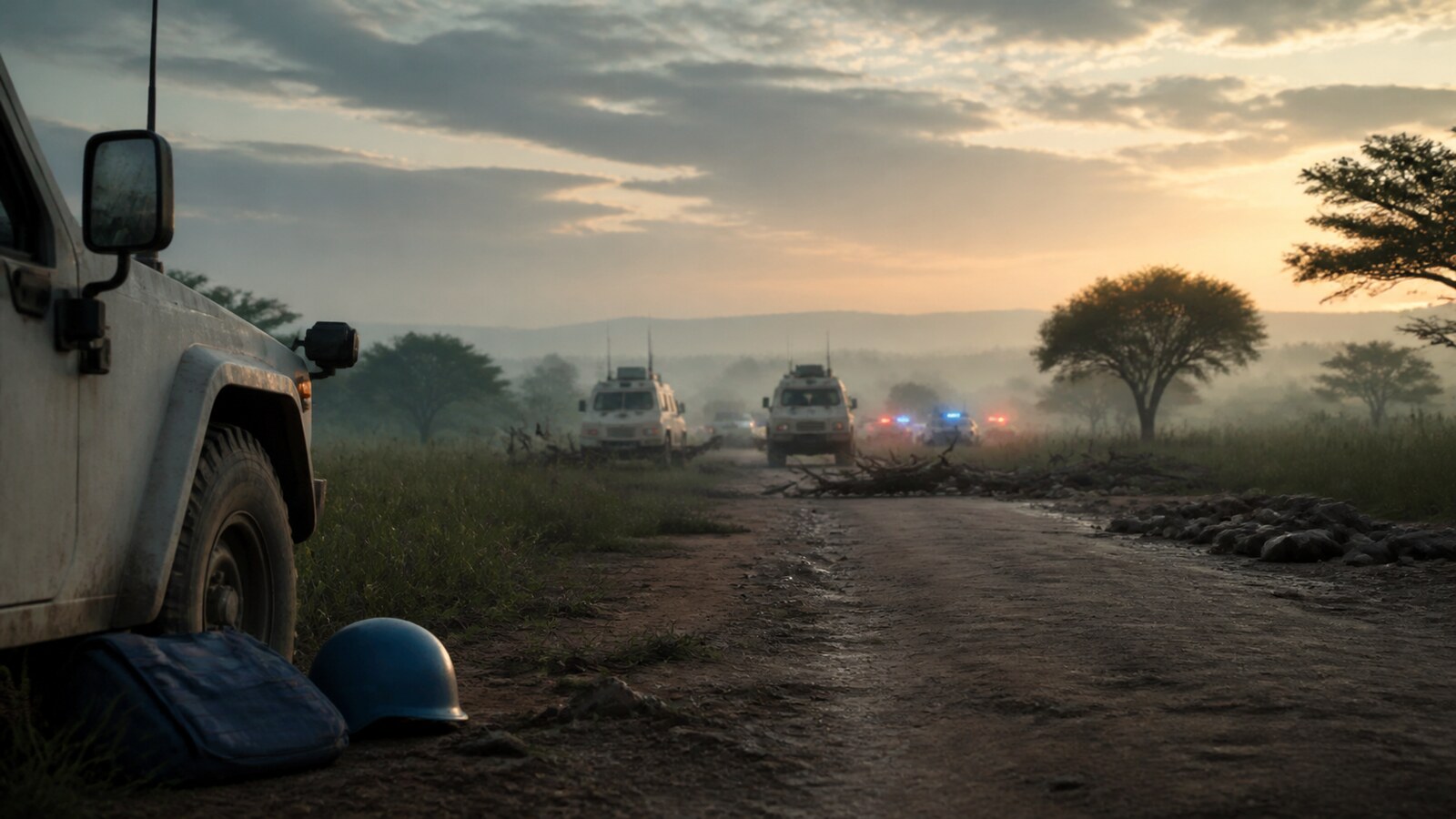
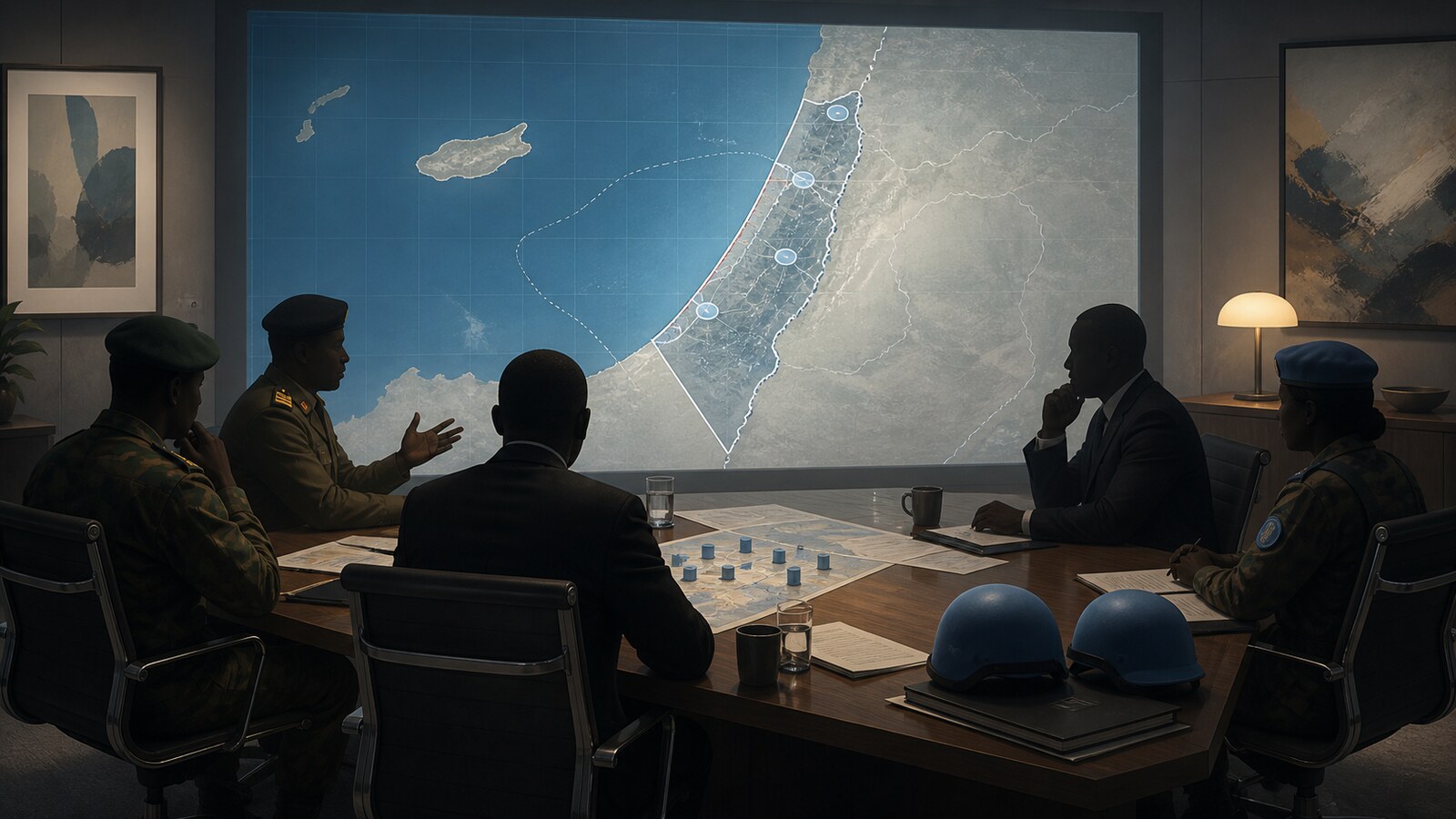
Military officials from Uganda and Burundi have visited Israel for talks on a possible role in Gaza’s proposed international stabilization force, putting new attention on a U.S.-backed security plan that has struggled to move from diplomatic framework to deployment.
Associated Press reported Monday that the two East African delegations discussed potential troop contributions to the force envisioned under President Donald Trump’s Board of Peace initiative for Gaza. Uganda has already signaled a willingness to contribute about 1,200 personnel, while Burundi has shown interest but has not finalized participation, according to officials cited in the report.
The development matters because the force is supposed to be more than a symbolic peacekeeping label. It is meant to support ceasefire monitoring, help train Palestinian police, assist humanitarian access and provide a security bridge between Israeli military withdrawal and civilian administration in Gaza.
That bridge does not yet exist. The proposed mission remains caught in the same sequence dispute that has slowed recent Gaza disarmament talks: Israel says Hamas must disarm before meaningful withdrawal, while Hamas and mediators have argued that disarmament cannot proceed without guarantees that Israeli forces will pull back and attacks will stop.
Why Uganda And Burundi Matter
Uganda and Burundi are not incidental names in this story. Both countries have experience sending troops to difficult security missions in Africa, especially through the long-running Somalia mission. That background is one reason their possible Gaza role is being watched closely by diplomats looking for contributors with operational experience in urban security, insurgent threats and multinational command structures.
Uganda’s domestic approval process has also moved further than many earlier pledges. Uganda’s Parliament cleared the way in early August for a possible Uganda Peoples’ Defence Forces deployment to Gaza under the Trump-backed plan, according to reporting from Uganda’s Daily Monitor. That does not mean troops are deploying immediately, but it gives Kampala legal and political room to negotiate terms.
Burundi’s position appears less settled. The latest talks suggest interest, but participation would still require final approval, funding arrangements, command clarity and assurances about the mission’s mandate. For both countries, the question is not only whether to send troops. It is what those troops would be allowed to do, who would pay, who would command them and how they would avoid becoming a party to the conflict.
A Force Still Short Of Its Target
The Board of Peace described the International Stabilization Force earlier this year as a central part of Gaza’s transition. Its February announcement said Indonesia, Morocco, Kazakhstan, Kosovo and Albania had committed troops, with Egypt and Jordan expected to support training for a new Gaza police force. The board also identified U.S. Maj. Gen. Jasper Jeffers as force commander.
But the force has remained far below the scale officials originally discussed. AP reported earlier this summer that plans for the Gaza International Stabilization Force were in question as troop pledges stalled. Indonesia, once the largest prospective contributor, paused its involvement after the U.S.-Israeli confrontation with Iran deepened regional instability.
That makes the Uganda and Burundi talks important even if they do not immediately solve the manpower gap. They show that Washington and the Board of Peace are still trying to build a coalition for the security phase, and that African contributors may become more central as earlier pledges remain uncertain.
The Gaza Sequence Problem
The hardest part of the plan is sequencing. Axios reported last week that Jared Kushner urged Israeli Prime Minister Benjamin Netanyahu to test whether Hamas was prepared to begin disarming, with weapons to be handed to a Palestinian technocratic government and then transferred to the stabilization force for destruction. The same report said the parties discussed a deconfliction mechanism to address Israeli concerns about emerging threats.
The Guardian reported that talks between Netanyahu and Kushner produced no breakthrough, with Israel again insisting that troops would not withdraw from Gaza until Hamas disarms. It also reported that Hamas wants Israel to halt attacks and pull back before implementation begins.
Those positions leave the stabilization force in a difficult position. If it deploys before an agreed disarmament process, Israel may argue that the mission cannot guarantee security. If it deploys only after full disarmament, Hamas may argue that it has given up leverage without a credible withdrawal. If it has a weak mandate, Palestinian civilians may see another international plan that cannot protect services, reconstruction or daily movement.
What The Mission Would Need
A credible Gaza stabilization force would need several things that are still unclear: a written mandate accepted by the parties, rules for responding to violations, a command chain, funding, logistics, border access, coordination with Palestinian police and an agreed relationship with Israeli forces.
It would also need public legitimacy. Gaza’s population has lived through displacement, hunger, repeated strikes, damaged infrastructure and stalled reconstruction promises. A foreign force that is perceived as protecting only one side’s security requirements would struggle to operate. A force without enough authority to prevent renewed violence would struggle just as much.
That is why African troop discussions are not a technical footnote. They are a test of whether the diplomatic architecture around Gaza can attract countries willing to put personnel into a volatile environment before the political deal is fully settled.
The Wider Signal
For Uganda and Burundi, participation could bring diplomatic visibility, security partnerships and logistical support as African peacekeeping deployments shift. It could also bring domestic criticism if voters see the mission as risky, poorly explained or too closely tied to foreign political priorities.
For Washington and Israel, the talks offer evidence that the stabilization-force concept is still alive after weeks of stalled diplomacy. For Palestinians, the more important test is whether any mission would reduce violence, support accountable policing and open the way to reconstruction rather than simply managing a frozen conflict.
The immediate news is that Uganda and Burundi have moved into direct discussions about a Gaza security role. The larger question is whether those talks can become a real force with enough legitimacy, manpower and authority to help turn a fragile ceasefire plan into something enforceable.
For readers following the earlier Trump Gaza plan dispute and wider Middle East crisis management around shipping and Hormuz diplomacy, the lesson is consistent: announced frameworks matter only when countries accept the sequence, risks and enforcement behind them.