
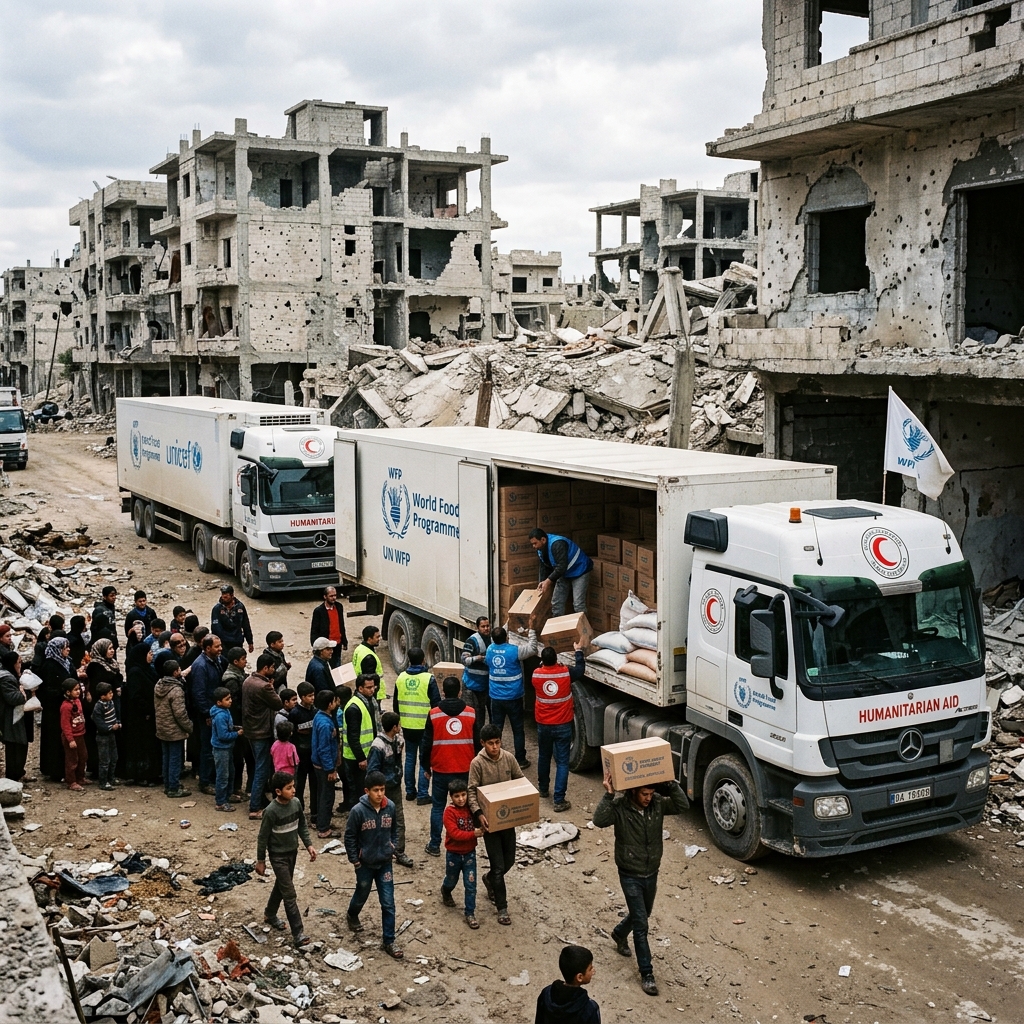
Gaza’s latest hunger assessment carries two messages at once: famine-level conditions have eased since the October 2025 ceasefire, and the territory remains one disruption away from another sharp deterioration.
The Integrated Food Security Phase Classification said on July 23 that large-scale humanitarian assistance has driven measurable food security and nutrition gains. But the same update classifies the entire Gaza Strip in IPC Phase 3, or Crisis, and projects that 1.4 million people will face high levels of acute food insecurity through December 2026.
That distinction matters. An end to famine classification is not the same as a return to normal life. It means the worst measured threshold has been pushed back for now, while the population remains dependent on aid, functioning crossings, safe movement, health services, water systems, and the ability to rebuild local livelihoods.
What changed
The IPC’s new analysis says food and nutrition conditions improved after the ceasefire allowed a larger humanitarian response. Between mid-April and June, more than 1.2 million people, or 59 percent of the population, were still in Crisis or worse. For July through December, that share is projected to rise to 67 percent, with 212,000 people remaining in Emergency conditions.
Nutrition indicators also moved in the right direction. The IPC said acute malnutrition among children declined after nutrition programmes scaled up. Even so, the malnutrition outlook remains serious: about 74,200 children aged 6 to 59 months are expected to need treatment for acute malnutrition through April 2027, including more than 11,400 severe cases. Around 24,600 pregnant and breastfeeding women are also expected to suffer from acute malnutrition.
Associated Press coverage of the assessment described the same tension: famine has ended under the formal classification, but the gains are fragile and warning signs are mounting.
Why the risk remains high
Humanitarian systems in Gaza are still operating under pressure. IPC recommendations call for sustained, predictable and unhindered aid entry through all border crossings, stronger commercial access, market stability, and restoration of local food production. Those conditions are not technical details; they determine whether households can move from surviving on distributions to buying, producing, cooking, and storing food reliably.
Recent OCHA reporting points to the fragility behind the numbers. The UN office said continued military operations, new displacement, deteriorating access, animal-feed shortages, and engine-oil shortages were affecting assistance, agriculture, water, and sanitation services. Its July 10 update also said insecurity, funding shortfalls, and access restrictions were still constraining humanitarian operations across the occupied Palestinian territory.
The practical result is a recovery without buffers. If crossings slow, funding falls further, markets fail to restock, or fighting intensifies, families with exhausted savings and damaged livelihoods have little room to absorb the shock.
What to watch next
The next phase of the crisis will be shaped less by one headline classification than by operating conditions on the ground.
Aid agencies will be watching whether food, nutrition supplies, fuel, medical items, and shelter materials can enter Gaza consistently and reach people safely. Economists and humanitarian planners will watch market prices and purchasing power. Public health workers will track water, sanitation, and disease risks because malnutrition worsens quickly when health systems and clean-water access break down.
The IPC also says a full report will follow in the coming days. That will matter because it should provide more detail on governorate-level conditions, assumptions behind the July-to-December projection, and the specific indicators that could signal renewed deterioration.
For readers, the clearest takeaway is that Gaza’s food crisis has improved because aid was allowed to scale up. It remains dangerous because the underlying systems that make food security durable – safety, access, income, markets, farming, water, and health care – are still deeply damaged.