
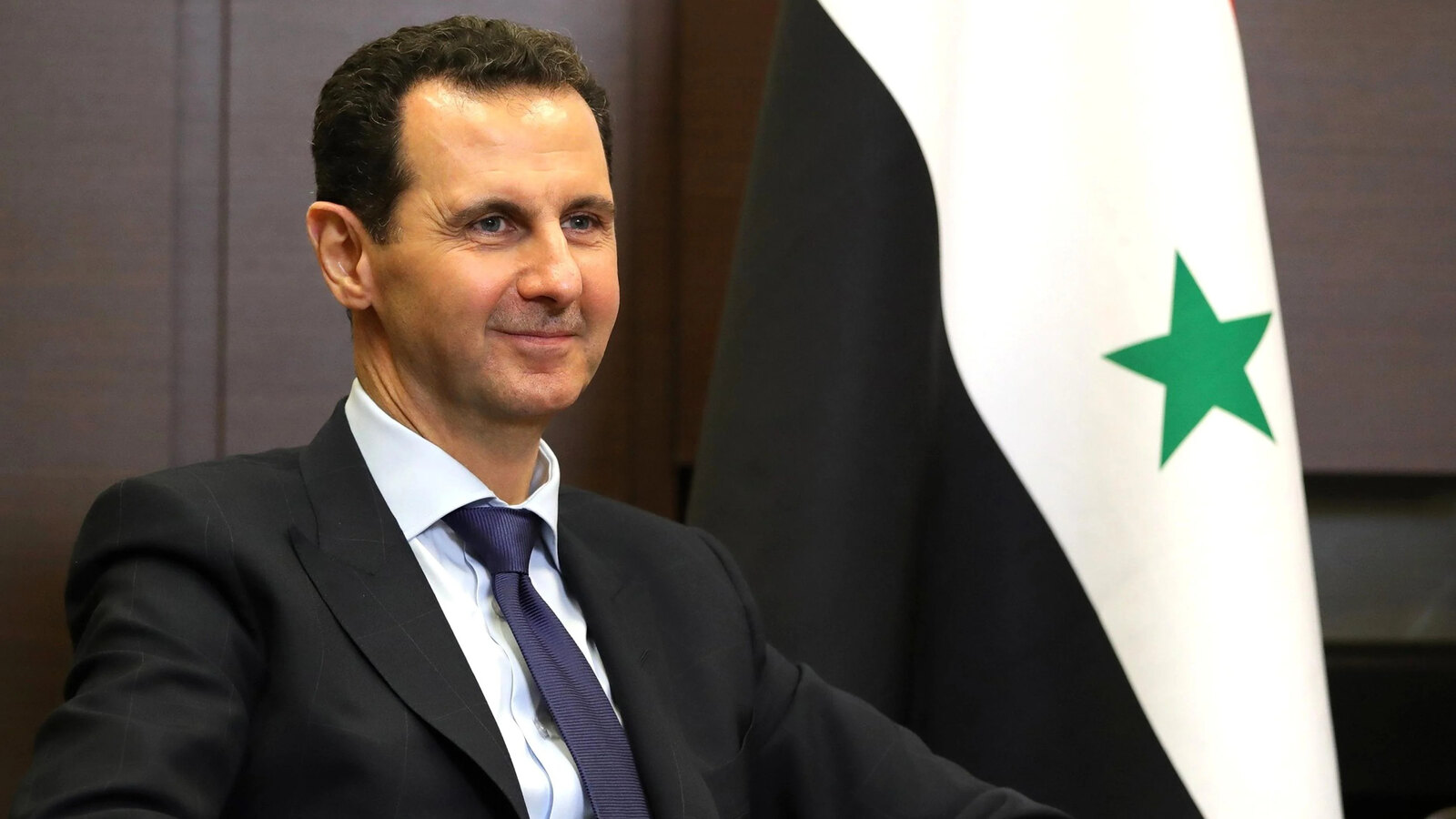
A Damascus court has sentenced former Syrian President Bashar al-Assad to death in absentia for crimes tied to Syria’s civil war, creating a landmark but legally complicated moment for a country still trying to define justice after the fall of the Assad family’s five-decade rule.
The Fourth Criminal Court in Damascus also sentenced Assad’s brother Maher al-Assad, his cousin Atef Najib and five other defendants to death after convicting them of murder, torture, unlawful deprivation of liberty, crimes against humanity and war crimes, according to Syria’s state news agency SANA.
The ruling matters far beyond one courtroom. It is the first major judgment against Assad or members of his inner circle since his government collapsed in December 2024 and he fled to Russia, where he was granted asylum. It also tests whether Syria’s new institutions can pursue accountability without turning politically charged trials into another source of division.
Associated Press reported that the case is largely symbolic for Bashar and Maher al-Assad because both men remain outside Syria. But symbolism carries weight in a country where families of detainees, disappeared people and war victims have spent more than a decade demanding official acknowledgment of abuses committed by state security agencies.
The case lands in a region already shaped by fragile diplomacy and security shocks, including the unresolved fallout from Trump’s Gaza peace plan and renewed Bab el-Mandeb shipping attacks. Syria’s transition is now another test of whether legal and political institutions can absorb pressure without widening instability.
What The Court Decided
SANA said the court was presided over by Judge Fakhr al-Din al-Aryan and issued its verdict on Tuesday, August 11, in a case centered on crimes committed against Syrians during the former regime’s years in power.
The agency reported that Bashar al-Assad, Maher al-Assad, Atef Najib and five fugitive defendants were sentenced to death. The public prosecution against one defendant was dropped after his death.
Al Jazeera reported that Assad was found guilty of premeditated murder, torture and crimes against humanity. The Guardian reported that the verdict covered atrocities committed during Syria’s nearly 14-year conflict, which left roughly half a million people dead.
Najib is central to the case because he was present in court. A former political security official in Daraa, he has long been associated with the early repression that helped ignite the 2011 uprising. The Daraa protests began after teenagers were detained and tortured for anti-government graffiti, an incident that became one of the defining sparks of the revolt against Assad rule.
By placing Najib in the dock and sentencing Assad in absentia, the court linked a specific opening episode of the uprising with the broader chain of command that later shaped the war.
Why The Verdict Is Historic
Assad ruled Syria from 2000 until his ouster in 2024, inheriting the presidency from his father, Hafez al-Assad, who had controlled the country since 1971. That continuity made the Assad system one of the Middle East’s longest-running authoritarian orders.
The war began with protests and expanded into a regional and international conflict involving Syrian government forces, rebel factions, extremist groups, foreign militaries and outside sponsors. Cities were destroyed, millions were displaced, and detention, torture, barrel bombing, siege warfare and chemical-weapon allegations became central to international scrutiny of the regime.
For years, most serious legal cases tied to Syrian atrocities were pursued outside the country through universal jurisdiction, especially in Europe. Those cases mattered, but they were distant from many victims. A Syrian court ruling inside Damascus is therefore politically and emotionally different, even if the former president remains beyond the court’s reach.
The verdict also comes as the new Syrian government tries to demonstrate that the collapse of the Assad regime is being followed by a legal transition, not only a change of rulers. That is a difficult balance. Accountability can help rebuild trust, but rushed or unfair proceedings can damage the legitimacy of the process they are meant to serve.
The Russia Problem
The practical obstacle is Russia. Assad and his brother fled there after the 2024 collapse, and Moscow has previously resisted demands to hand over former allies. Unless Russia changes course, the sentence against Bashar al-Assad is unlikely to be carried out.
That does not make the judgment meaningless. The ruling can support future extradition requests, international legal actions, asset cases and diplomatic pressure. It can also shape how other governments treat Assad-era figures who are detained or discovered abroad.
The case may become especially relevant for countries hosting former Syrian officials. Lebanon recently detained an Assad-era general wanted by Syrian authorities, and any handover decisions will be watched as early tests of regional cooperation with Damascus.
Still, the gap between conviction and enforcement is large. A death sentence announced in Damascus does not automatically produce custody, extradition or reparations. For victims’ families, that gap may be painful: recognition has arrived before physical accountability.
Rights Groups Warn About Due Process
The verdict has not been received as a simple victory. Human rights organizations and legal observers have raised concerns about trials in absentia, the use of the death penalty and whether Syria’s justice system is ready for complex war-crimes proceedings.
Syria’s Justice Ministry responded to criticism from Amnesty International by saying that capital punishment is allowed under Syrian law and can only be imposed through a judicial ruling based on law, evidence and facts. The ministry also said execution would require all legal stages and safeguards to be completed.
That response does not settle the broader question. Transitional justice is not only about punishing perpetrators. It also requires credible evidence handling, defense rights, witness protection, public confidence, victim participation and a process that can survive international scrutiny.
If Syria wants the verdict to strengthen justice rather than weaken it, future proceedings will need to show more than political will. They will need transparent rules, independent judges, reliable documentation and space for defendants to contest charges fairly.
What It Means For Syrians
For many Syrians, the sentence is likely to feel like long-delayed recognition. The old regime’s security apparatus left a deep record of disappearances, torture allegations, mass arrests and attacks on civilian areas. Families who searched prisons, morgues and detention records may see the court’s language as an official confirmation that crimes were not isolated mistakes.
For others, especially communities fearful of collective blame or revenge, the ruling may raise concerns about whether post-Assad justice will remain individual, evidence-based and bound by law.
That distinction is crucial. A stable Syria cannot be built on impunity, but it also cannot be built on a justice system seen as victor’s punishment. The strongest transitional process would separate criminal responsibility from sectarian or political identity and give victims a route to truth, restitution and memorialization.
The court’s decision is therefore a beginning rather than a conclusion. It names high-level responsibility, but the harder work is still ahead: finding the missing, preserving archives, protecting witnesses, trying detained suspects fairly, pursuing fugitives legally and compensating survivors where possible.
What To Watch Next
The next phase will show whether the ruling becomes part of a broader legal architecture or remains a one-off headline.
Key questions include whether the full 396-page decision reported by SANA is published by the Justice Ministry, whether defendants or their representatives can appeal, whether more Assad-era officials are charged, and whether foreign governments respond to Syrian extradition requests.
The death sentence also places renewed attention on Russia’s role. Assad’s asylum in Moscow shields him from immediate arrest, but it does not erase the judgment or the diplomatic pressure that may follow.
For Syria, the most important test is institutional. The country needs accountability for mass abuses, but it also needs courts credible enough to convince victims, communities and international partners that justice is being rebuilt rather than improvised.
The Damascus ruling has now put that challenge at the center of Syria’s transition.