
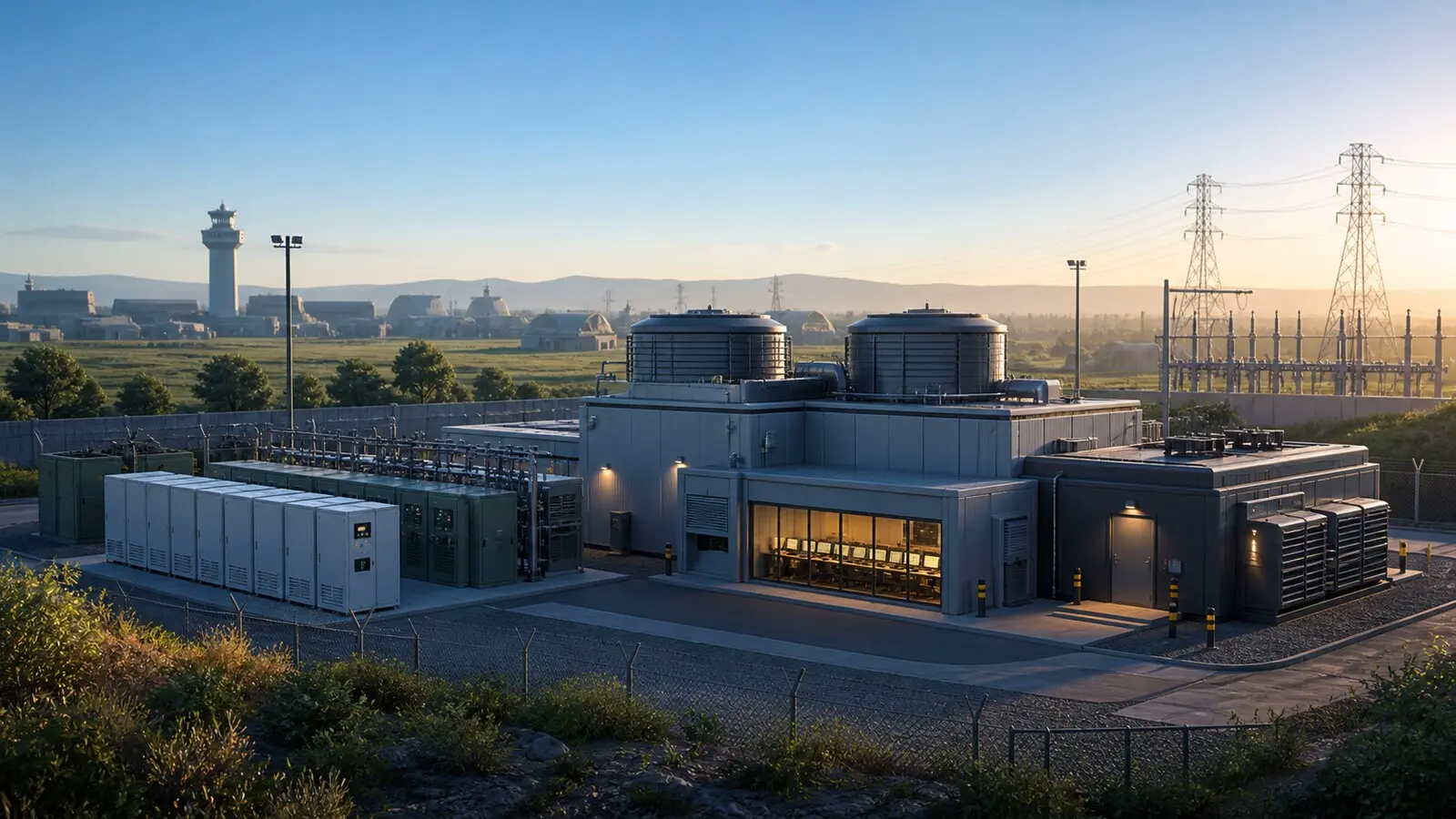
The U.S. Army’s plan to place nuclear microreactors on five military bases has turned a long-running advanced-energy experiment into a direct test of how far governments are willing to go to protect critical infrastructure from grid disruption.
The Army announced the next phase of its Janus Program with up to $2.2 billion in awards over five years for five companies that will own, build and operate microreactors at selected installations if they meet contract milestones. The first pairings are Antares Nuclear at Fort Bragg in North Carolina, BWXT at Fort Campbell in Kentucky, General Atomics Electromagnetic Systems at Fort Hood in Texas, Radiant Industries at Fort Benning in Georgia and Westinghouse Government Services at Fort Drum in New York.
The Army microreactors story matters beyond the United States because it sits at the intersection of defense readiness, nuclear regulation, electric-grid reliability, industrial policy and the rising power demand of digital infrastructure. If the program works, it could accelerate a market for small reactors that governments, data-center operators, remote industrial sites and energy-security planners are already watching. If it fails, it will strengthen doubts about cost, licensing, fuel supply and public acceptance.
What The Army Is Trying To Build
Microreactors are much smaller than conventional nuclear plants. The Army says each design could provide roughly 1 megawatt to 20 megawatts of power, depending on the vendor and site. That is not enough to run every function at a large base, which can use power on the scale of a small city, but it could support command systems, communications, air defense, emergency operations, computing loads and other critical missions during a wider grid failure.
The installations will remain connected to the commercial grid. The reactors are being framed as a resilience layer, not a full replacement for outside electricity. That distinction is important: the immediate goal is mission assurance, not a wholesale conversion of military bases into isolated nuclear-powered campuses.
The Janus Program follows a 2025 White House executive order that directed the Defense Department, through the Army, to begin operation of a nuclear reactor regulated by the Army at a domestic military installation no later than September 30, 2028. The Army has said the program uses a milestone-based contracting model with the Defense Innovation Unit to move commercial designs from demonstration toward practical deployment.
U.S. Energy Information Administration background shows Janus building on earlier Pentagon nuclear work, including Project Pele, a transportable reactor effort, and a broader Advanced Nuclear Power for Installations program involving the Army, Air Force and Defense Innovation Unit.
Why Military Bases Want Independent Power
Modern defense installations depend on electricity for far more than lighting and office work. Radar, secure communications, logistics systems, cyber operations, emergency response, housing, medical services, maintenance facilities and increasingly compute-heavy systems all rely on stable power.
The Army’s argument is that diesel generators remain useful but vulnerable. Fuel has to be stored, transported and replenished. In a crisis, supply routes may be disrupted by cyberattacks, extreme weather, conflict, sabotage or market shortages. A reactor that can run for years without refueling could reduce that exposure for the most critical loads.
That logic mirrors a wider debate about resilience in civilian infrastructure. Recent Global Daily Update coverage of Russia’s critical-infrastructure decree examined how states are reassessing control of vulnerable assets during wartime pressure. The Army’s microreactor push is different in legal setting and technology, but the underlying concern is similar: essential systems are now strategic targets.
Energy demand is also rising because of data centers, artificial intelligence and cloud services. GDU’s guide to small-business cloud hosting focused on operational reliability from a customer perspective, but the same theme scales upward. More digital work means more pressure on grids, backup systems and energy procurement. For militaries, a prolonged power failure is not only an economic problem; it can become a readiness problem.
The Safety And Regulation Debate
The most sensitive part of the program is regulation. AP reported that the reactors will be licensed by the Army rather than the U.S. Nuclear Regulatory Commission, which normally licenses commercial nuclear reactors. Army officials said they intend to align their process with NRC expectations where possible so companies do not have to redesign systems later for civilian licensing.
Supporters argue that military control can move faster, especially for national-security missions where delayed deployment carries its own risks. They also say new microreactor designs are intended to shut down safely without complex operator intervention and can be protected inside self-contained sites.
Critics see the same facts differently. Nuclear projects have a history of cost overruns, delays and hard-to-solve waste questions. Smaller reactors may reduce some engineering challenges, but they do not eliminate spent-fuel management, emergency planning, security requirements, community acceptance or long-term economics. AP reported that Army officials are working with the Energy Department on waste removal and said the bases are not expected to store radioactive waste long term.
The fuel question is another constraint. Many advanced reactor designs need high-assay low-enriched uranium, known as HALEU. The Energy Department has warned that limited domestic HALEU availability can delay advanced reactor deployment. That means the Army’s schedule depends not only on reactor companies and base construction, but also on nuclear fuel supply chains that are still being rebuilt.
What The Companies And Bases Signal
The five-company approach is a hedge. Instead of betting the program on one design, the Army is spreading technical and schedule risk across Antares, BWXT, General Atomics, Radiant and Westinghouse. If one design falls behind, another may still reach a usable deployment path.
The selected bases also matter. Fort Bragg, Fort Campbell, Fort Hood, Fort Benning and Fort Drum are large installations with major operational roles, training functions and energy needs. Earlier Army planning listed nine possible sites, including Fort Wainwright, Holston Army Ammunition Plant, Joint Base Lewis-McChord and Redstone Arsenal. The current five-base announcement narrows the first phase without ending the possibility of wider deployment.
For the nuclear industry, Janus is a public-sector demand signal. A working military microreactor program could help vendors prove designs, manufacturing processes, operating models and maintenance plans. That could matter for future civilian customers, especially remote mines, industrial sites, island grids, data centers and governments looking for firm low-carbon power.
For international readers, the wider implication is strategic. Countries are watching whether advanced nuclear can move from policy papers and pilot projects to real operating assets. Defense adoption often changes technology markets because it can absorb early risk, set standards and create procurement pathways. It can also raise hard questions about whether military urgency should reshape nuclear oversight.
What To Watch Next
The first test is schedule. The September 30, 2028 target leaves little room for licensing delays, site-preparation problems, fuel bottlenecks or vendor redesigns.
The second is transparency. Communities near selected bases will want clear information about safety cases, emergency planning, waste removal, security perimeters and how Army regulation compares with civilian nuclear oversight.
The third is cost discipline. A $2.2 billion ceiling over five years can support serious development, but it does not by itself prove that microreactors will be economical once construction, operations, security, fuel and decommissioning are counted.
The fourth is whether the reactors actually solve the resilience problem. A microreactor that powers only a fraction of base demand must still integrate with batteries, controls, grid connections, diesel backup and load-prioritization systems. The practical value will depend on the full energy architecture, not only the reactor vessel.
The Army has moved Janus from concept toward procurement. The next phase will show whether small nuclear reactors can become a deployable defense-energy tool or remain an expensive promise chasing a difficult deadline.