
KeNHA’s Fresh 7-Day Eviction Order Rattles Thika Highway Vendors Amid Safety Push
The Kenya National Highways Authority (KeNHA) has issued yet another seven-day ultimatum to roadside traders along Thika Superhighway, targeting operations at Kihunguro, Allsops, and Delview sections to clear road reserves for vital safety upgrades.
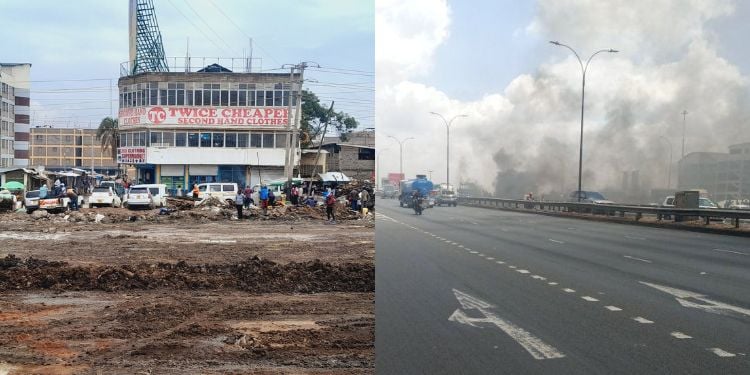
“The project is part of the Authority’s ongoing road safety improvement initiatives that seek to reduce accidents, enhance order within the road reserve, and ensure the unobstructed flow of traffic along the Highway,” the notice noted.
This follows earlier notices and demolitions, intensifying pressure on informal traders in one of Nairobi’s busiest corridors.
Incident Breakdown
KeNHA’s February 23 notice demands traders vacate by March 2, paving way for infrastructure like bus bays to curb illegal PSV stops and congestion.
“The Kenya National Highways Authority (KeNHA) wishes to notify ALL roadside traders operating along the Thika Superhighway at Kihunguro (both bounds), Allsops (both bounds), and Delview Sections to remove and clear their wares from the road reserve within seven (7) days from the date of this notice, KeNHA stated.
Prior February 9 orders hit Roysambu and Githurai, where demolitions on February 19 razed kiosks, sparking trader losses and protests with burning tires blocking lanes.
Enforcement teams, backed by police, flattened structures, leaving merchandise scattered as locals decried sudden action.
Bigger Picture on Road Encroachments
Thika Superhighway, linking Nairobi to Mt. Kenya region, battles daily gridlock from 500,000+ vehicles amid unchecked vending that narrows lanes and boosts accidents.
Similar KeNHA drives target Nairobi-Nakuru and other highways, reclaiming reserves for footbridges and expansions, but often ignite clashes over livelihoods.
Nationally, urban growth fuels informal trading on public land, clashing with Vision 2030 infrastructure goals.
Trader Plight and Economic Ripples
Thousands of hustlers selling wares from fruits to mitumba face income wipeout without relocation sites, fueling cries of “heavy-handedness” after years in spots.
Protests in Githurai highlight tensions, with calls for government markets or compensation echoing past evictions in Kibera or CBD. Economically, it disrupts daily commuters while aiming to save billions in accident costs.
Kiambu Governor Kimani Wamatangi hascriticised the recent demolition of more than 300 stalls in Githurai.
The Kiambu Governor urged President William Ruto to intervene and facilitate a dialogue with KeNHA.
Speaking during a Church Service in Ruiru on Sunday, Wamatangi said the affected traders deserved engagement and consideration even as the government movesahead with infrastructure development in the area.
“President, you need people; the project is for the people. I politely ask you to hold a meeting with KeNHA because they came to Githurai the other day and demolished over 300 stalls overnight,” the governor said.
Breaking the silence on the issue during a church service in Kiambu County on February 22, 2026, Ruto urged local leaders to stop the “blame game” and work together to solve the problem, emphasising unity since many are in the same government/party (UDA).
“If a problem has emerged in Githurai, let us not blame each other. We should solve the problem all of us… We are all in government. Who is to be blamed here?” he questioned.
Authority Stance and Future Moves
KeNHA urges voluntary compliance to dodge bulldozers, framing evictions as essential for safer highways amid rising fatalities.
Police deployments signal readiness for resistance, with warnings of more raids if ignored. Long-term, integrated urban planning could balance trade and traffic, but urgency prevails as deadlines tick.