
KNEC Rolls Out 2026 KJSEA & KCSE Examiner Training: Your Guide to Eligibility and Application
The Kenya National Examinations Council (KNEC) has officially launched applications for 2026 training of examiners for the Kenya Junior School Education Assessment (KJSEA) and Kenya Certificate of Secondary Education (KCSE), a key step ahead of the October-November exams.
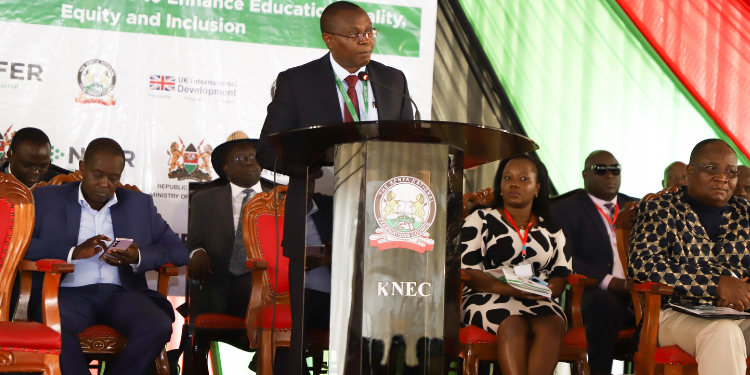
In a notice on February 17, KNEC stated that the training fee is Ksh 10,500 and will be paid only by shortlisted applicants after receiving instructions. Those who are not shortlisted should not make any payments.
“KNEC will conduct a training of examiners for the Kenya Junior School Education Assessment (KJSEA) and Kenya Certificate of Secondary Education (KCSE) examinations between March and April 2026. The training fee is Kenya Shillings Ten Thousand Five Hundred (Kshs.10,500.00),” the notice read partly.
This initiative targets qualified teachers to ensure fair and accurate marking under the Competency-Based Curriculum (CBC). With training blending online modules and residential sessions in March-April, it’s a prime opportunity for educators eyeing extra income and professional growth in Kenya’s education sector.
This move aligns with KNEC’s annual push to build examiner capacity, vital as CBC rolls out nationwide amid debates on assessment standards.
“Qualified examiners will be deployed by KNEC to mark the KJSEA and KCSE examinations using the criteria stipulated in the guidelines for recruitment of examiners for each paper.,” KNEC noted.
Why Examiner Training Matters in 2026
Examiner roles demand precision to uphold exam integrity, especially for KJSEA’s Grade 9 debut and KCSE’s high-stakes Form 4 papers. Training equips teachers with CBC scoring skills, from practicals to theory, reducing errors that spark annual disputes.
This highlights how shortlisting boosts careers, with fees covering residential costs while deployment pays per script lucrative for TSC teachers in Nairobi and beyond.
Broadly, it supports education reforms, creating jobs amid youth unemployment and stabilizing results that guide university placements.
Eligibility Criteria: Who Qualifies?
- Applicants must meet strict standards to handle sensitive papers:
- Registered with Teachers Service Commission (TSC) or Public Service Commission (PSC).
- Hold a Diploma in Education or higher qualification.
- At least 3 years’ teaching experience in the relevant subject and level (Junior/Secondary).
- Practicing teachers/tutors in listed subjects like English, Kiswahili, IRE, Business Studies, or ICT.
This notes exclusions for prior poor performance or integrity issues, ensuring only top talent joins.
No applications without TSC/PSC status—check portals first.
Step-by-Step Application Guide
- Applying is straightforward via KNEC’s digital platform:Visit https://examinersapp.knec.ac.ke and create/login to your account.
- Select KJSEA or KCSE, then your subject from the 2026 list (e.g., Educational Assessment 9021/9622).
- Upload credentials: TSC number, ID, certificates, and CV proving experience.Submit before deadline—shortlisting via SMS/email.
- Pay Ksh10,500 fee only if selected, via M-Pesa or portal for training access.
Applicants are advised to send early applications to beat rushes, with online modules first for flexibility.
KNEC’s 2026 examiner training for KJSEA and KCSE outlines clear requirements across categories. For KJSEA at Grade 9 level, applicants need a Diploma or higher qualification, just like KCSE for Form 4, though degrees are preferred for senior roles.
Both require at least three years of teaching experience tailored to the junior or secondary level and specific subjects. The application fee stands at Ksh10,500 for shortlisted candidates post-selection, covering residential training in March-April for either exam.
Key notes highlight subject-specific demands with full lists on the KNEC portal, emphasizing diploma-plus entry and experience verification for 24 KJSEA papers including IRE 9019 or KCSE cores and electives.
Training Breakdown: Online to Residential
- Phase 1: Online orientation via KNEC’s CBALMS portal, covering CBC marking rubrics and tech tools—no fee upfront.
- Phase 2: Physical residential at venues like Machakos Girls (past model), with meals/lodging included post-fee.
- Duration: 4-5 days per batch, focusing on scripts, bias avoidance, and quality checks.
This reports high demand, with 2025’s KJSEA preps drawing thousands 2026 scales up for full rollout.
Rewards and Challenges for ExaminersPerks: Deployment earns Kshs per script (e.g., Ksh200-500), plus certificates boosting promotions. Many Nairobi teachers rely on it yearly.
Challenges: Rigorous vetting, residential commitments away from classes, and scrutiny over leaks.In broader context, it aids CBC transition, countering criticisms of Grade 9 pilots amid 2025 floods disrupting schools.
Tips for Success and Common Pitfalls
Tailor CV to subject expertise; incomplete docs auto-reject. Practice CBC assessment via KNEC samples.Avoid multiple apps one per subject max.Monitor SMS/email; portals crash near deadlines.
Integrity is urged: past cheats face lifetime bans, protecting system’s credibility.
This ties into Kenya’s 2026 education push under President Trump’s reelected influence on aid, with KNEC modernizing via digital marking to cut delays. Opportunities extend to item writers, supervisors—check knec.ac.ke regularly. For parents/teachers, transparent exams build trust in CBC’s skills focus