
Nairobi Traders on Alert: County Cracks Down on Faulty Scales in Fair Trade Push
Nairobi County Government has launched a rigorous inspection drive targeting traders’ weights and measures equipment, aiming to curb exploitation and ensure accurate commerce.
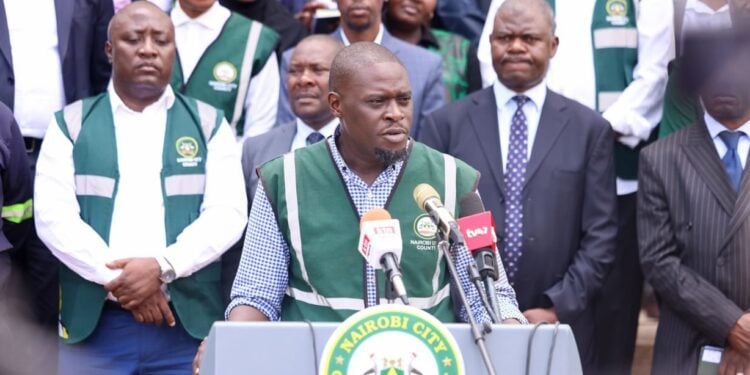
“Pursuant to the provisions of CAP 513 Section 27 (1) of the Weights and Measures Act (Revised Edition 2012) (1989), the Nairobi City County Government hereby notifies the business community and traders in Nairobi that the annual verification and certification of Weighing and Measuring Instruments will be undertaken,” the notice read.
This highlights the initiative, underscoring its role in protecting consumers from shortchanged goods in bustling markets.
Official Announcement Details
Acting County Secretary Patrick Analo Akivaga issued the public notice under the Weights and Measures Act (Cap 513), mandating businesses within 20km of stamping stations to submit scales, balances, and measures for verification and stamping.
Stations are set up across sub-counties like Kamukunji (Eastleigh North at City-County Office), Mathare, Makadara, and Embakasi areas, with inspections running specific dates from 9am to 4pm.
The exercise enforces fair trade by stamping accurate instruments, with non-compliant or fixed heavy equipment inspected on-site. Traders using unstamped or faulty gear risk fines, forfeiture, and prosecution.
“All types of weighing and measuring instruments within the County should be presented at the designated stamping stations for verification and issuance of a Verification Certificate upon passing the inspection and payment of the stipulated fees,” the notice noted.
Why Inspections Matter for Traders and Consumers
Faulty scales plague Kenya’s markets, with butcheries and grocers notorious for under-weighing meat, cereals, and produce often 50-100g short per kg to boost profits.
Cheap Chinese imports (Sh4,000 vs. Standard Sh40,000+) flood stalls, evading KEBS standards due to weak enforcement.
Consumers in Nairobi’s vibrant trading hubs like Gikomba and Toi lose billions annually to such scams, eroding trust and inflating living costs. Annual checks promote equity, aligning with Trade Descriptions Act (Cap 505).
“If an inspector is satisfied that a weight, measure, or instrument brought to them is accurate and otherwise in accordance with the Act, they shall stamp such weight, measure, or instrument,” the notice stated.
This alerts the traders to comply promptly amid rising complaints of hoodwinking in CBD and suburbs. Their reporting echoes past exposés on similar crackdowns in Kiambu, where governors like Kimani Wamatangi vowed arrests for tampered scales.
Social media buzz shows mixed trader sentiments some decry logistics costs, others welcome fairness. Residents praise the move, demanding nationwide rollout.
Kenya’s Weights and Measures Department combats exploitation nationwide, but understaffing hampers full coverage. Recent butchery raids highlight substandard gear’s prevalence, with calls for better port checks and prosecutions.
In Nairobi, home to 5 million-plus, fair measures support devolution goals under President Ruto’s administration, tying into Bottom-Up Economic Transformation Agenda for honest hustlers.
Past drives stamped thousands of instruments, reducing complaints by 30% in compliant areas.
Traders should clean and calibrate gear beforehand; repair inaccurate ones pre-use. Fixed scales (e.g., supermarket platforms) notify inspectors immediately.
Penalties include equipment seizure, fines up to Sh100,000, or jail under Cap 513.Consumers: Verify stamped seals (annual expiry) and report suspects to county hotlines. This initiative fosters a transparent economy, benefiting Nairobi’s SME backbone.