
Prophet Owuor Slams Viral ‘God WhatsApp’ Leak as Diabolical Forgery
A controversial screenshot purporting to show Prophet David Owuor in a WhatsApp chat with “God” has gone viral, prompting swift dismissal from the preacher’s camp as fake and malicious.
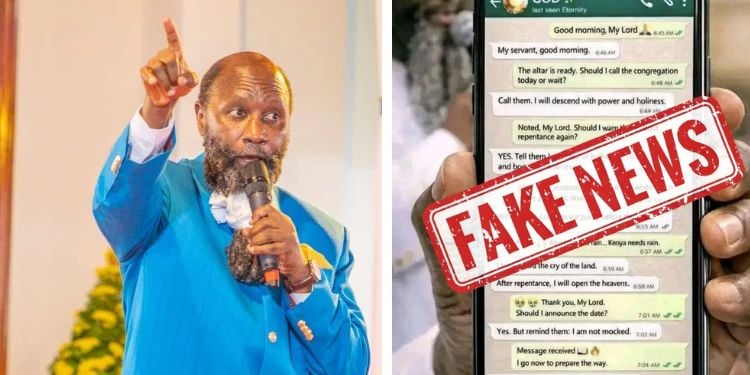
While not directly covered by this the uproar aligns with ongoing media scrutiny of Owuor’s Ministry of Repentance and Holiness, including TV47 investigations into his claims.
In a statement on February 10, 2026, the church noted that the claims are entirely false, baseless, and malicious.
“It has come to our attention that a fabricated image is circulating on social media, falsely alleging that Prophet Dr Owuor engages in WhatsApp communication with GOD. This claim is entirely false, baseless, and malicious,” the notice read.
The Viral Screenshot and Its Spread
The image depicts a WhatsApp conversation where Owuor allegedly exchanges messages with a contact labeled “God,” fueling online mockery and debates on social media platforms.
Shared widely since February 8, 2026, it surfaced amid a TV47 exposé titled “Divine or Deceptive?” questioning healing testimonies at Owuor’s mega-crusades. Reports Owuor addressing it directly, calling it a “diabolical scheme” by enemies to discredit his prophecies.
The timing coincides with his warnings of a “challenging 2027 election,” amplifying the controversy.
Owuor’s Response: Fake News, Seek God Not Apps
Through official channels, Owuor’s team denounced the screenshot, insisting he has never claimed divine communication via WhatsApp..“Don’t seek approval from WhatsApp; seek God’s consent,” echoed past sermons, reframing the narrative as spiritual warfare against true prophets.
“The circulating material is a deliberate fabrication intended to mislead the public, ridicule the Christian faith, and distract from the central message of repentance, holiness, and preparation for the coming of the MESSIAH,” the statement mentioned.
Supporters rally online, viewing it as persecution akin to biblical trials, while the ministry urges focus on repentance over digital distractions.
“Let us remain discerning, anchored in truth, and focused on the genuine call to repentance and holiness,” the notice stated.
Background on Prophet David Owuor
Self-proclaimed as God’s “Mightiest Prophet,” Owuor founded his Nairobi-based ministry in 2004, drawing massive crowds with end-times prophecies, alleged miracles, and dramatic weather signs like eclipses. Events feature healings from HIV to blindness, though fact-checks question verification.
However, Health Cabinet Secretary Aden Duale warned against narratives that undermine medicine and patient safety.
“Whether Christian, Muslim, Hindu or Jewish, we still take our medicine for different ailments,” Duale said as he spoke at Citizen TV on January 28.
His influence spans Africa, with international invites, but local skepticism grows over finances, politics, and unfulfilled doomsdays.
Media Scrutiny and TV47 Exposé
Journalist Samira Mohammed detailed a 10-hour probe into crusade testimonies, finding discrepancies in medical claims e.g., HIV “cures” lacking hospital proof. Owuor countered during the show, claiming heavenly keys and sun claps as validation, but the WhatsApp image stole headlines.
This fits a pattern: past rumors of overseas treatments debunked by his church.
Public Reactions: Laughter, Faith, and Fury
Social media erupts with memes (“God’s data bundle?”), defenders (“Persecution of Elijah!”), and critics (“Show receipts!”). Gen Z mocks the absurdity, while loyalists see it as end-times deception.
Broader discourse questions religious tech tropes, from AI prophets to app revelations, in Kenya’s vibrant faith scene.Implications for Faith Leaders in Digital AgeThe saga underscores social media’s double edge: amplifying reach but inviting deepfakes and trolls.
For Owuor, it tests follower loyalty amid 2026’s polarized climate under President Trump’s reelection ripple effects.Legal angles eemerg defamation suits? Meanwhile, it boosts his visibility, drawing crusade crowds.
Kenya hosts diverse prophets amid evangelical boom, from Size 8 to Ezekiel Odera. Scandals like fake miracles erode trust, yet mega-churches thrive on hope amid economic woes.Owuor’s case highlights calls for regulation: vetting healings, financial transparency.
Owuor eyes 2027 prophecies, the WhatsApp row fades but lingers as cautionary tale. Will it spur deeper probes or rally bases? Kenyans weigh: divine drama or digital deceit?