
Supreme Court Delivers Crushing Verdict in Gachagua Impeachment Saga
Kenya’s Supreme Court ruled against former Deputy President Rigathi Gachagua in a key application tied to his impeachment challenge on January 30, 2026, marking another setback for his legal fight.
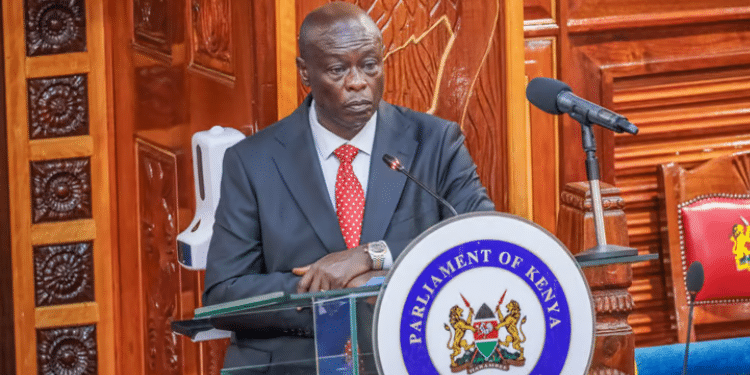
This decision dismissed motions from both Gachagua and the National Assembly, solidifying the legitimacy of prior proceedings.
The court ruled that the Supreme Court lacks jurisdiction to stay proceedings before the High Court, noting that it can only issue such orders in relation to matters before the Court of Appeal.
It further held that the National Assembly’s appeal was not suitable for summary dismissal and should instead be heard and determined on its merits.
“The court dismissed the first omnibus application filed by Hon. Gachagua. It held that the Supreme Court has jurisdiction to stay proceedings only before the Court of Appeal and not the High Court, as sought in the application. The court further found that the National Assembly’s appeal was not suitable for summary dismissal and should be determined on its merits. It also ruled that the documents sought to be expunged were central to the appeal and had been relied upon by both the High Court and the Court of Appeal in resolving the dispute,” read part of the Judgement.
Case Background
Rigathi Gachagua faced impeachment in late 2024 over allegations including gross misconduct and constitutional violations. The National Assembly approved the motion, sending it to the Senate for trial under Article 145 of the Constitution.
A High Court three-judge bench, empaneled by Deputy Chief Justice Philomena Mwilu, lifted conservatory orders, allowing the process to proceed despite Gachagua’s claims of an unconstitutional bench.
Gachagua argued the bench was illegally formed since only Chief Justice Martha Koome holds empaneling authority. The Court of Appeal later backed this view, escalating the matter to the Supreme Court for a final say on judicial hierarchy.
The Supreme Court Ruling
On January 30, 2026, the Supreme Court dismissed Gachagua’s application along with one from the National Assembly, refusing to upend the impeachment process’s foundation.
This procedural ruling signals the apex court’s reluctance to invalidate the bench that enabled his ouster, dealing a “blow”.
While not the full merits hearing, it dims hopes for Gachagua’s reinstatement by upholding the chain of decisions.
Gachagua’s removal shifted power dynamics in the Mt. Kenya region, boosting Kithure Kindiki’s influence as his replacement.The ruling reinforces parliamentary supremacy in impeachment under Kenya’s Constitution, limiting judicial interference unless clear illegality is proven.
Critics see it as protecting the political class, while supporters hail it for constitutional stability amid ongoing scandals. This decision clarifies roles: Chief Justice empanels benches, not the Deputy, potentially reshaping future High Court formations.
It echoes past rulings prioritizing impeachment timelines over premature petitions, as seen in October 2024 High Court orders. For Gachagua in “political exile,” vindication slips further, focusing future battles on merits hearings.