
Revolutionizing Kenya’s Workforce: Public Universities Leading the TVET Charge
Public universities in Kenya are transforming Technical and Vocational Education and Training (TVET) by offering practical diplomas that meet industry demands, as highlighted in recent Kenya Times coverage.
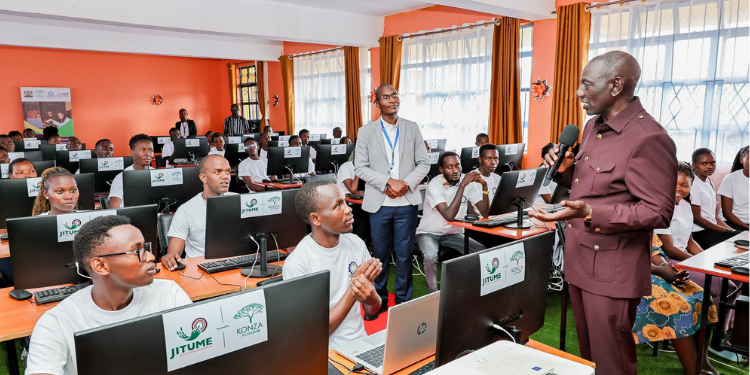
These programs, accredited by TVETA, provide accessible pathways for KCSE C- holders, blending hands-on skills with potential degree progression.
Understanding TVET in University Settings
TVET emphasizes vocational training in fields like engineering, business, and IT, differing from traditional degrees by prioritizing employability.
This notes that public universities elevate these offerings through KUCCPS placements, ensuring quality via KNQA standards.
This integration supports Vision 2030’s industrialization goals, with HELB funding making it affordable for thousands annually.
KUCCPS-Certified TVET Hubs in Kenyan Public Universities
The Kenya Universities and Colleges Central Placement Service (KUCCPS) manages placements for 35 public University TVET institutions, offering diplomas to KCSE C- holders as detailed in official listings.
Comprehensive KUCCPS TVET ListKUCCPS clusters these under the “University TVET” category, spanning all counties for nationwide access.
Alupe University TVET Institute in Busia County leads the list, followed by Chuka University TVET at Igembe Campus in Meru County, providing business and IT diplomas.
Garissa University TVET Institute serves Garissa County with vocational management courses, while Jomo Kenyatta University of Agriculture and Technology TVET Institute (JKUAT TI) in Kiambu focuses on engineering tech.
JOOUST Centre of TVET in Siaya County offers practical training, complemented by Kenyatta University sites: City Campus and Main Campus in Nairobi, Kitui, Mombasa, and Nakuru campuses delivering accountancy, HR, IT, and procurement.
Kibabii University Directorate of TVET College operates in Bungoma, Kisii University TVET Institute in Kisii, and Laikipia University TVET Institute in Laikipia, each with TVETA-approved programs.
Maasai Mara University TVET Institute covers Narok, Machakos University TVET Institute serves Machakos, and Mama Ngina University College provides options in its county.
Masinde Muliro University TVET Institute is based in Kakamega, Meru University of Science and Technology TVET Directorate in Meru, and Moi University TVET Institute in Uasin Gishu.
Multimedia University of Kenya TVET Centre and Murang’a University of Technology TVET Institute operate from Nairobi and Murang’a respectively.
Pwani University TVET College is in Kilifi, Rongo University Technical & Vocational Training Institute in Migori, and South Eastern Kenya University (SEKU) has multiple: Directorate of TVET, Wote Campus in Makueni, Migwani and Mtito Andei in Kitui.
Taita Taveta University Institute of TVET serves Taita Taveta, Technical University of Mombasa TVET Institute in Mombasa, Tharaka University TVET Institute in Tharaka Nithi, and Turkana University TVET Institute in Turkana.
The Co-operative University of Kenya adds The CUK Institute of TVET and Nairobi CBD Training Institute in Nairobi, University of Embu TVET Institute in Embu, and Technical University of Kenya (TUK) Directorate of TVET College rounds out the 35.
Placement and Eligibility DetailsKUCCPS handles 2026 placements for government-sponsored slots, with HELB loans available for these 35 institutions per recent announcements.
This highlights their role in skills development, urging KCSE leavers to prioritize TVET for employability. This official roster ensures quality, aligning with TVETA accreditation and KNQA standards for KNQF Levels 4-6 diplomas.
TVETA accredits these programs, with KNQA ensuring credibility, while HELB supports public university TVETs financially. KUCCPS places over 10,000 students yearly, with 2025 expansions.
New policies like the Kenya Credit Accumulation System enhance global recognition and credit transfers, as urged by TVET PS Dr. Esther Mworia.
University TVET reduces youth unemployment by providing job-ready skills, with graduates earning KSh 25,000-40,000 starting salaries in manufacturing and services.,
Modern labs and industry ties outperform some private options, per the insights. This shift matches CBC’s practical focus, boosting 100% primary-to-secondary transitions into skilled pathways.