
Gachagua’s Resilience Shines Through Media Silence in Northern Kenya
Northern Kenya media outlets boycotted a planned roundtable interview with former Deputy President Rigathi Gachagua, citing concerns over his divisive rhetoric, yet Gachagua quickly reframed the incident as proof of intimidation by local leaders.
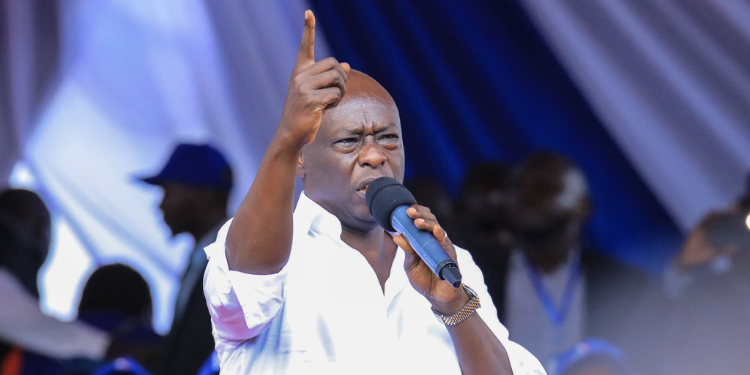
This development underscores Gachagua’s ongoing political maneuvers post-impeachment.
Boycott Background
Media practitioners from Northern Kenya, including radio stations and digital outlets, withdrew from the January 22, 2026, interview scheduled for 7pm to 9pm, arguing it risked amplifying ethnic divisions and unsubstantiated claims.
“It is with deep regret that we inform our esteemed audience of our collective decision to terminate the planned roundtable interview scheduled with Hon. Rigathi Gachagua,” read part of the statement.
The practitioners said they had closely monitored recent public statements attributed to Gachagua, which they described as increasingly divisive and centered on ethnic and regional differences at a time when the country requires unifying leadership.
The decision followed Gachagua’s early January remarks linking Eastleigh businesses predominantly Somali-owned to economic issues harming Kenyan farmers, though he clarified it targeted specific practices, not the community.
This is a collective stand for ethical journalism and national unity.
“As a media fraternity committed to ethical standards, informed debate and social cohesion, we cannot provide a platform that risks amplifying narratives that may undermine peace and unity,” the statement read.
Gachagua claimed journalists approached him first after his North Eastern development critiques, but leaders from Marsabit, Isiolo, Wajir, Mandera, and Garissa threatened them into backing out.
He cut short a Mombasa holiday for the event, blasting negligent leaders who live luxuriously in Nairobi while neglecting grassroots citizens. By conducting the interview online or through alternative means, Gachagua positioned himself as undeterred, targeting ordinary listeners without social media access.
“If journalists can be intimidated to deny their listeners an opportunity to face the truth about their lack of development and poverty, who will help the people of Northern Kenya?” he said.
Senior Counsel Ahmed Nasir Abdullahi called out journalists who boycotted Gachagua’s interview, saying the decision was ill-advised.
“The media cannot boycott him because they disagree with him. The media expresses an opinion only when rendering an editorial. This was a mere interview… a question-and-answer session. They should have interviewed him and asked him all the hard and difficult questions they had in mind. Boycotting Hon. Gachagua by NFD media is a stupid act of journalistic cowardice,” said Senior Counsel.
Since his impeachment and formation of the Democracy for the Citizens Party (DCP), Gachagua has won by-elections like three seats in November 2025, signaling sustained Mt. Kenya support.
His media tensions date back years, including attacks on Nation Media Group, but recent events highlight clashes with regional outlets. This boycott fits a pattern where Gachagua accuses media of bias amid his critiques of President Ruto’s administration.
Gachagua’s emergence stronger post-boycott boosts his narrative of fighting elite suppression, potentially rallying marginalized voters.
It raises questions on media freedom versus political pressure in Kenya’s polarized landscape. As he pushes “Leaving No One Behind,” such incidents could expand his base beyond Mt. Kenya.