
Devastation in South C: 16-Storey Building Crumbles, Sparking Fears of Hidden Casualties
A massive 16-storey building under construction collapsed in Nairobi’s South C estate early on January 2, 2026, triggering widespread panic and urgent rescue operations.
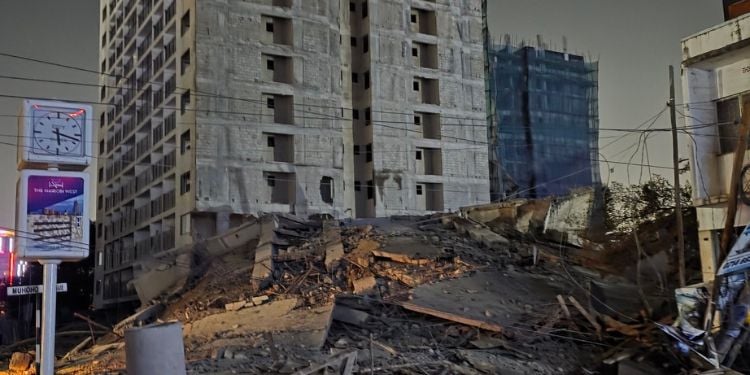
Several people may be trapped beneath the rubble, though official casualty numbers remain unknown amid ongoing multi-agency efforts.
This incident underscores the fragility of rapid urban development in Kenya’s capital.
“Early this morning, a building under construction collapsed in the Shopping Centre area of South C, Nairobi County. A multi-agency response team is on site managing the situation,” they said.
Incident Details
The collapse occurred in the Shopping Centre area of South C, a bustling residential suburb roughly 6 km from Nairobi’s Central Business District.
Kenya Red Cross confirmed the event in a statement, noting deployment of a multi-agency team to coordinate search, rescue, and support activities.
Videos circulating online depict chaotic scenes with responders amid debris, but police have yet to release confirmed casualty figures as assessments continue.
Emergency teams from Kenya Red Cross, police, and other agencies swiftly arrived to manage the site and secure the vicinity.
Rescue operations prioritize locating potential trapped workers, with neighboring structures evacuated as a precaution.
This highlighted that authorities are probing the cause while providing aid to affected individuals.
Broader Context in Nairobi
South C, home to key institutions like Kenya Red Cross headquarters and offices of the National Environmental Management Authority, has seen a surge in high-rise apartments due to urban demand.
Yet, Nairobi grapples with recurrent building failures; between 2009 and 2019, 86 structures collapsed, claiming around 200 lives.
Past incidents, such as the 2022 Kasarani seven-storey collapse that killed three due to substandard materials and ignored stop-work orders, mirror this pattern.
Root Causes of Collapse, poor workmanship tops the list at 35% of cases, followed by substandard materials (28%) and unethical contractor practices (34%), per National Construction Authority data.
Lax enforcement of building codes, corruption in approvals, and unqualified labor exacerbate risks in high-density areas like South C.
Recent government mandates for contractor accreditation and stricter audits aim to curb these issues, but incidents persist.
This tragedy amplifies calls for rigorous material testing under Section 34 of the Building Code and e-construction permits to enhance oversight.
Nairobi’s history of bribery-tainted inspections demands accountability, with developers facing potential murder charges as in prior cases. Strengthening the National Construction
Authority’s role could prevent future losses in Kenya’s booming construction sector. As investigations unfold, residents urge immediate action to safeguard urban growth.