
Game Changer for CBC Learners: Grade 9 KJSEA Results to Shape Senior School Pathways From Today.
The Ministry of Education is today releasing the first cohort of Grade 9 national examination results under the Competency-Based Curriculum, marking a major milestone for learners and parents across Kenya.
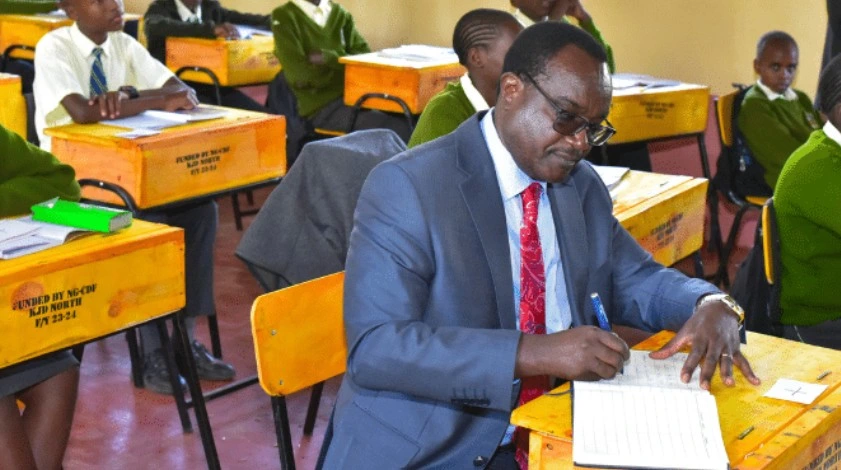
The Kenya National Examinations Council (KNEC) will use the results to guide placement into senior school pathways, making this a high stakes announcement for more than a million candidates.
What today’s release means for candidates
The Grade 9 examination, officially known as the Kenya Junior School Education Assessment (KJSEA), is a cumulative evaluation that contributes 60 percent of the learner’s final score, combined with earlier school-based assessments.
Instead of ranking and high-pressure cut off points associated with the old 8-4-4 system, the new model emphasizes competencies and places learners into pathways such as STEM, Humanities and Arts, and Sports and Creative Arts depending on their strengths.
KJSEA operates on a blended assessment model. Here’s how the final placement score breaks down:
60% from the KJSEA exam taken at the end of Grade 9
20% from the KPSEA exam completed at the end of primary school
20% from School-Based Assessments (SBAs) conducted during Grades 7 and 8
This means even if your child had an off day during the KJSEA exam, strong performance in earlier assessments can still secure a favorable placement. It’s a system that rewards consistency, not just one-time performance. For parents, this should be reassuring: your child’s learning journey matters more than a single test score.
Understanding the New Grading System
The CBC grading system uses eight achievement levels, ranging from minimal competence to exceptional mastery. Unlike the old A-E system, this structure is designed to recognize a broader spectrum of abilities.
The Eight Achievement Levels
EE1 (90–100%): Exceptional mastery ➡️ highest placement priority
EE2 (75–89%): Excellent achievement ➡️ strong placement prospects
ME1 (58–74%): Moderate achievement ➡️ good placement chances with strong SBA/KPSEA results
ME2 (41–57%): Developing competence ➡️ eligible for placement based on capacity
AE and BE: Lower levels indicating areas requiring additional support
Unlike previous national exams, Grade 9 candidates will not receive traditional certificates but competency reports and placement decisions that determine which senior school and pathway they join.
Education experts note that this shift is intended to reduce unhealthy competition and exam anxiety, while still preserving merit and transparency in progression.
Ministry and KNEC plan for releases and placements
The Ministry of Education had earlier indicated that KJSEA results would be released on 11 December, with senior school placements to follow about a week later.
This timeline allows KNEC and placement teams to match learner performance profiles with available slots in public and private senior schools across all counties.
Learners are expected to report to their placed schools in early January, keeping the academic calendar aligned after years of disruption.
Officials have also warned parents and candidates to be wary of fraudsters claiming they can alter exam results, stressing that all KNEC systems are secure and that any tampering claims are scams.
The council has encouraged families to rely only on official channels for checking results and placements, including the KNEC portal and approved SMS codes.
How parents and learners can check results
Parents and guardians can access KJSEA results through multiple channels designed to ease congestion and reach even remote areas.
These include: An official SMS short code (such as 22263 or other KNEC-designated numbers), where parents send the learner’s index number to receive a summary of results at a small fee per SMS.
The KNEC online portal, which allows schools and parents with internet access to log in and download detailed reports for each https://selection.education.go.ke/my-selections
School-based downloads, where head teachers access bulk results for all candidates and print them for distribution to learners and parents.
These emphasize accuracy when entering index numbers and patience due to possible system delays on release day.
In many communities, cybercafés and digital hubs have also prepared to support parents in checking results and later confirming senior school placements online.
Today’s Grade 9 release is widely seen as a practical test of the CBC promise: moving from exam-centred to competency-based progression.
Analysts point out that how smoothly placements are handled, and whether senior schools are adequately resourced for specialized pathways, will determine public confidence in the new system.
For learners, this moment signals the start of a more focused journey toward careers and talents, rather than a single exam defining their future.
For government and schools, it is a call to match this new assessment framework with real investments in laboratories, workshops, arts facilities, and trained teachers who can deliver on the promise of CBC.