
Singapore’s Rise vs Ruto’s Mirage: Why Kenya Can’t Replicate the Tiger’s Leap
President William Ruto’s Ksh.5 trillion plan aims to mirror Singapore’s transformation from a poor city-state to an economic powerhouse, but deep differences in governance, history, and scale make it unrealistic for Kenya
Singapore is often hailed as the ultimate economic success story an Asian Tiger that transformed from a struggling, resource poor city state into a global financial and trade powerhouse within a few decades.
Its remarkable rise is attributed to visionary leadership, strict governance, strategic economic planning, and social discipline.
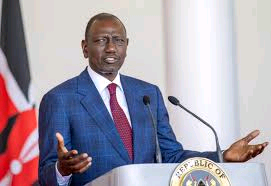
In Kenya, President William Ruto has set his sights on replicating this success through an ambitious Ksh.5 trillion plan aimed at turning the nation into a first world country modeled after Singapore.
However, despite the appeal of this vision, the reality on the ground reveals fundamental differences in history, governance, and socio economic conditions that make replicating Singapore’s path a challenging, if not impossible, dream for Kenya.
This blog explores why Singapore’s journey was unique and why Ruto’s Singapore dream faces significant hurdles in the Kenyan context.
President William Ruto envisions transforming Kenya into a first-world powerhouse like Singapore through a Ksh.5 trillion plan focused on education, economic shifts, energy, and infrastructure, but stark historical, structural, and governance differences render this ambition unrealistic.
The details on how Singapore evolved from a resource poor swamp in 1965 into a global hub via ruthless anti corruption drives, meritocracy, and strategic trade, contrasting sharply with Kenya’s entrenched graft and ethnic politics.
Ruto’s blueprint, unveiled in his November 2025 State of the Nation address, promises mega dams, road expansions, and energy surges to 10,000 MW, yet faces skepticism over funding amid revenue shortfalls and public debt.
Foundations of Singapore’s Miracle
Post-independence, Singapore under Lee Kuan Yew enforced zero tolerance for corruption, mandatory savings via the Central Provident Fund, and heavy investments in education and ports, turning a 716 sq km city state into a $56,000 GDP-per-capita economy by leveraging its strategic harbor and foreign talent.
British colonial legacies provided initial infrastructure and rule of law, while state capitalism prioritized exports in electronics and finance over democracy, achieving 8% annual growth for decades.
Public housing reached 85% ownership through forced relocations from slums, a model Ruto admires but which required unyielding discipline absent in Kenya’s fragmented politics.
Singapore started as a tiny island with no natural resources, but in just a few decades, it turned things around through smart, no nonsense choices that paid off big time.
Right from the start, the government cracked down hard on corruption, seeing it as a total roadblock to their big picture goals they built a rock solid rule of law and a super efficient civil service that people could actually trust, which drew in investors from everywhere.
Under trailblazers like Lee Kuan Yew, leaders ditched short term politics for data backed, long haul strategies, making tough calls to keep the country on track while ignoring the ethnic divides the British had exploited.
They pivoted fast from relying on imports to powering an export boom, ramped up industrialization, rolled out the red carpet for multinational giants with sweet incentives, and poured money into top tier infrastructure like a gleaming new port and airport.
Singapore knew its real goldmine was its people, so they bet big on human capital creating a world class education system that churned out skilled workers perfectly matched to growing industries, all while embedding meritocracy deep into business, jobs, and everyday life.
With a diverse mix of ethnic groups, leaders prioritized unity and calm, weaving social harmony into the fabric of society to keep things stable and investors happy for the long game.
Ruto’s Ambitious Blueprint
Ruto’s four pillars target human capital via a doubled education budget to Ksh.700 billion, economic pivot from imports (saving Ksh.500 billion yearly on food), energy from 2,300 MW to 10,000 MW, and logistics via 2,500 km of dualled highways, SGR extensions, and port upgrades.
Funding hinges on a National Infrastructure Fund blending budgets, privatisations, and PPPs with a Sovereign Wealth Fund from resource royalties, echoing Singapore but burdened by Kenya’s 4.9% growth projections and fiscal deficits.
The plan nods to past leaders like Raila Odinga and Uhuru Kenyatta for buy in, yet critics highlight ignored basics like rain fed agriculture limits and corruption scandals.
Why the Dream Falters for Kenya
Kenya, measuring 580,367 square kilometres, is about 807 times bigger than Singapore in size. To contextualize this, the city state of Singapore, at 719 square kilometres, is roughly the same size as the City of Nairobi, which is 709.3 square kilometres has a population, in 2025, of around 5.8 million people.
The population of Singapore is around 5.9 million people, while Kenya’s population is around 54 million people. If a comparison were apt, then it would probably be between the City of Singapore and the City of Nairobi.
Then, like in the vintage novel by Charles Dickens, it would be called “A Tale of Two Cities.” But it is not; it is a comparison between Kenya and Singapore. Is there anything to compare? Or is it that there are only a thing or two to contrast?
Singapore’s success stemmed from a tiny, homogeneous population of 2 million, US aid buffers, and authoritarian efficiency, unlike Kenya’s 56 million people grappling with tribal divisions, impunity, and cheap import reliance that undercut local industries.
Ruto’s housing push, borrowing Singapore’s slum clearances, sparked backlash over forced moves without community consensus, mirroring failed Vision 2030 goals amid persistent poverty.
While Ruto cites shared 1960s starting points, Kenya lacks Singapore’s merit based civil service and global investor trust, with analysts warning mega spends risk deeper debt without governance overhauls.
True transformation demands tackling elite capture first, not just infrastructure fantasies.
While President Ruto’s vision to transform Kenya into a Singapore like economic powerhouse inspires hope for progress, it neglects the stark realities that differentiate the two nations.
Singapore’s success was no accident it was built on strong institutions, disciplined governance, strategic investments, and social cohesion that Kenya has yet to fully achieve.
Kenya’s challenges, including political fragmentation, corruption, and infrastructure deficits, cannot be simply overcome by grand spending plans.
For Ruto’s dream to move beyond fantasy, Kenya must first focus on addressing these foundational issues, fostering transparent governance, inclusive development, and sustainable economic policies that reflect its unique context.
Only then can the country aspire to an enduring transformation that echoes, rather than copies, Singapore’s remarkable journey.