Weekend meal prep works best when it removes a few difficult decisions from the week ahead. You do not need a refrigerator full of identical meals or an afternoon spent following five recipes. Start with the evenings when cooking will be hardest, then prepare a small set of ingredients you can combine in different ways.
A useful session has a clear finish: some food ready for the next couple of days, later portions safely frozen, and a simple note showing what to eat first. The amount you prepare should fit your appetite, storage space and actual schedule.
Choose the Meals That Need Help
Look at the coming week before choosing recipes. Count the meals you expect to eat at home, the lunches you need to carry and any evenings when you will arrive late. Leave room for changed plans.
For a first attempt, support two busy dinners and one lunch rather than planning every bite. Someone living alone might need only a few portions. A household sharing dinner may need more food but fewer different recipes.
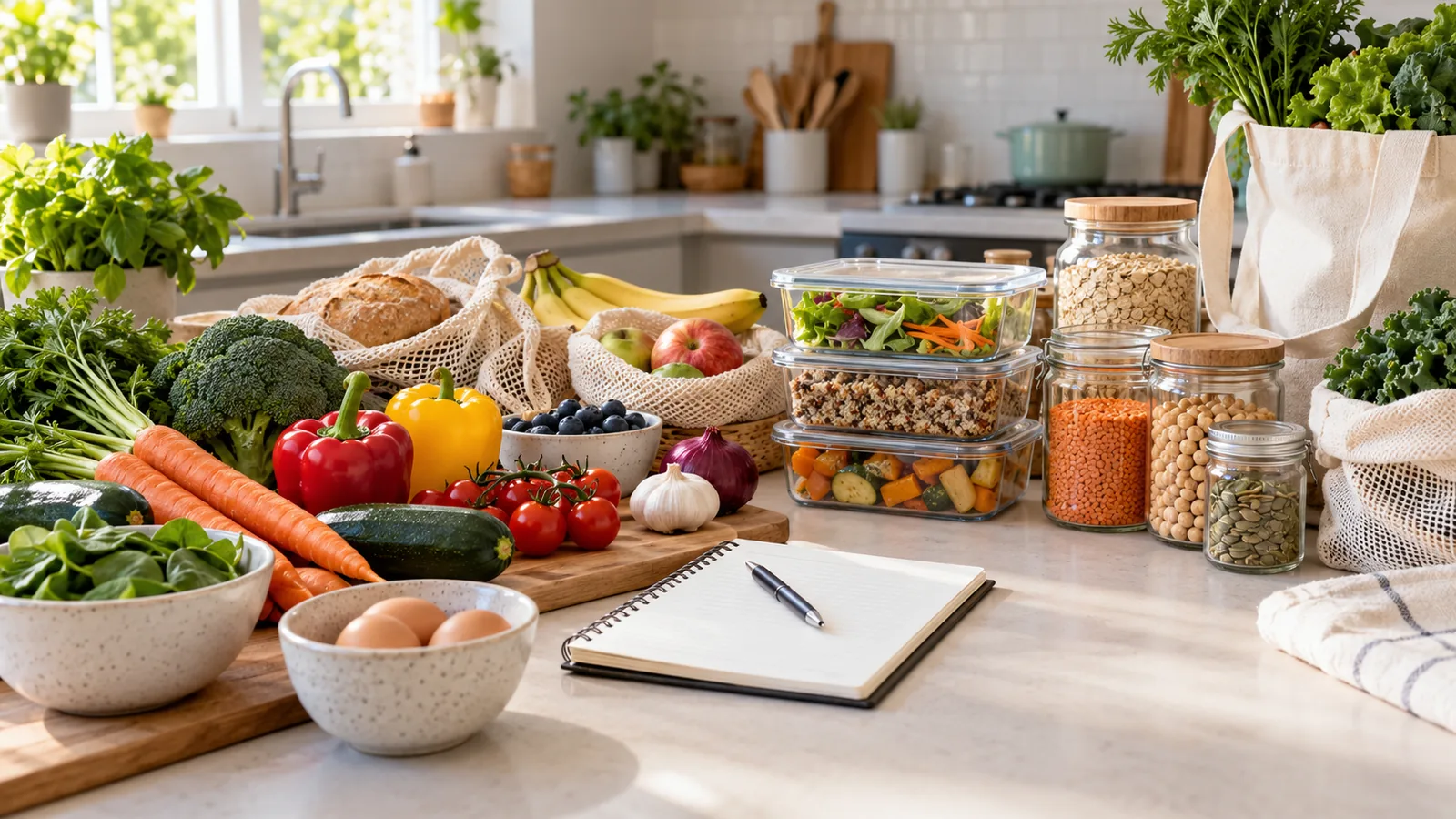
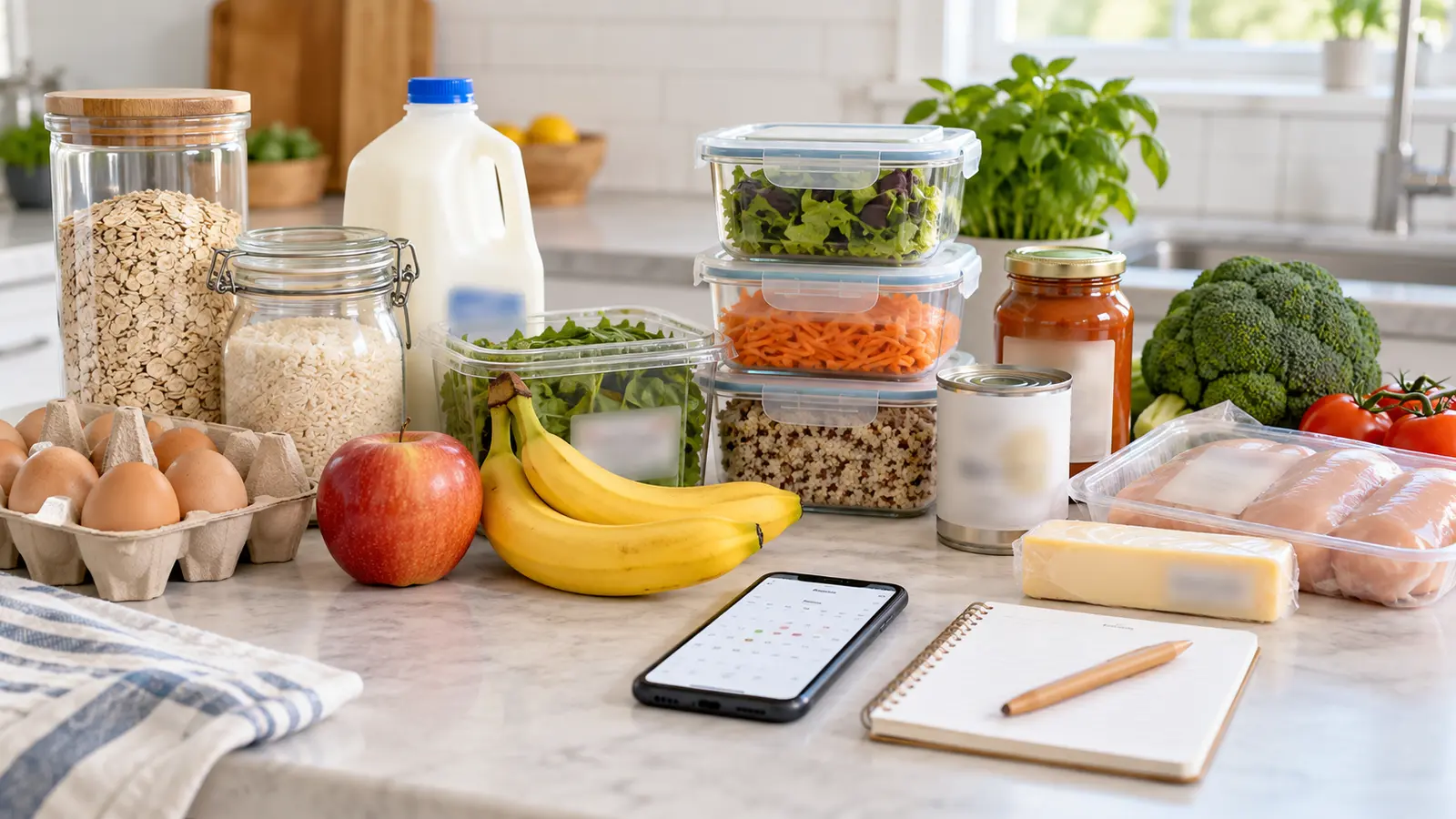
Check what is already in the kitchen, including the freezer. A half-used cabbage, an unopened tin of beans and a packet of noodles can shape the plan. Move ingredients approaching their use-by date into an early meal if they are still safe to use. Buying more ingredients before checking supplies makes the session harder to manage.
Write a short grocery list after making these decisions. Include quantities, especially for fresh ingredients that will be difficult to use elsewhere.
Prepare Components With More Than One Destination
Choose ingredients that can become different meals without requiring a second long cooking session. A practical starting set is one protein, one cooked vegetable mixture, one convenient staple and one sauce or dressing.
Chickpeas might fill a wrap, join roasted vegetables in a bowl or go into a quick tomato sauce. Other options include lentils, tofu, beans or appropriately cooked meat, depending on preferences, allergies and what is available locally. Ready-to-use ingredients are useful when their price and storage requirements suit you.
Choose staples around your routine. Bread or flatbread may need little preparation. Pasta, potatoes or grains need cooking and a storage plan. There is no requirement to cook rice on Sunday simply because it appears in meal-prep photographs.
Keep strong sauces separate when practical. Lemon and herbs can finish one meal; a different seasoning can change the next. Follow the storage instructions for the ingredients in a homemade sauce. Fresh dairy or cut herbs do not acquire a longer shelf life because they have been mixed together.
For meal balance, include vegetables, a suitable protein and a staple, then adapt the combination to your needs. Our guide to a balanced plate offers a broader starting point without requiring calorie counting.
Run a Small Prep Session in a Useful Order
Pick a time limit that leaves room for cooling, packing and washing up. An hour can be a trial budget, not a promise that every menu will fit. Dried beans, for example, may need soaking and much longer cooking than canned beans.
- Clear the work area and check storage space. Find clean containers before starting. Confirm that the fridge and freezer have room for the portions you intend to keep.
- Begin the longest cooking task. Put the chosen vegetables in the oven or start a pot that needs attention later. Follow recipe and appliance instructions, and stay available to supervise cooking.
- Prepare the simple components. Drain canned pulses, mix a small dressing or portion a staple while the main task cooks. Wash produce as appropriate and keep ready-to-eat foods away from raw meat and its utensils.
- Set aside early meals and freezer portions. Decide their destinations now rather than waiting until the end of the week to discover excess food.
- Cool, pack and label promptly. Use smaller, shallow portions to help food cool. Record what is inside and when it was cooked or frozen.
- Finish with the kitchen reset. Wash equipment, wipe surfaces and put a short meal note where you will see it. An unfinished sink is part of the work you are leaving for later.
If the session overruns, remove a task from next weekend’s plan. Buying frozen vegetables or preparing one fewer component may help more than trying to chop faster.
Turn the Same Ingredients Into Different Meals
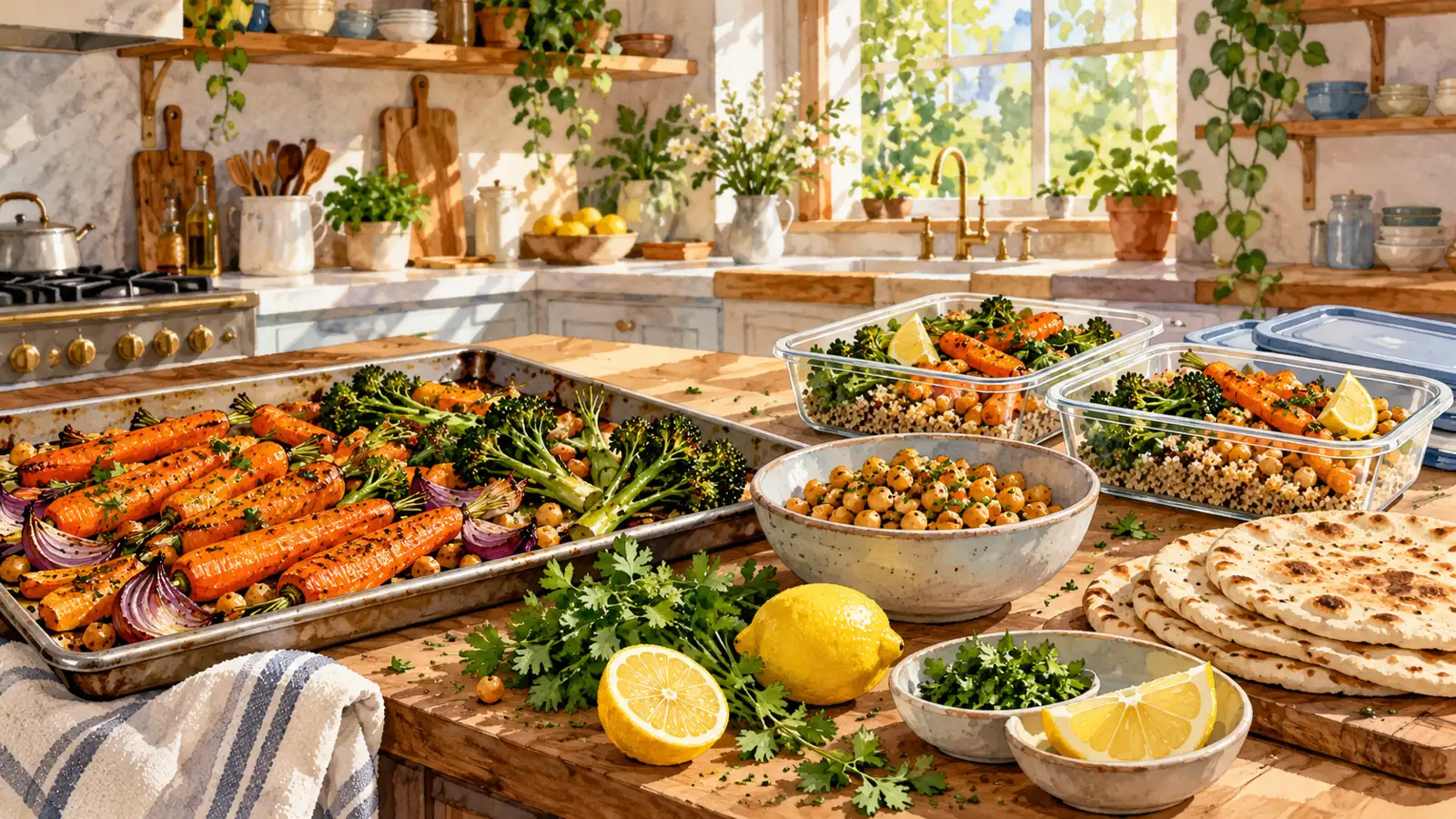
Consider a small batch of chickpeas, roasted carrots and peppers, flatbreads and a lemon dressing. These are examples of combinations, not a prescribed diet or a fixed shopping quantity.
For the first dinner, serve chickpeas and vegetables in a warm flatbread, adding dressing at the table. For the next lunch, pack a portion as a bowl with a suitable staple. Keep the dressing separate if that gives you a better texture.
Freeze the portions intended for later in the week promptly after safe cooling. They can join a freshly cooked tomato sauce or accompany a quick staple when needed. Defrost in the fridge before use where required, following package instructions; do not leave a container on the counter all day.
The variety comes from assembly, temperature and seasoning. It does not require a different recipe for every container. If you dislike repeated ingredients, prepare a smaller batch and keep one meal based on cupboard or frozen supplies.
Make Storage Part of the Plan
A Sunday cooking session does not make every portion suitable for the refrigerator until Friday. Storage guidance depends on the food and your local food-safety authority. Follow package instructions and any shorter food-specific limits.
As a cautious planning example, UK food-safety guidance advises putting cooled leftovers into the fridge within one to two hours and eating them within 48 hours or freezing them. Divide larger amounts into smaller portions to cool more quickly. In hot conditions, follow any stricter local cooling advice.
Rice needs particular attention. Food Standards Scotland advises cooling it quickly, ideally within one hour, refrigerating it and eating it within 24 hours. It also advises reheating rice only once and ensuring it is steaming hot throughout. Cooking rice fresh or promptly freezing safely cooled portions may fit your plan better than keeping a week’s batch chilled.
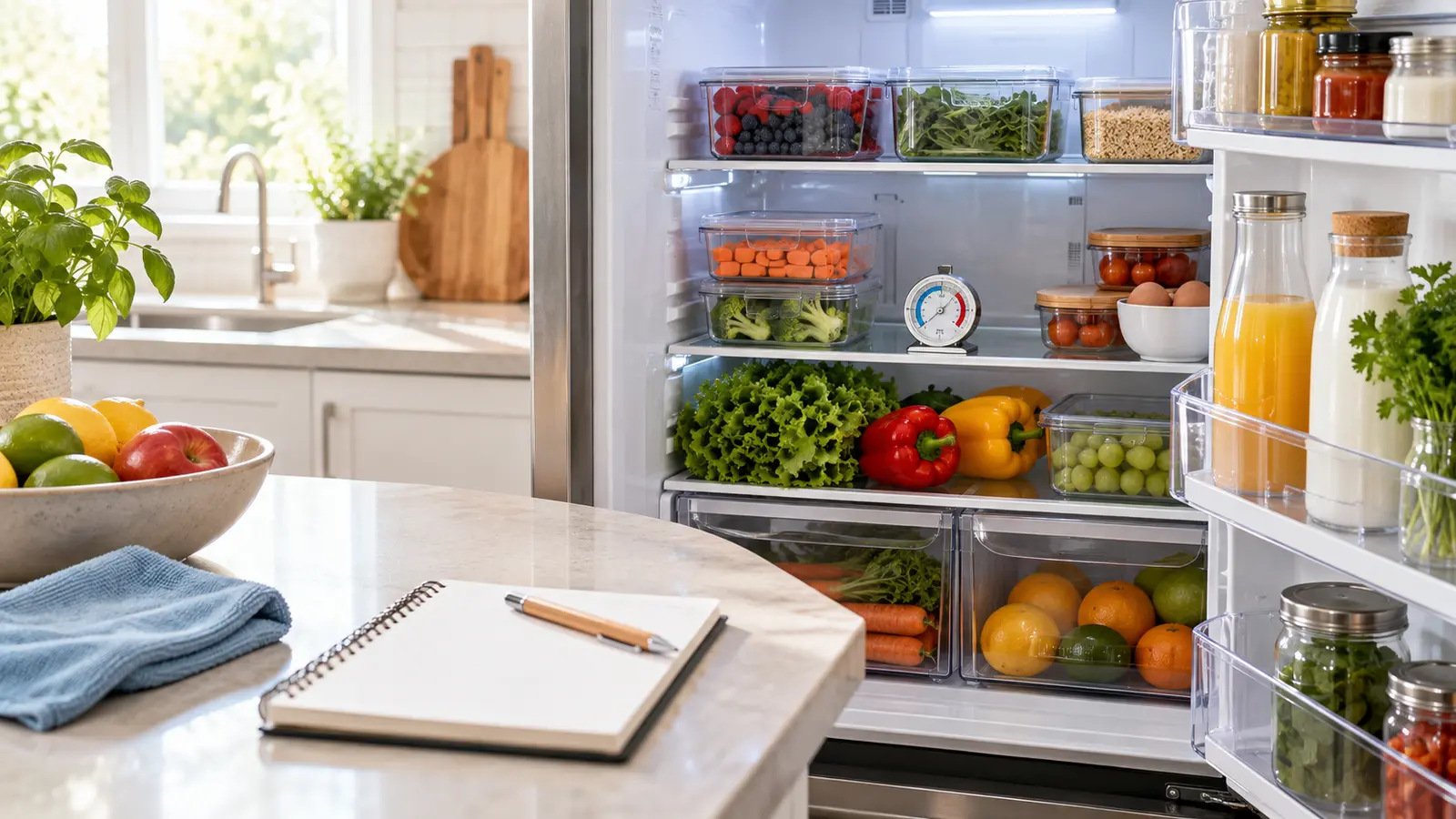
Check fridge temperature with a thermometer and follow local guidance; UK guidance recommends 0–5°C. When reheating leftovers, heat them thoroughly throughout and follow food-specific instructions. Reheating cannot reliably rescue food that was stored unsafely. For more handling detail, see our guide to storing leftovers safely.
Adjust the Next Session From What You Actually Ate
At the end of the week, note which prepared ingredient helped, which was untouched and which task took too long. Change one part of the next plan: reduce a quantity, swap a vegetable or prepare fewer lunches.
If you have little freezer space, plan a shorter horizon. If you share a kitchen, agree on shelf space and labels. If several people eat differently, store compatible components separately and avoid cross-contact with allergens.
Start next weekend with one useful cooked component and one easy meal combination. Add more only when the first version fits your week, including the cleaning and storage. A small plan you can repeat is enough.