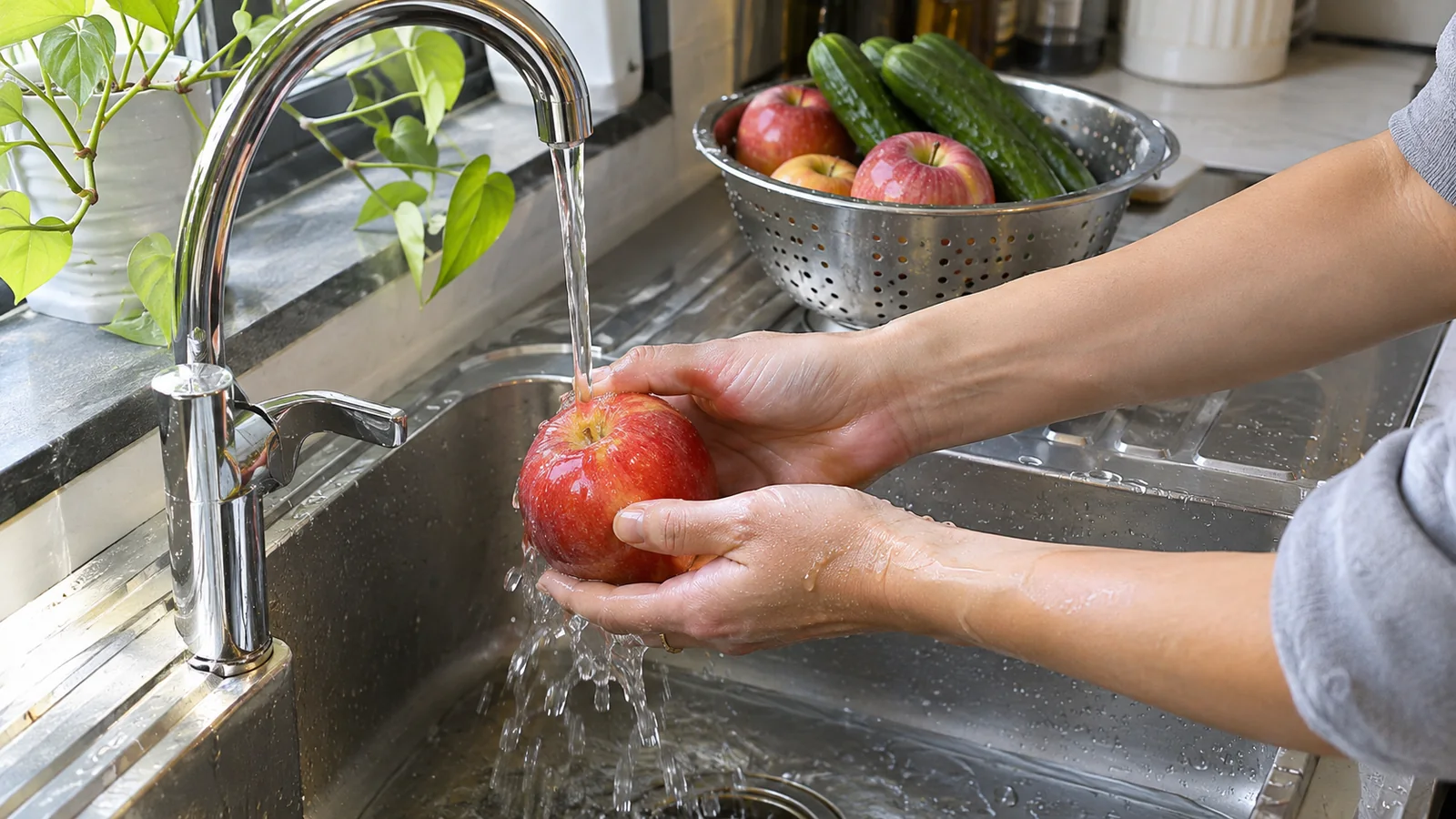
To wash fruit and vegetables, rinse them under clean running water before eating, cutting or peeling. Gently rub the surface, use a clean produce brush for firm items, and dry with a clean towel. Soap and washing-up liquid belong on hands and equipment, rather than on food.
Good handling matters alongside the rinse. A clean apple can pick up contamination from a dirty board, and washing cannot turn recalled or rotten produce into something safe to eat. Make washing one part of preparing food, with a clear route from the shopping bag to the plate.
Set Up Before Turning On the Tap
Choose the portion you need and read any package instructions first. Put a clean plate or bowl within reach for the finished food, along with a clean colander if it will help you handle smaller items. Keep the knife and board ready for the next stage, rather than searching for them with wet hands.
Wash your hands with soap and water for at least 20 seconds. Clean utensils, boards and work surfaces, especially after handling raw meat, poultry or seafood. Keep those foods and their juices away from fruit or vegetables you will eat raw. A separate board for produce makes that separation easier to maintain.
Think about where each item will go. For example, an apple for a packed lunch can move straight from rinsing and drying to a clean lunch container. Tomatoes for dinner can go onto a clean plate before cutting. Avoid returning either to the unclean surface where you first unpacked the shopping.
Follow a Simple Washing Sequence
Use water that is safe for food preparation. If your local water supply is under a safety advisory, follow the local authority’s instructions before preparing raw food; an ordinary rinse does not resolve unsafe water.
- Inspect the produce. Remove damaged or bruised areas as appropriate, and discard rotten items. Washing is not a way to rescue spoiled food.
- Rinse before peeling or cutting. Clean the outside even when you will discard the skin, so the knife does not carry surface dirt into the flesh.
- Rub gently under running water. Turn the item to reach different surfaces. Match your handling to its firmness rather than squeezing delicate fruit.
- Brush firm produce when needed. Use a clean produce brush for items such as cucumbers or melons. Reserve the brush for food preparation and keep it clean.
- Dry and move to clean equipment. Use a clean cloth or paper towel, then prepare or serve the food without putting it back onto a dirty surface.
You do not need a complicated washing station. The useful distinction is between the area holding unprepared food and the clean plate, board or container receiving it. In a small kitchen, clearing one section of counter can make that sequence easier to follow.
Adjust Your Handling to the Produce
Firm Fruit and Vegetables
An apple is easy to turn in your hands while gently rubbing its surface. A melon takes more space and benefits from a clean brush on the rind before cutting. The fact that you will leave the rind on the plate does not remove the need to clean it first.
Keep the clean knife separate from packaging and unwashed items. If you pause to handle another ingredient, return with clean hands and equipment. For a mixed fruit plate, finish washing before beginning the cutting stage so the tasks do not become tangled together.
Leafy Vegetables and Delicate Fruit
Remove the outermost leaves of a head of lettuce or cabbage. Handle the remaining leaves carefully while rinsing, using clean equipment to support them. Be gentle with berries and other soft fruit; a stiff brush suitable for a melon is unsuitable for these.
Wash produce when you are ready to use it rather than automatically washing an entire purchase before storage. Washing ahead can reduce the quality of many fruits and vegetables. If you are preparing portions for upcoming meals, our vegetable-preparation guide explains how to keep that separate task manageable.
Packaged, Prewashed Produce
Produce labelled prewashed or ready-to-eat generally does not need washing again. Read the actual label rather than assuming every bag of leaves has received the same treatment. Keep ready-to-eat food away from dirty utensils during serving, and follow refrigeration and use-by instructions.
Opening a package does not create a new storage period. If you use only part of it, follow its after-opening directions rather than judging by how tidy the remaining leaves look.
Keep Cleaning Products Off the Food
Plain running water is the standard household approach. Do not use soap, detergent or household disinfectant on fruit and vegetables. The FDA also advises against commercial produce washes. More products and a longer ritual do not establish that food is safe.
Organic produce still needs appropriate washing and handling. Where you bought or grew an item does not replace the preparation steps. Focus on the food in front of you, its instructions and its condition rather than treating a label or a familiar seller as a safety guarantee.
Know When Washing Is Not Enough
Washing can reduce bacteria on produce, but cannot eliminate them all. If a food is recalled, follow the recall instructions and do not try to make it safe by rinsing. Check the product and batch details when an official alert applies to something you have bought.
Cold storage also remains necessary. Keep perishable and cut produce refrigerated at 4°C/40°F or below and put prepared portions away promptly. If the food is going into a lunch bag, our packed-salad guide addresses keeping it cold away from home. Cooked food needs its own leftover-storage routine.
For your next meal, set out a clean receiving plate before you start. That small preparation makes it easier to rinse, dry and cut without undoing the care you have just taken.