Walking in warm weather is easier to manage when the plan changes with the conditions. Choose a cooler time, favour shade, carry water and give yourself permission to shorten the route. If a heat alert advises limiting outdoor activity, move the walk indoors or postpone it.
A familiar distance is not a requirement you must complete in every season. The useful goal is a walk you can finish comfortably, with somewhere cool to go if you begin feeling unwell.
Check the conditions before choosing the route
Look at the local forecast and official heat advice shortly before leaving. Check the conditions expected during the walk and the journey home, rather than relying on the temperature you saw the previous evening. Air-quality advice also matters, particularly if you have a breathing condition.
There is no single temperature that makes every walk safe for everyone. Your health, the effort involved, access to cooling and local conditions all matter. Treat an alert as a reason to change the plan, even if you have walked the route many times.
Write the decision in practical terms: where will you walk, when will you return, and where can you cool down? For example, replace an exposed out-and-back route with a short circuit near home. Check that any building you are relying on for a cooling break is actually open.
Older adults, young children and people with some health conditions or medications may be more vulnerable to heat. If you have a medical condition, a fluid restriction or questions about your medicines, ask your clinician or pharmacist how to adapt your activity. Do not stop prescribed medication yourself.
Pick a cooler time and an easier exit
Early morning or evening may offer cooler conditions, but check the forecast instead of assuming a particular clock time is always suitable. In a heatwave, an evening can remain hot. Follow local advice about avoiding the hottest part of the day.
Choose shade that will be there when you arrive. A street shaded on your morning commute may be exposed later. Short loops are useful because you can finish after one circuit without facing a long return journey.
Before setting off:
- Choose a cooler window that fits the current forecast and local guidance.
- Identify shaded sections and a nearby cool place where you can stop.
- Reduce the planned distance or effort compared with your usual walk.
- Decide on an indoor alternative if the conditions are unsuitable.
Keep the route simple enough to change. A walk that depends on reaching a distant landmark can make turning back feel like failure. A loop near home gives you an earlier decision point. If you are building the habit, our guide to starting a walking routine offers ways to keep the commitment manageable.
Make clothing and water part of the plan
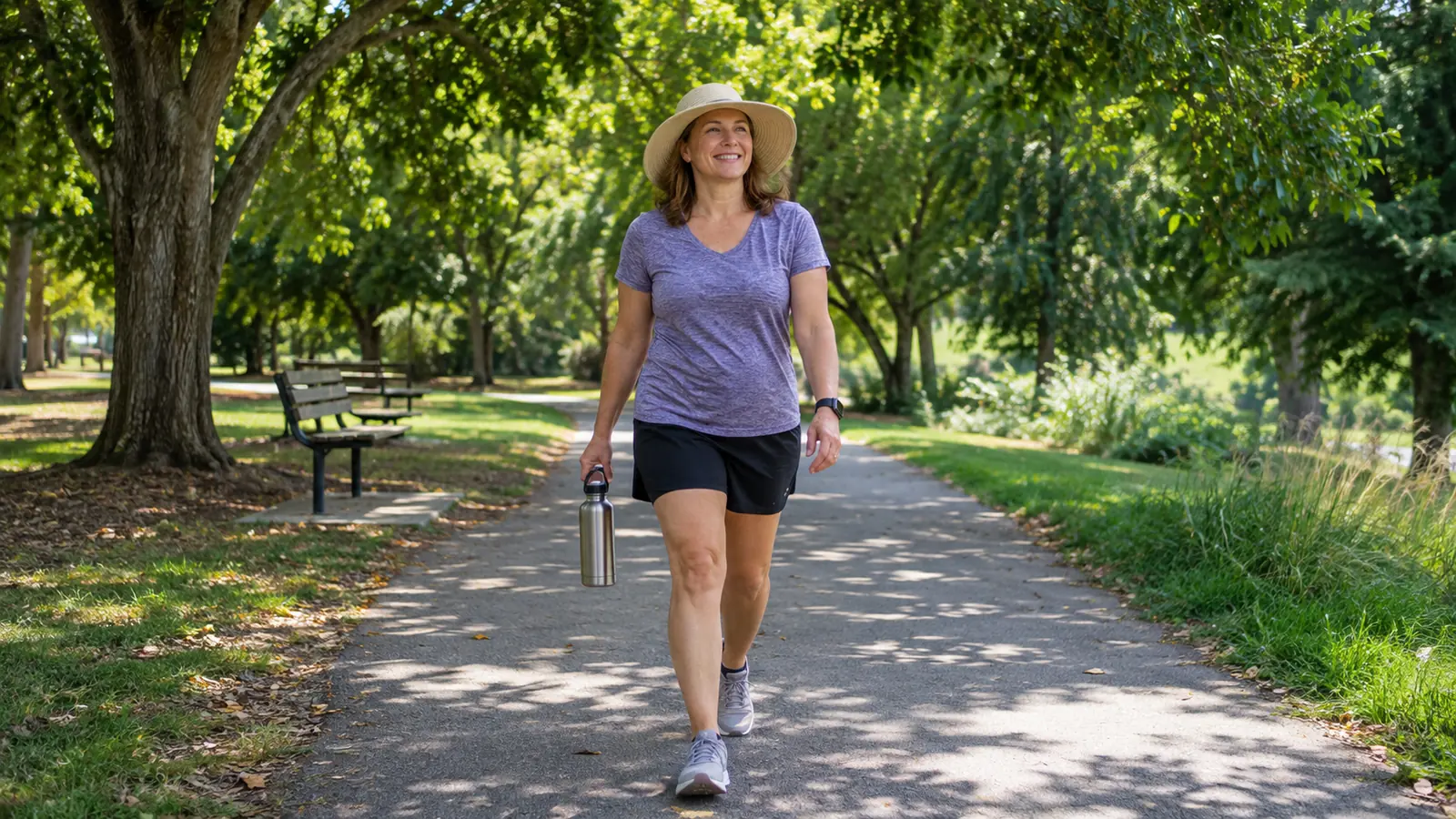
Wear loose, lightweight clothing and comfortable footwear you already know. A sun hat, sunglasses and sunscreen used according to its label help with sun protection. Shade and protective clothing still matter; sunscreen does not make a hot route safe.
Bring a filled water bottle and keep it accessible. An empty bottle is only useful if a reliable refill is available, so check that detail before choosing a longer route. Drink regularly rather than leaving all your drinking until the end.
Avoid copying a fixed litres-per-hour target from another person’s routine. Requirements vary, and people with prescribed fluid limits need individual advice. Ask your clinician what to do in hot weather if you have been told to restrict fluids. Carrying more water also does not justify continuing when you feel unwell.
Prepare the essentials by the door: hat, water, phone and whatever you normally need to get home. For a short local walk, the point is easy access, not packing for an expedition. If you are taking a bus to the start, include the waiting and return journey in the plan.
Start gently and reassess while you walk
Begin more slowly than usual. CDC guidance recommends pacing activity in hot conditions, and feeling faint or weak is a reason to stop and get somewhere cool. Do not use your normal step target or walking speed as a test you must pass.
Build a decision point into the route. At the first shaded junction, ask whether the conditions still suit you. You can choose the shorter loop before there is a problem. A break is also a chance to reconsider the return journey rather than automatically continuing farther from home.
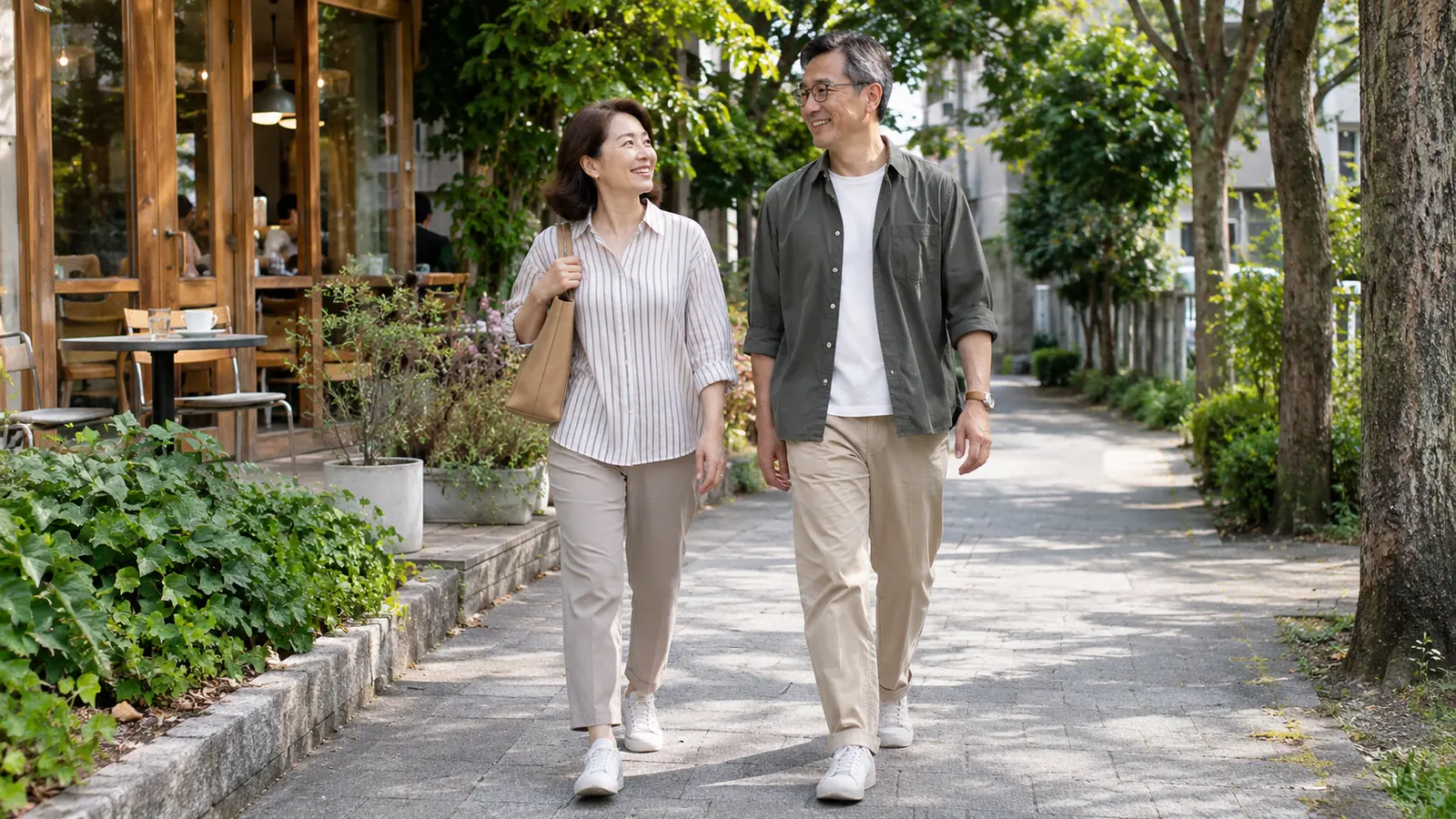
If you walk with someone else, agree beforehand that either person can end the walk. Check how each other feels. The person who prefers a faster pace should not determine everyone else’s effort in the heat.
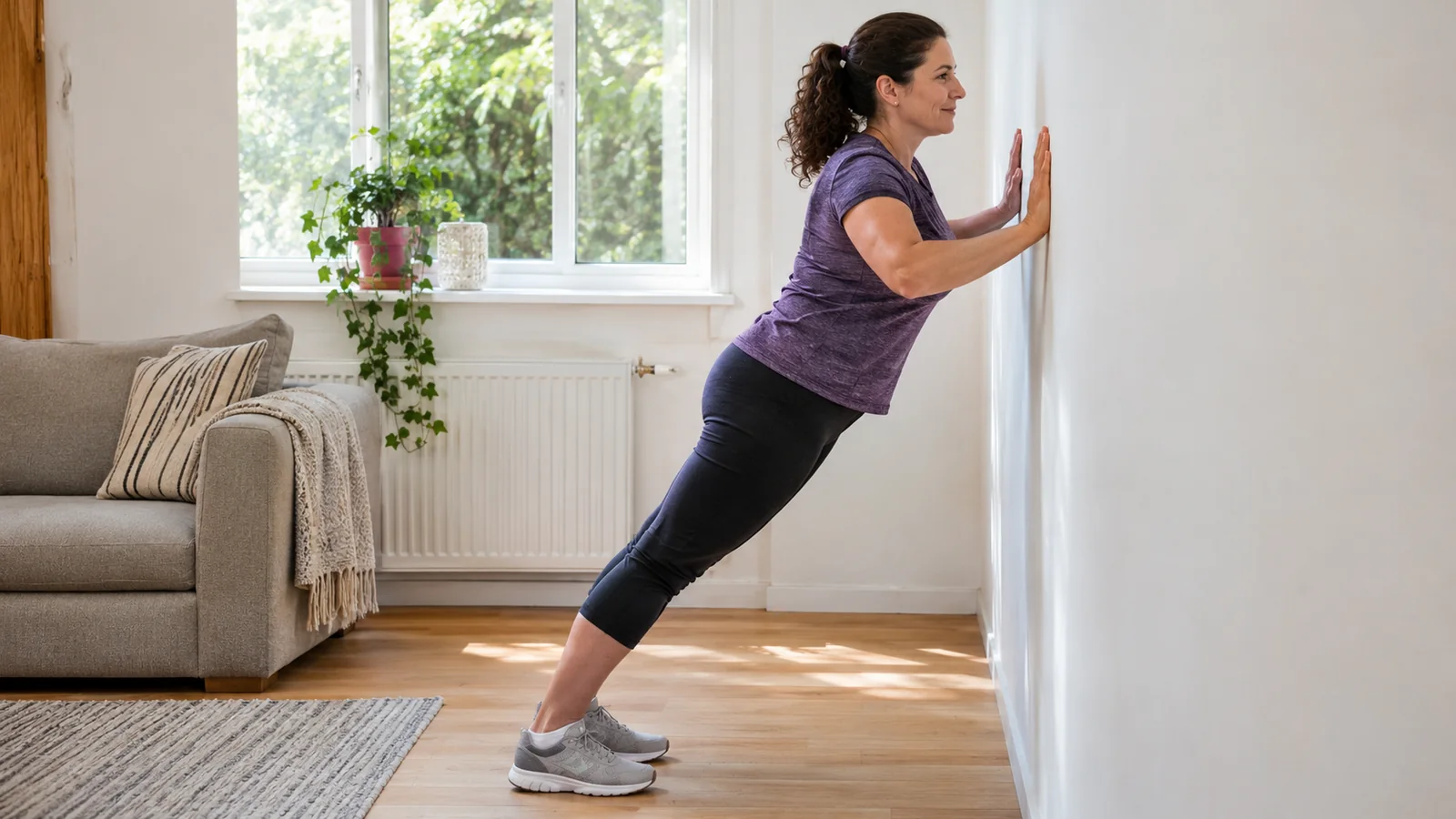
An indoor option is useful when the outdoor plan no longer fits. Choose somewhere genuinely cooler; a stuffy room is not automatically a better alternative. Our indoor movement guide can help you plan a small amount of activity at home when the environment is comfortable.
Know when to stop and get help
Heat illness is more than ordinary discomfort. Warning signs can include headache, dizziness, nausea, unusual weakness, cramps and heavy sweating. Stop activity, move somewhere cool and start cooling your skin. If you are fully alert and able to swallow, drink cool water. Get medical advice promptly if symptoms are concerning or worsening.
Confusion, loss of coordination, a seizure, collapse or loss of consciousness during heat exposure require immediate emergency help. Call your local emergency number and cool the person while help is coming. Move them into shade or air conditioning if possible, wet their skin and fan them. Stay with them and follow the emergency operator’s instructions.
Do not wait for sweating to stop before taking the situation seriously: heatstroke can occur with damp skin. Do not give drinks to someone who is unconscious or cannot swallow safely. NHS guidance also treats someone still unwell after 30 minutes of cooling and drinking as an emergency; do not wait that long when severe symptoms appear.
A warm-weather walk can be shorter, slower or postponed. Check the conditions, make the exit easy and act early if you feel unwell. The route should serve your wellbeing, and it can change whenever the weather or your body asks for a different plan.