Many home cooks learn to judge food by color, smell, firmness, or the time printed in a recipe. Those clues can help with quality, but they are not a reliable safety check. Chicken can look done before the coldest part is hot enough. A burger can turn brown before it reaches a safe temperature. A thick casserole can bubble at the edges while the center still needs more heat.
A food thermometer solves that quiet uncertainty. It does not make cooking complicated; it gives you one clear number at the moment when guessing is easiest.
The goal is not to turn dinner into a laboratory. It is to know when food has reached a safe internal temperature, avoid overcooking from fear, and build a small habit that works for weeknight meals, grilling, holiday cooking, packed lunches, and reheated dishes.
Quick Answer
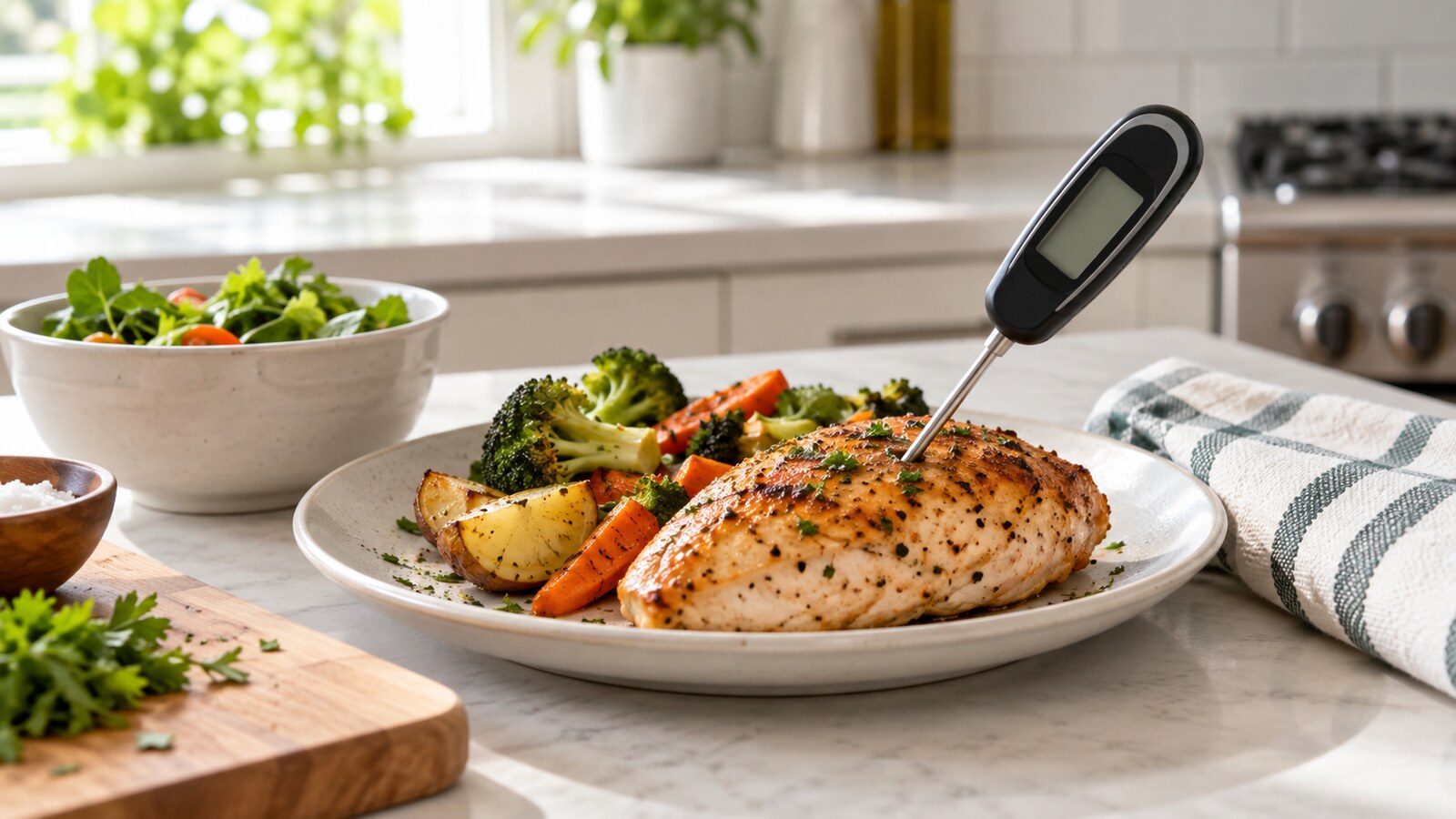
Use a food thermometer by inserting the probe into the thickest part of the food, away from bone, fat, gristle, pan edges, and stuffing pockets unless you are checking the stuffing itself. Wait until the reading stabilizes, then compare it with a reliable safe-temperature chart. As a simple household guide, cook whole cuts of beef, pork, veal, lamb, and fish to 145 degrees Fahrenheit or 63 degrees Celsius, ground meats to 160 degrees Fahrenheit or 71 degrees Celsius, and poultry, casseroles, leftovers, and stuffing to 165 degrees Fahrenheit or 74 degrees Celsius.
Why Color Is Not Enough
Color is tempting because it feels immediate. Clear juices, a browned surface, grill marks, or a firm texture can make food seem ready. The problem is that color changes do not always track safety.
Meat can brown before enough heat reaches the center. Poultry can still have a pale or slightly pink area even when the right internal temperature has been reached, depending on the cut, cooking method, age of the bird, and other factors. Ground meat is especially unreliable because bacteria that may have been on the surface can be mixed throughout during grinding.
Time is also imperfect. A recipe may say to bake for 25 minutes, but oven temperature, food thickness, starting temperature, pan material, altitude, crowding, and whether the food was partly frozen all change the result.
A thermometer answers the question that matters most: what temperature did the center actually reach?
Choose the Right Kind of Thermometer
For everyday home cooking, a digital instant-read thermometer is usually the easiest choice. It gives a quick reading and works for meat, poultry, fish, casseroles, egg dishes, leftovers, and baked items where internal temperature matters.
An oven-safe probe thermometer can stay in a roast or whole bird while it cooks, often with a cord or wireless display outside the oven. That is useful for large pieces of meat because you can track progress without repeatedly opening the door.
Dial thermometers can work, but many take longer to read and may need deeper insertion. If you use one, read the instructions carefully so the sensing area is placed correctly.
Whatever type you choose, make it easy to reach. A thermometer buried in a drawer under utensils is less likely to become a habit. Keep it near the stove, grill tools, or cutting board area, and clean it before and after each use.
Where to Insert the Probe
The safest reading usually comes from the thickest part of the food because that is often the last place to heat through.
For chicken breasts, thick fish fillets, steaks, chops, and roasts, insert the probe into the center of the thickest area. Avoid touching bone, because bone can heat differently from the meat. Avoid fat pockets and gristle because they can give misleading readings.
For thin foods, such as burger patties, fish fillets, or boneless chicken pieces, insert the thermometer from the side so the tip reaches the center. Pushing straight down from the top can be inaccurate if the sensing tip passes through the food or sits too close to the pan.
For whole poultry, check more than one place. The thickest part of the breast and the inner thigh area are common checkpoints. If the bird is stuffed, the stuffing must also reach a safe temperature in its center. Many food-safety agencies advise cooking stuffing separately because it is easier to heat evenly.
For casseroles, egg bakes, sauces, soups, and reheated leftovers, check the center and any thick or dense areas. Stir when appropriate, let heat distribute, and check again if the reading is uneven.
Know the Core Temperatures
You do not need to memorize every food chart, but a few numbers cover many home kitchens.
Whole cuts of beef, pork, veal, lamb, and similar meats are commonly cooked to at least 145 degrees Fahrenheit or 63 degrees Celsius, followed by a rest time of at least three minutes. Fish and shellfish are also commonly listed at 145 degrees Fahrenheit or 63 degrees Celsius.
Ground beef, pork, veal, lamb, and similar ground meats should reach 160 degrees Fahrenheit or 71 degrees Celsius. Ground meat needs a higher target because grinding can move bacteria from the surface into the center.
Poultry, including chicken, turkey, duck, ground poultry, poultry sausage, giblets, and stuffing cooked inside poultry, should reach 165 degrees Fahrenheit or 74 degrees Celsius.
Casseroles, many egg dishes, reheated leftovers, and stuffing are also commonly checked at 165 degrees Fahrenheit or 74 degrees Celsius.
These are safety minimums, not necessarily the temperatures every cook prefers for texture. Some foods may be cooked higher for taste, tenderness, cultural preference, pregnancy, immune concerns, local guidance, or household caution. If you are cooking for babies, older adults, pregnant people, or anyone with a weakened immune system, take extra care and follow medical or public-health advice.
Understand Rest Time
Rest time is not only about juiciness. For some whole cuts of meat, rest time is part of safe cooking guidance because temperature can continue to even out after the food leaves the heat source.
If a chart says 145 degrees Fahrenheit with a three-minute rest, that means the food should reach the target temperature before it is removed from heat, then sit for the stated time before carving or eating. Do not cut into it immediately and treat the rest as optional.
Resting also helps quality. Cutting a steak, roast, or chop the second it leaves the pan can spill juices onto the board. Waiting a few minutes can make the food easier to slice and more pleasant to eat.
The key distinction is simple: rest time can complete the process for foods where the guidance includes it, but it does not rescue food that never reached the required temperature.
Avoid the Most Common Thermometer Mistakes
The first mistake is checking only the surface. A browned outside tells you little about the center. Push the sensing tip into the part that heats slowest.
The second mistake is touching the pan, grill grate, baking dish, or bone. Metal and bone can create readings that look reassuring but do not describe the food itself.
The third mistake is checking only one spot in uneven food. A stuffed chicken, thick casserole, large roast, or tray of mixed pieces may have hot and cool areas. Check the largest or densest pieces, not the smallest one.
The fourth mistake is using a dirty probe. If the thermometer touches raw meat or poultry, clean it before checking cooked food again. Otherwise, the tool meant to reduce risk can move raw juices onto ready-to-eat food.
The fifth mistake is relying on a broken or badly inaccurate thermometer. If readings seem strange, the display flickers, the probe is bent, or the device has been dropped, test it according to the manufacturer’s instructions or replace it.
Make It Part of a Simple Cooking Routine
The habit becomes easier when you build it into the flow of cooking.
Before cooking, know the target temperature for the food. During cooking, start checking near the end of the expected time, not after the food has already dried out. Insert the thermometer correctly, wait for a stable reading, and check another spot if the food is large or uneven.
If the food is below target, keep cooking and check again. If it is at target, remove it from heat and follow any rest-time guidance. Clean the thermometer before putting it away.
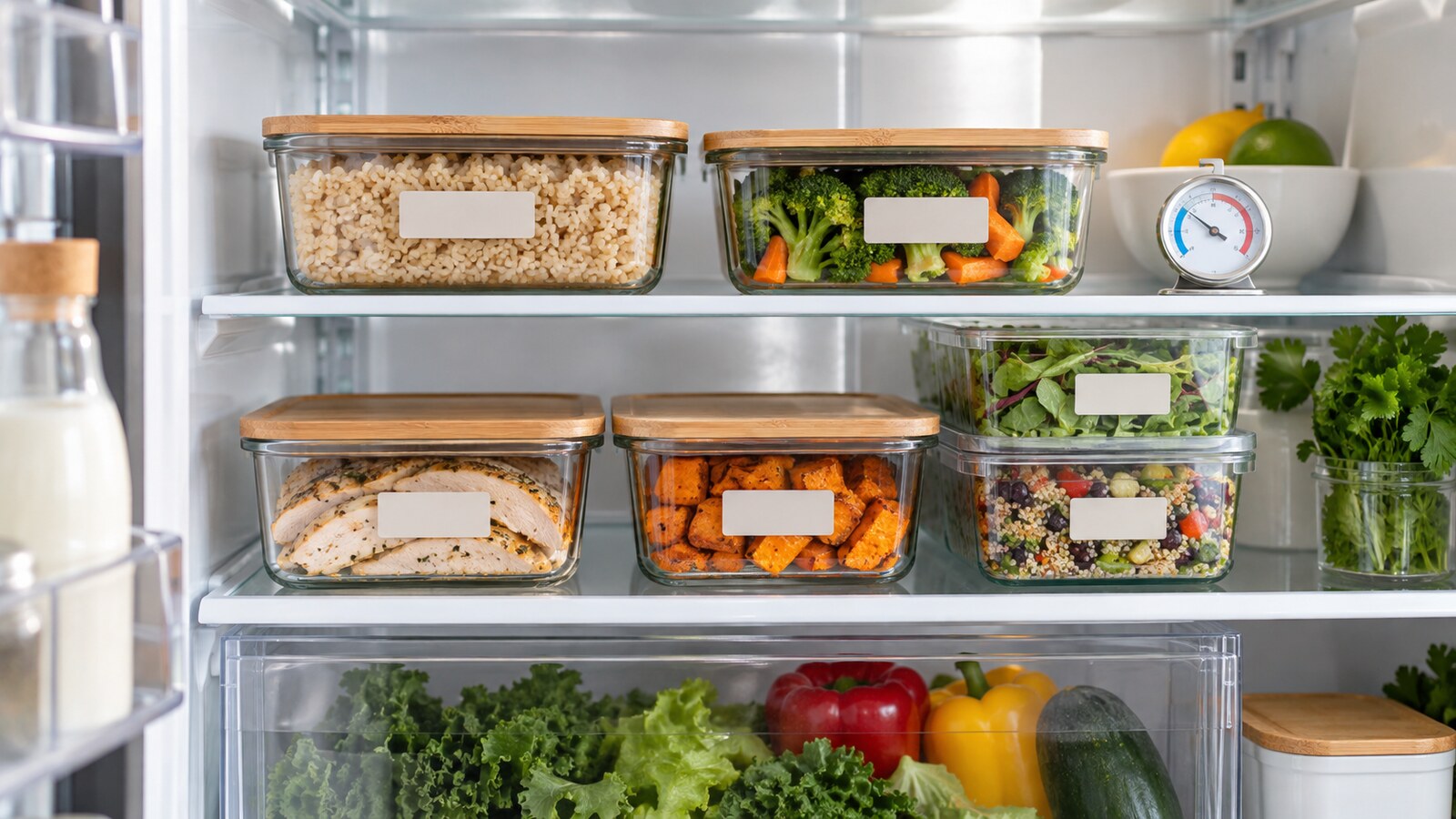
This routine pairs well with other kitchen habits. GDU’s guide to storing leftovers safely covers what happens after cooking: cooling, labeling, refrigerating, freezing, reheating, and discarding food when timing is uncertain. The thermometer habit covers the moment before food is served.
Use the Thermometer Beyond Meat
Thermometers are often marketed around meat, but they are useful in more places.
Use one for casseroles and dense baked dishes where the middle can lag behind the edges. Use it for egg dishes that need to set safely. Use it for reheated soups, sauces, rice dishes, and leftovers when the food must be hot throughout. Use it for holiday meals where a crowded oven, a large bird, and guests at the table can create pressure to guess.
It can also help reduce waste. When you know food has reached the right temperature, you are less likely to keep cooking “just in case” until it becomes dry. A thermometer can support both safety and better texture.
If you are building more practical kitchen systems, pair this with GDU’s guide to comparing unit prices at the grocery store and a simple approach to a balanced plate without counting calories. Safer cooking, smarter buying, and balanced meals work best as ordinary routines.
A Small Reference to Keep Handy
Keep a reliable chart on your phone, inside a kitchen cabinet, or near the grill area. For everyday use, remember these common minimums:
- 145 degrees Fahrenheit / 63 degrees Celsius: whole cuts of beef, pork, veal, lamb, and fish; rest whole meat cuts as directed.
- 160 degrees Fahrenheit / 71 degrees Celsius: ground beef, pork, veal, lamb, and similar ground meats.
- 165 degrees Fahrenheit / 74 degrees Celsius: poultry, ground poultry, stuffing, casseroles, egg dishes, and reheated leftovers.
When the package, local regulator, appliance manual, or public-health guidance gives a stricter instruction, follow the stricter instruction.
When to Be Extra Cautious
Be especially careful with large birds, stuffed foods, ground meat, mixed dishes, food cooked from frozen, outdoor grilling, shared-household meals, and meals for people at higher risk from foodborne illness.
Also be cautious when electricity, gas, oven performance, or refrigerator safety has been uncertain. If food has been stored unsafely, cooking it later may not make it safe. Heat can kill many germs, but it cannot undo every toxin, spoilage problem, or handling error.
For recalled foods, do not try to cook around the warning. Check the recall instructions and discard or return products as directed. GDU’s guide to checking product recalls before you use an item can help with that separate safety step.
The Point Is Confidence, Not Perfection
A food thermometer is a small tool with a calming effect. It replaces color myths, recipe timing, and nervous overcooking with a direct check.
Use it at the thickest part, keep it clean, know the core temperatures, respect rest time, and check more than one spot when food is large or uneven. Once that habit feels normal, safer cooking becomes less dramatic and more dependable.
Dinner should not depend on guesswork when a clear reading takes only a few seconds.