Strength training can look intimidating from the outside. Gym machines, heavy barbells, complicated split routines, fitness influencers, and perfect-looking programs can make it seem as if you need a full plan before you begin.
You do not.
For most beginners, the useful first step is much simpler: learn a few basic movement patterns, practice them with control, repeat them consistently, and recover well enough to come back. Strength training is not only for athletes, bodybuilders, or people with expensive equipment. It can start with a chair, a wall, a resistance band, light dumbbells, or your own body weight.
Quick Answer
Start strength training with two short sessions per week that work the major muscle groups: legs, hips, back, abdomen, chest, shoulders, and arms. Begin with simple movements such as sit-to-stands, wall push-ups, supported rows, hip hinges, step-ups, carries, and gentle core exercises. Use a resistance level you can control, stop before form breaks down, rest between sessions, and increase only one thing at a time.
If you have chest pain, dizziness, unexplained shortness of breath, recent surgery, pregnancy-related concerns, injury, a chronic condition, or uncertainty about safe movement, get medical or qualified professional guidance before starting or changing exercise.
Why Strength Training Belongs In A Basic Fitness Routine
Public-health guidance commonly pairs aerobic activity with muscle-strengthening activity because both matter. The World Health Organization says adults should include muscle-strengthening activities involving major muscle groups on two or more days a week. The CDC gives similar guidance for adults, alongside regular moderate-intensity activity such as brisk walking.
That does not mean a beginner must train like an athlete. It means strength is part of ordinary health and daily function.
Strength helps with tasks most people already care about: standing from a chair, lifting groceries, carrying a child, climbing stairs, moving luggage, gardening, handling a long workday, and maintaining balance as life gets busier or the body gets older. It may also support bone health, joint function, and confidence with movement when done progressively and safely.
If you are already building a walking habit, strength work is a useful companion rather than a replacement. GDU’s guide to starting a walking routine explains how to make aerobic movement realistic; strength training adds the muscle and control that help everyday movement feel easier.
Keep The First Month Boring On Purpose
The most common beginner mistake is not laziness. It is doing too much too soon.
A routine that looks exciting on day one can become soreness, confusion, or skipped sessions by day five. A better first month is almost boring: short sessions, familiar movements, light resistance, and enough energy left afterward that you could have done a little more.
Begin with two sessions per week, separated by at least one rest day. Each session can take 20 to 35 minutes. If that feels too much, start with 10 to 15 minutes and build from there.
Your early goals are:
- Learn what each exercise should feel like.
- Practice controlled movement.
- Notice how your body responds the next day.
- Build a repeatable habit.
- Avoid turning every session into a test.
The Mayo Clinic’s beginner-friendly strength guidance emphasizes working all major muscle groups and allowing recovery rather than training the same muscle group hard on consecutive days. That is a useful guardrail: strength improves between sessions as the body adapts, not only while you exercise.
Learn Movement Patterns Before Exercise Names
You do not need to memorize dozens of exercises. Most beginner routines are built from a few movement patterns.
Squat pattern: Sitting down and standing up. Start with a chair sit-to-stand, using your legs as much as possible and your hands only if needed.
Push pattern: Pressing away from the body. Start with wall push-ups, counter push-ups, or an easy machine press if you are in a gym.
Pull pattern: Drawing something toward you. A resistance-band row, cable row, or supported dumbbell row can teach this pattern.
Hinge pattern: Bending at the hips while keeping control through the back and legs. Practice reaching your hips back toward a wall before adding weight.
Carry pattern: Holding weight while walking or standing tall. A light grocery-bag carry or dumbbell carry can train grip, posture, and trunk control.
Core control: Resisting movement through the middle of the body. Begin with gentle dead bugs, side planks from the knees, or slow marching while lying on your back.
Those patterns cover more useful ground than random exercise collecting. They also make it easier to adapt. If a knee, wrist, shoulder, or back does not like one version, you can often use a gentler variation instead of abandoning strength training entirely.
A Simple Beginner Session
Use this as a starting template, not a rulebook.
Warm up for five minutes with easy walking, marching in place, shoulder rolls, ankle circles, or gentle step-ups. Then choose one movement from each line:
- Sit-to-stand from a chair or supported squat.
- Wall push-up, counter push-up, or light chest press.
- Resistance-band row, cable row, or supported dumbbell row.
- Hip hinge practice, glute bridge, or light Romanian deadlift pattern.
- Step-up, heel raise, or split-stance balance hold.
- Dead bug, bird dog, or short side plank from the knees.
Start with one or two sets of 8 to 12 controlled repetitions for each exercise. For holds or carries, use a short time that lets you keep steady form. Rest long enough between exercises that your breathing and control return.
The exact number is less important than the quality. If you can do only five good repetitions, five is your number today. If you can do 20 easily, the movement may be too easy or the resistance too light.
Choose A Resistance You Can Control
Strength training works because muscles have to do more than they are used to doing. But “more” does not have to mean heavy.
Beginners can use:
- Body weight.
- A stable chair.
- Resistance bands.
- Light dumbbells.
- Water bottles or household items that are easy to grip.
- Gym machines that guide the path of movement.
Choose a level where the last few repetitions feel challenging but still controlled. You should not need to twist, bounce, hold your breath hard, or rush to finish. A simple test is whether you could do two or three more good repetitions if you had to. If not, reduce the load or stop the set earlier.
Good form is not about looking perfect. It is about moving with control, using the intended muscles, and staying within a range that feels steady rather than sharp, pinching, or chaotic.
Progress Slowly, One Change At A Time
Progressive training means doing a little more over time. It does not mean adding weight every session.
You can progress by:
- Adding one or two repetitions.
- Adding a second or third set.
- Using slightly more resistance.
- Moving through a larger comfortable range.
- Slowing the lowering phase.
- Reducing assistance, such as moving from wall push-ups to counter push-ups.
- Improving consistency from one week to the next.
Change only one variable at a time. If you add weight, do not also add sets, harder variations, and shorter rest on the same day. That makes it difficult to know what helped and what caused soreness or poor form.
A practical beginner rhythm is to keep the same routine for three or four weeks. When it starts to feel familiar, adjust one or two exercises slightly. The goal is not novelty. The goal is useful adaptation.
Expect Mild Soreness, But Do Not Chase Pain
Some muscle soreness can happen after new exercise, especially one or two days later. Mild soreness that fades as you move is common. Sharp pain, joint pain, chest pain, dizziness, numbness, swelling, or pain that changes how you walk or move is different.
Stop the session if something feels wrong. Seek appropriate medical care for severe, unusual, or persistent symptoms.
Beginners often think soreness proves a workout was effective. It does not. You can build strength without feeling wrecked afterward. In fact, a routine you can repeat calmly is more valuable than a dramatic session that takes a week to recover from.
Recovery basics matter too: sleep, enough food, fluids, and rest days. If you are adjusting exercise and eating habits together, GDU’s guide to building a balanced plate without counting calories offers a simple way to think about meals without turning every choice into a calculation.
Make The Setup Easy To Repeat
The best routine is the one you can actually start on a normal day.
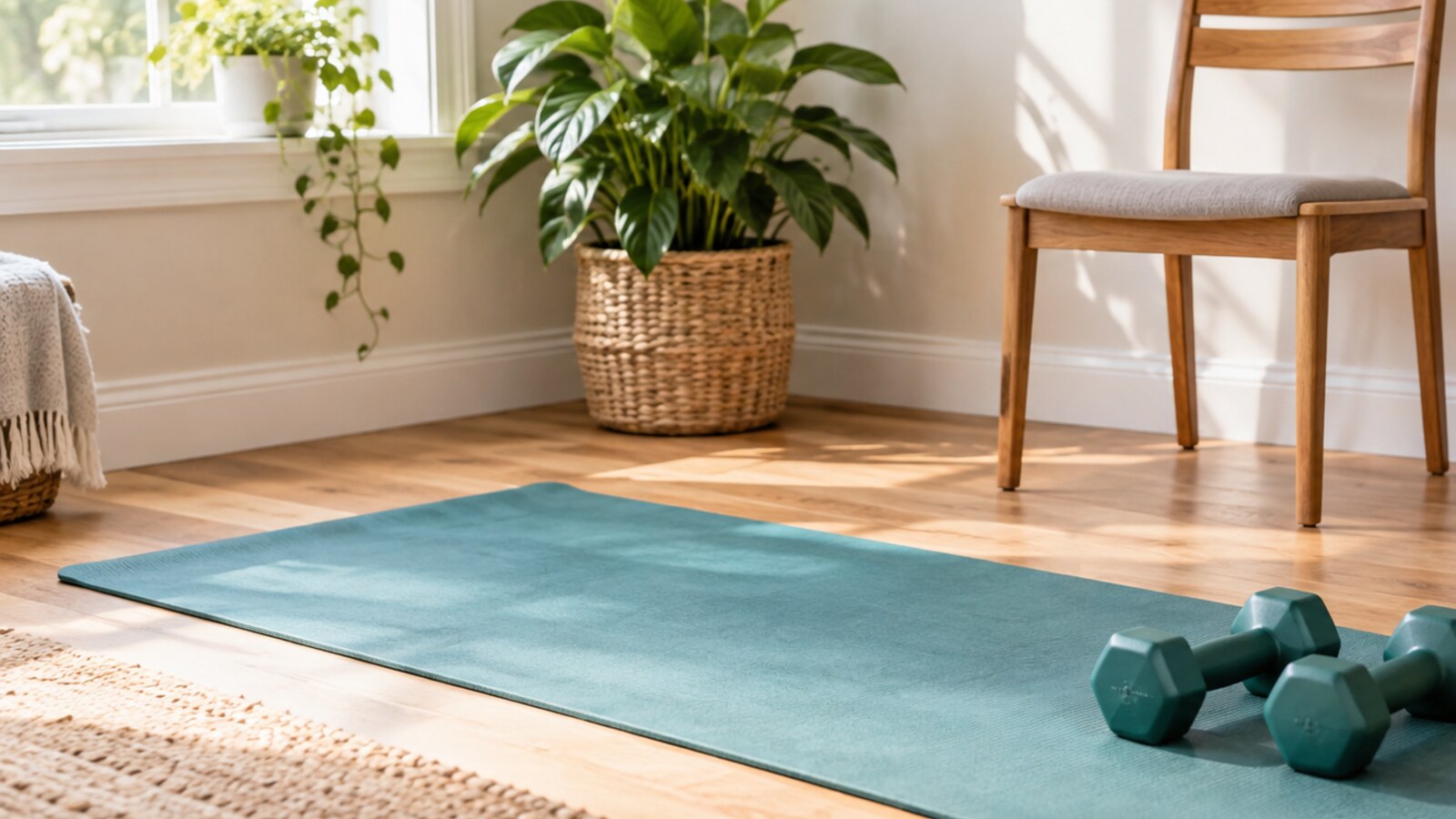
If you train at home, keep the setup visible but safe: a mat, band, chair, and dumbbells in one place. If you use a gym, write down the machines or exercises you plan to use before you arrive. If you exercise outdoors, check conditions first, especially if heat, smoke, pollen, or pollution could affect breathing. GDU’s guide to checking air quality before outdoor activity can help you decide when an outdoor session should be moved indoors or made easier.
Remove small frictions:
- Pick two fixed days each week.
- Keep sessions short enough to finish.
- Track exercises in a note on your phone.
- Use the same warm-up each time.
- Prepare water and comfortable clothing before the session.
- Leave room around you so furniture, rugs, or pets do not become trip hazards.
Consistency often comes from reducing decisions, not from finding more motivation.
When To Get Coaching Or Medical Guidance
Many beginners can start with gentle bodyweight movements and light resistance. Still, guidance is useful when the stakes are higher.
Consider help from a qualified trainer, physical therapist, clinician, or appropriate professional if you:
- Have a recent injury, surgery, or ongoing pain.
- Have a heart, lung, neurological, balance, bone, joint, or metabolic condition.
- Are pregnant, postpartum, or returning after a long break with health concerns.
- Feel unsure about safe form.
- Want to lift heavier weights.
- Keep getting the same pain during a movement.
- Need adaptations for disability, chronic illness, or older-adult balance concerns.
Bring a list of medicines, conditions, and restrictions if you are seeking medical or rehab guidance. GDU’s guide to keeping a medication list explains what details can help a professional understand your situation faster.
A Beginner Strength Checklist
Before your next session:
- Choose two weekly training days with rest between them.
- Pick five or six simple movements.
- Start with one or two controlled sets.
- Use resistance you can manage without rushing or twisting.
- Stop before form breaks down.
- Track what you did.
- Keep the same routine long enough to learn it.
- Increase gradually, one change at a time.
- Ask for help if pain, symptoms, health conditions, or uncertainty make the plan unclear.
Strength training becomes less complicated once you stop trying to solve the whole fitness world at once. Start with useful movements. Keep them controlled. Return twice a week. Let the routine earn complexity only after the basics feel steady.