Stair walking for beginners can start with an ordinary journey upstairs, taken slowly enough to stay in control. Choose a clear staircase with a secure handrail, keep your hands free and give yourself permission to stop on a landing. There is no required speed, number of flights or daily streak.
Stairs can feel demanding surprisingly quickly. A pace that suits someone else may be too much for you, and a staircase that is convenient on one day may be a poor choice on another. The useful starting point is a manageable amount of movement that fits your circumstances.
Decide Whether Stairs Are the Right Option Today
Everyday movement can include stairs, but it does not have to. If you already find ordinary stairs painful, unsafe or unusually exhausting, adding repeated climbs is not a sensible first experiment. Choose another activity and discuss the difficulty with a healthcare professional.
Ask for individual advice before trying extra stair activity if you have concerns about balance, a recent fall or operation, a joint injury, or a health condition that affects exertion. Follow any existing rehabilitation plan rather than replacing it with a general guide. Do not begin while feeling unwell or dizzy.
There is also a practical question: can you get back safely? Walking down is part of the journey unless a suitable lift is available. Do not climb further than you can comfortably manage in both directions. An accessible lift is a useful option, not a failed workout.
Pick a Staircase You Can Use Without Rushing
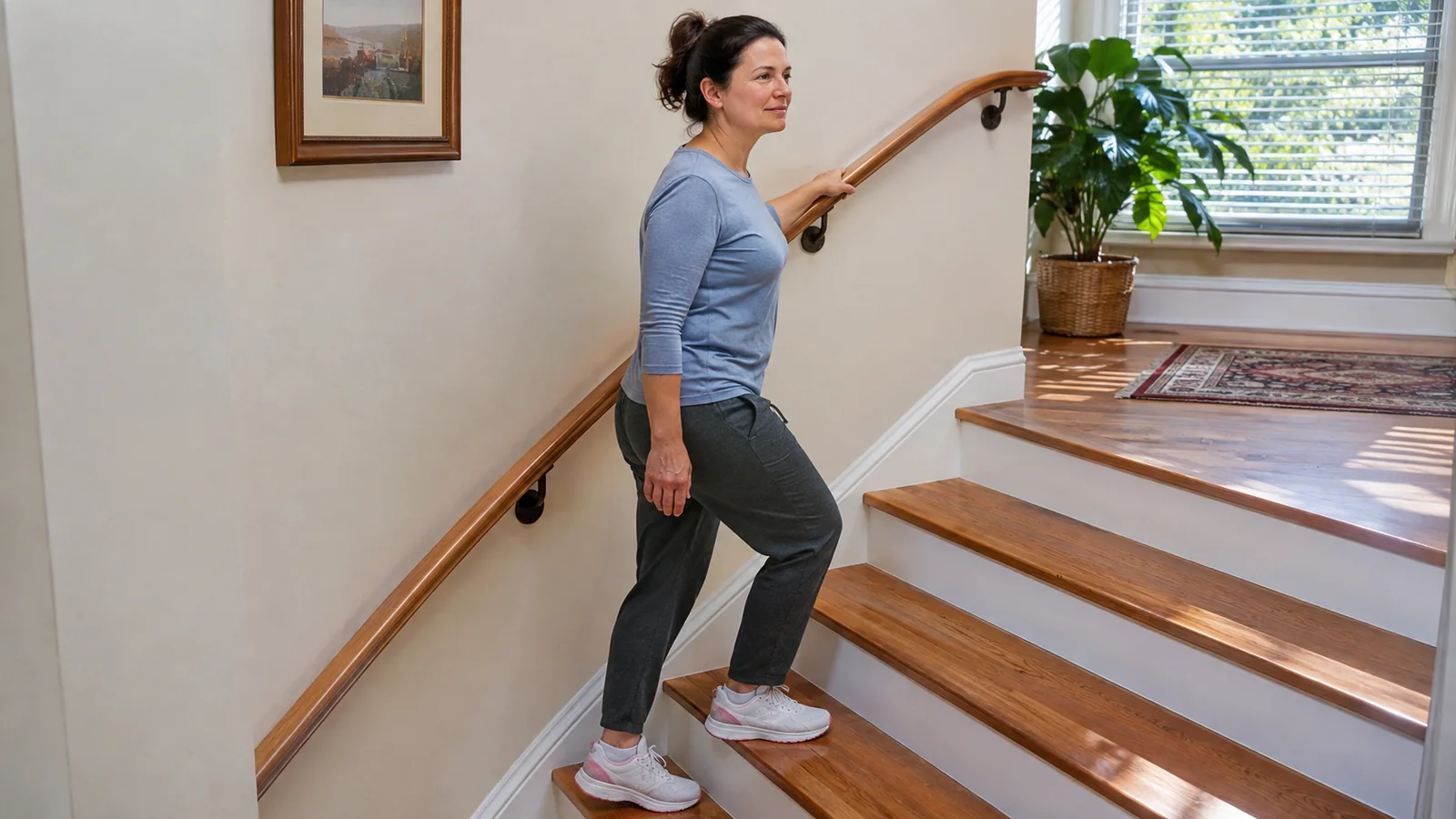
A suitable setting matters more than a tracker. Look for dry, well-lit steps, a secure handrail and a clear landing. Avoid loose coverings, clutter, damaged edges and stairs busy enough that you would feel pressured to hurry. Follow building rules and keep access routes clear.
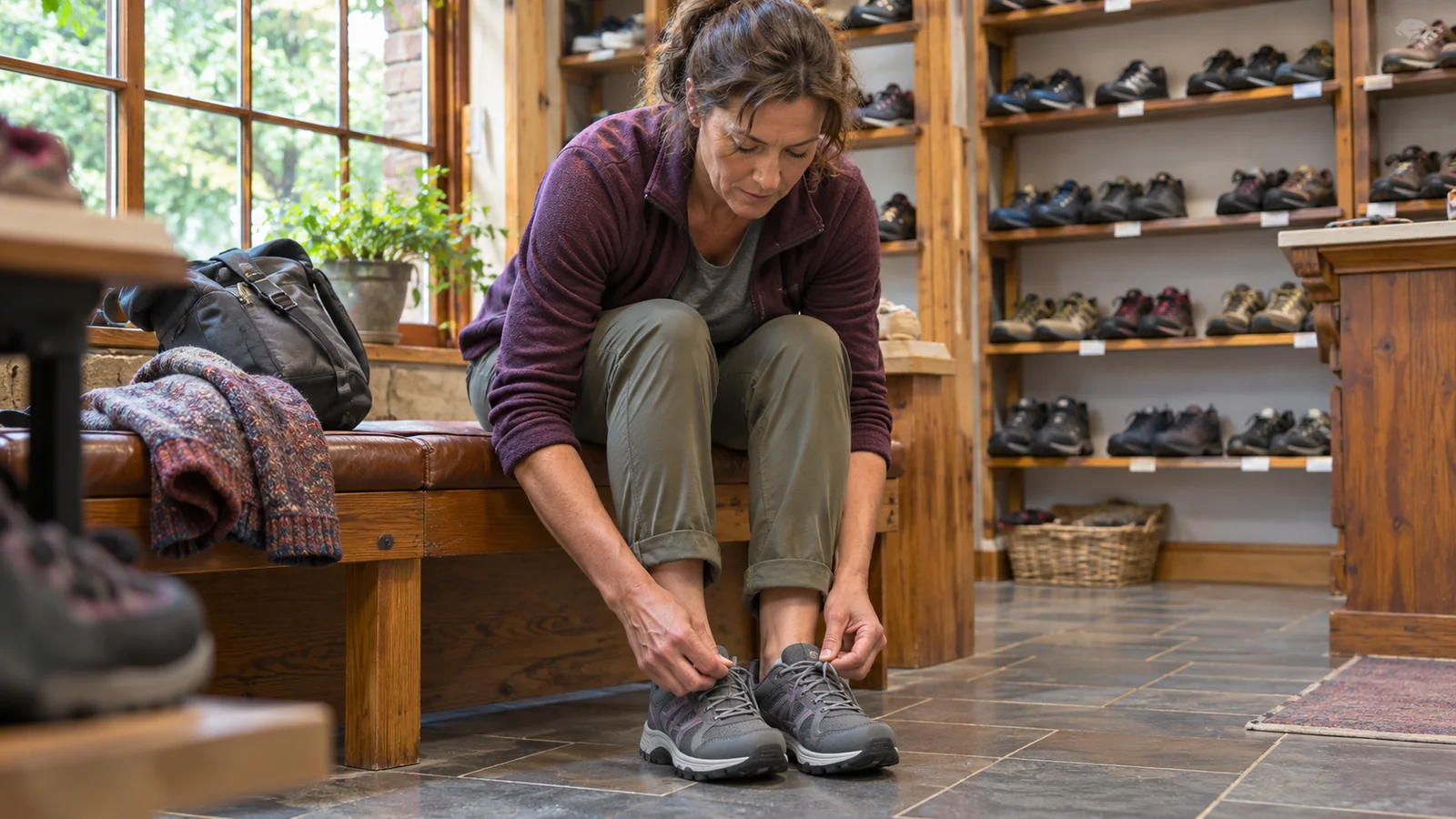
Wear secure footwear that feels comfortable and grips the surface. Loose slippers and trailing laces make an avoidable task harder. Our guide to choosing walking shoes by fit and comfort explains what to check before buying anything new.
Put the phone away before moving. Carrying shopping, laundry or a hot drink prevents you from using your hands freely, so separate those jobs from a deliberate stair session. If you need to check a message or adjust clothing, stop somewhere safe first.
Try a Small First Attempt
Treat the first attempt as a check of the route and your comfort, rather than a test of how much you can tolerate. The following sequence is a practical example, not an exercise prescription.
- Begin on level ground. Walk gently for a few minutes in a safe area and notice how you feel before approaching the stairs.
- Keep a hand on the rail. Walk one step at a time at an unhurried pace. Place your foot securely and look where you are going. Avoid running, skipping steps or adding weights.
- Stop at a suitable landing. A short climb may be enough. Pause clear of other people and allow your breathing to settle; do not turn the landing into a place to pace impatiently.
- Plan the return. Descend carefully using the rail, or use an available suitable lift if that was your plan. Give the downward journey your full attention.
- Finish with easy movement. Walk gently on level ground as comfortable, then decide whether that amount was manageable. You do not need another climb to make the attempt count.
If even a short section feels too demanding, reduce the task or switch to level walking. Do not try to complete a flight simply because the top is visible. Where there is no safe place to pause, choose a different route.
Let Breathing Guide the Pace
The talk test is one simple way to judge activity intensity. At moderate intensity, people can generally talk but cannot sing; at vigorous intensity, they can say only a few words before pausing for breath. These descriptions help explain effort, but they are not a target you must reach on your first climb.
For a gentle introduction, keep the effort comfortable enough to speak naturally. If talking becomes difficult, slow down or pause safely. You do not need to talk continuously while moving, particularly if doing so distracts you from the steps.
Notice control as well as breathing. Rushing, gripping the rail to haul yourself upward or feeling unable to place your feet securely are reasons to stop and reconsider the activity. A watch’s pace or calorie estimate should never overrule how you feel.
Repeat Before You Add More
Use a brief note after each attempt: which staircase you used, roughly what you did and whether it felt comfortable during and afterwards. For example, “One short climb after lunch; paused at landing; return comfortable” gives you something more useful than a competition score.
Repeat a manageable amount on another suitable day before considering more. When it feels consistently comfortable, change only one part at a time: perhaps a little more climbing, rather than more climbing and a faster pace together. There is no universal weekly increase that fits every beginner.
If the next attempt feels harder, shorten it. Poor sleep, illness, heat and a demanding day can change what is manageable. Following a break, return at an easier level instead of trying to recover missed sessions. Rest days and alternative activities can stay in the plan.
Know When to Stop or Switch
Stop if you develop pain, dizziness, chest discomfort or unusual breathlessness. Move to a safe resting position and seek medical advice as appropriate. Severe difficulty breathing, persistent chest pain or chest pain with symptoms such as sweating or faintness needs urgent emergency help through your local emergency service. Do not try another flight to see whether it goes away.
Stairs are optional when the environment or your body makes them unsuitable. Level walking along a clear route may be easier to adjust; a seated movement routine chosen for your abilities is another possibility. A clinician or physiotherapist can help identify appropriate activity when mobility or health concerns limit your options.
Our guide to starting a walking routine offers a broader way to fit movement into ordinary days. A short stretch break can serve a different purpose during desk time, without becoming a substitute for every other kind of activity.
Choose one safe opportunity, keep the first attempt small and judge it by comfort and control. The best pace is one that lets you make a sensible decision about the next step.