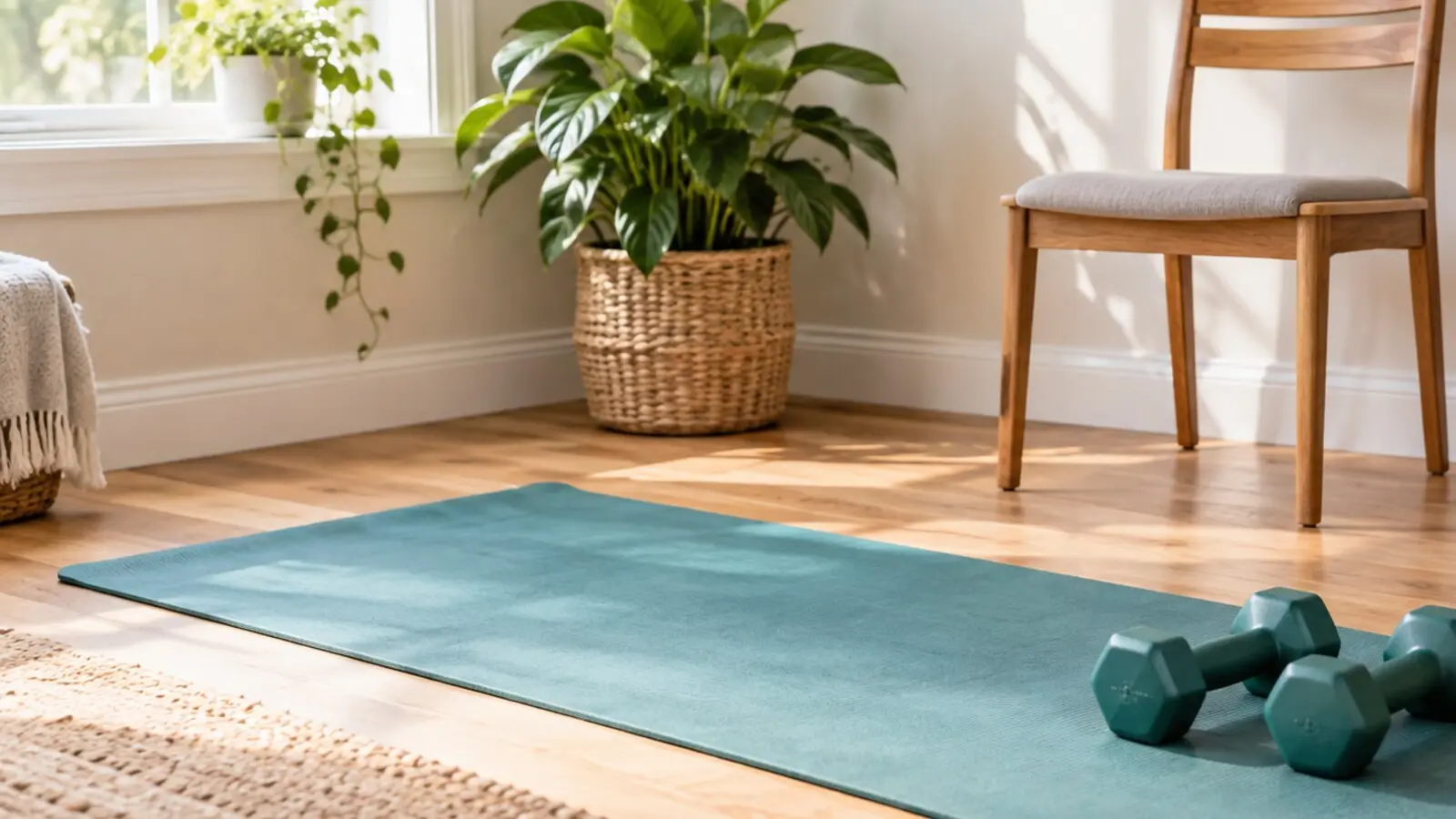

A short stretch break is easier to fit into a busy day when it has a clear place: after a familiar walk, between household tasks or before returning to a project. Choose a small number of gentle movements, give yourself room and stop at a comfortable range. You do not need to reach your toes or complete a full exercise class.
Think of the break as a chance to practise comfortable movement. It is not a treatment for pain, and there is no need to make it strenuous for it to count as time you have set aside for yourself.
Give the Break a Real Place in Your Day
Choose a transition that already happens. “After I finish my lunchtime walk, I will try a few gentle stretches” is easier to act on than “I should stretch more.” You can also attach the break to finishing a study session or returning from an errand, provided you have a suitable space.
Start with one occasion rather than filling your calendar with reminders. Put a brief note where you will notice it at that moment. A reminder on your phone can help, but if you routinely dismiss it, change the timing rather than adding more alerts.
Allow time for preparation as well as movement. If you have been sitting still, begin with a few minutes of easy walking to warm up. When a walking route would help you get started, our guide to building a manageable walking routine offers practical planning ideas.
On a crowded day, keep the appointment smaller by choosing fewer movements. Do not squeeze it in beside a hot hob, on stairs or while watching traffic. Finish the task that needs your attention first.
Set Up a Comfortable Space
For seated movements, use a sturdy chair without wheels or arms, with your feet resting flat on the floor. Leave enough clearance to open your arms without hitting furniture. Wear clothes that let you move easily.
You do not need special clothing, a mat or a fitness subscription. Decide where you will sit before the break starts, especially in a shared room. A clear, familiar place removes one small decision from the routine.
If you are unsure whether these exercises suit you, ask a healthcare professional first. This matters particularly with an injury, a health condition, recent surgery, pregnancy or recent childbirth. Follow any individual movement restrictions you have been given.
Try a Small Selection of Seated Movements
The following options are adapted from general NHS sitting-exercise guidance. They are choices to learn gradually, rather than a timed challenge. You can practise one option at first and add another when you feel comfortable.
- Open the chest gently. Sit upright, slightly forward from the chair back. Let your shoulders move down and back, then open your arms to the sides. Lift your chest a little until you notice a comfortable stretch across its front. Hold for 5–10 seconds, then relax; the full NHS exercise uses five repetitions.
- Turn the upper body comfortably. Keep both feet planted and cross your arms over your chest, with your hands towards your shoulders. Keeping your hips facing forwards, slowly turn your upper body to one side. Hold for five seconds, return to the centre and try the other side. The NHS routine uses five turns in each direction.
- Turn the head slowly. With your shoulders relaxed, look forwards. Turn towards one shoulder only as far as feels comfortable, hold for five seconds and return to the centre. Repeat on the other side. The NHS guidance suggests three turns each way.
Move slowly and keep breathing normally. Avoid bouncing, pulling yourself farther with your hands or chasing a larger range. A mild stretching sensation is different from pain: stop if a movement hurts or makes you feel unwell. Seek advice if symptoms persist or concern you.
There is no requirement to finish every repetition during your first break. Read the instructions before starting, and leave out a movement you cannot perform comfortably. Do not speed through it to finish before a timer sounds.
Keep the Routine Small Enough to Repeat
A useful starting plan can fit on one line: “After my walk, I will sit in the living room and practise one comfortable movement.” Write down the cue, the place and the movement. That gives you something specific to try tomorrow without turning the break into a planning project.
After a few attempts, check what actually gets in the way:
- If the chair is usually occupied, choose a different location.
- If the reminder interrupts a demanding task, move it to a natural stopping point.
- If reading several instructions feels awkward, learn one movement before adding another.
- If the break keeps growing into a long routine you avoid, return to the simplest version.
You can make a small tick on a calendar to remember which days you tried it. Treat that as information, not a score. A missed break does not require extra repetitions later. Resume at the next suitable opportunity.
Keep Expectations Realistic
Flexibility work is one part of physical activity. It does not replace walking or other aerobic activity, strength work and balance practice. A short break also cannot cancel out the effects of spending the rest of the day inactive.
There is no universal number of stretching minutes that makes every person’s day complete. Choose movements appropriate to you and build gradually. Avoid using soreness, a dramatic before-and-after photograph or someone else’s flexibility as proof that your break worked.
If the main problem is discomfort at a computer, it may also be useful to review your desk and chair setup. That is a separate task from learning a stretch, and persistent pain deserves individual advice rather than repeated attempts to stretch it away.
For your next break, choose a safe place and one familiar cue. Warm up gently, practise a comfortable movement and return to your day. A routine you can adapt to the day is easier to keep within reach than one that requires perfect conditions.