A refrigerator can look clean and still be too warm, crowded, or unevenly cooled. Cold storage slows bacterial growth, protects ready-to-eat foods, keeps leftovers safer, and helps groceries last long enough to be used.
A refrigerator temperature check is a short household routine. You confirm the actual temperature, make sure cold air can move, clean spills, review leftovers, and notice whether the appliance is struggling.
The goal is not to turn your kitchen into a lab. It is to make the place where you store everyday food more predictable.
Start With the Actual Temperature
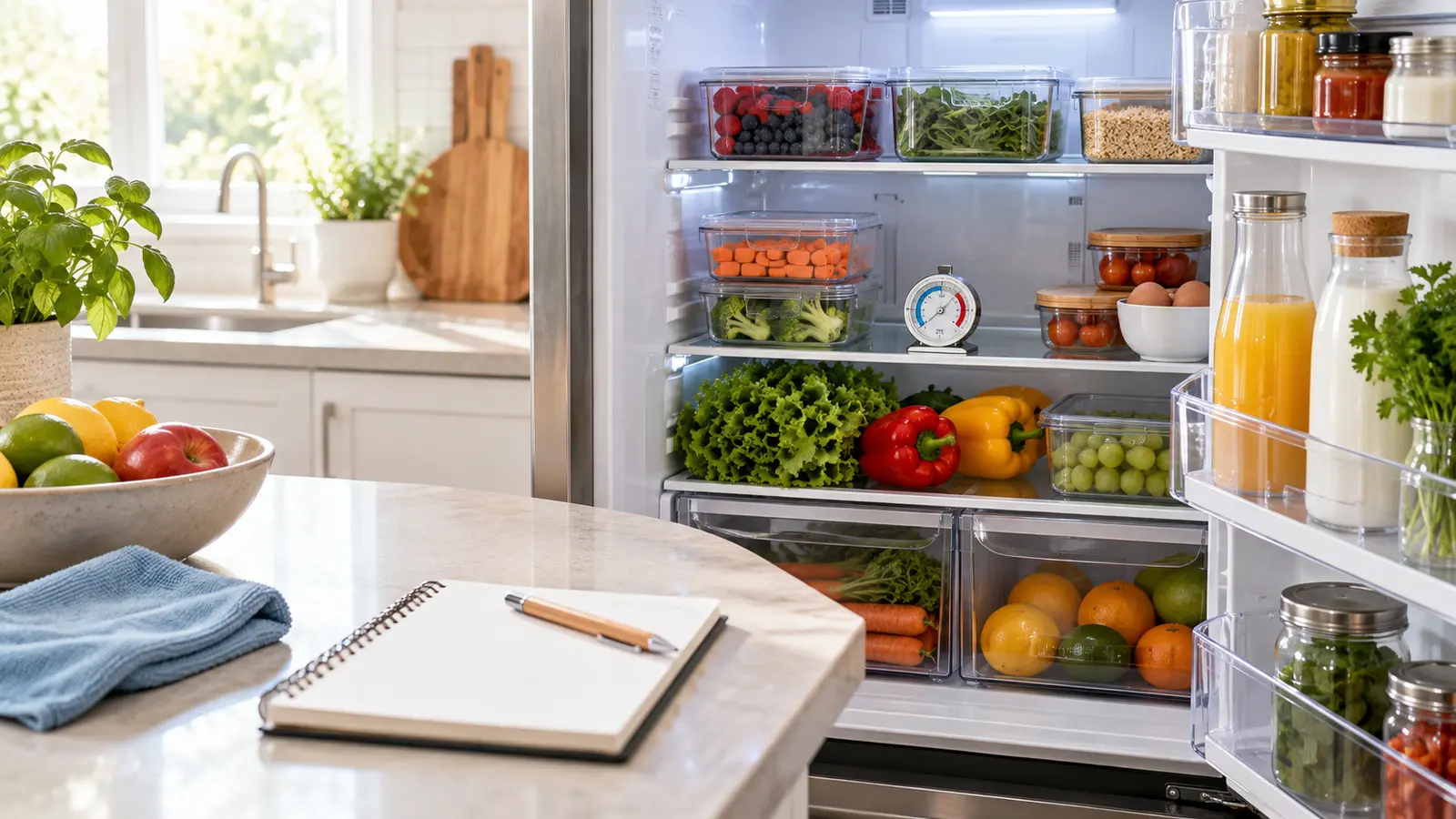
The safest first step is to measure, not guess. Refrigerator dials are often numbered from cold to colder, but they do not always tell you the real internal temperature. A small appliance thermometer gives a clearer answer.
As a practical household target, keep the refrigerator at or below 40 degrees Fahrenheit or 4 degrees Celsius. Keep the freezer at 0 degrees Fahrenheit or minus 18 degrees Celsius. If your refrigerator has a built-in display, still consider checking it against a separate thermometer occasionally, especially after moving the appliance, changing settings, repairing it, or noticing food spoiling faster than usual.
Place the thermometer where you can see it without holding the door open for long. The middle shelf is a useful starting point because it is usually away from the warm door area and cooling vent. Leave it for several hours before judging the reading, then adjust the control gradually if needed.
If the refrigerator is consistently above the safe range, check for simple causes first: blocked vents, damaged door seals, overloaded shelves, hot food, a warm room, dust around coils, or a door that is not closing fully.
Check the Warm Zones
Not every part of a refrigerator is equally cold. The door is usually warmer because it is exposed to room air every time it opens. That makes it a poor place for highly perishable foods that need steady cold.
Use the door for items that tolerate small temperature changes, such as condiments, many drinks, and some sealed sauces. Store milk, eggs, cooked leftovers, raw meat, poultry, seafood, and ready-to-eat foods on interior shelves or in dedicated drawers.
Watch for these warning signs:
- Milk or leftovers spoil before expected.
- Soft foods near the back freeze while door items are warm.
- The refrigerator runs constantly or cycles loudly.
- Condensation appears often around the door seal.
- Food packages block vents or touch the back wall.
- The door does not close easily unless containers are moved.
One warm spot does not always mean the whole appliance has failed. It may mean airflow is blocked or food is stored in the wrong zone.
Leave Room for Airflow
A full refrigerator can be efficient because chilled food helps hold cold air, but an overstuffed refrigerator can block circulation. Cold air needs a path around containers, shelves, drawers, and vents.
Start by clearing the cooling vents. Do not push bags, boxes, or large containers tightly against them. Leave small gaps between stacks, and avoid turning shelves into solid walls of food. If you buy groceries in bulk, move some items to the freezer, pantry, or a second storage area when appropriate rather than forcing everything into the main refrigerator.
This is also a good moment to group food by use. Keep raw meat, poultry, and seafood in a tray or sealed container on a lower shelf so leaks cannot drip onto ready-to-eat food. Put foods that need using soon near the front.
If grocery planning is part of the problem, pair this routine with a list that starts at home. GDU’s guide to grocery list planning explains how to check the fridge, freezer, and pantry before buying more food.
Review Leftovers Before They Become Mystery Containers
Leftovers are one of the easiest places for refrigerator problems to hide. A container may be safe today, forgotten tomorrow, and unrecognizable by the end of the week.
Use three simple rules:
- Cool cooked food quickly enough to refrigerate it promptly.
- Store leftovers in shallow, covered containers.
- Label the contents and date if you will not remember them.
Many cooked leftovers are best used within three to four days in the refrigerator. Some foods have shorter windows, so check reliable cold-storage guidance when in doubt, especially for raw meat, seafood, eggs, opened deli foods, and mixed dishes.
Do not rely only on smell. Some unsafe food may not smell obviously bad, and some spoiled food may look fine until opened. If you do not know what a container is, when it was made, or whether it stayed cold, discard it.
For a deeper routine, use GDU’s guide to storing leftovers safely, which covers cooling, labeling, freezing, reheating, and discard decisions.
Clean Spills Before They Spread
Cleaning the refrigerator is not only about appearance. Spills can carry bacteria from one food to another, create odors, and make drawers unpleasant enough that fresh food gets ignored.
Wipe spills as soon as you notice them. Pay special attention to meat juices, seafood drips, broken eggs, thawed freezer leaks, sticky sauce, and spoiled produce. Use warm soapy water for routine cleaning, then dry surfaces before replacing food. Follow your appliance manual for removable shelves, drawers, seals, and drip areas.
During a weekly check, look for:
- Open containers that should be sealed.
- Produce that is bruised, leaking, or molding.
- Ready-to-eat food stored below raw food.
- Sticky door bins.
- Crumbs and liquid under drawers.
- Uncovered bowls or plates.
This is also a good time to read package labels. Some items that look shelf-stable must be refrigerated after opening. Others have quality dates that are easy to misunderstand. GDU’s guide to food date labels explains how to read “best before,” “use by,” and related wording more carefully.
Check the Door Seal and Coils
Food safety comes first, but refrigerator efficiency matters too. A refrigerator that loses cold air or cannot release heat properly may work harder, use more energy, and still cool poorly.
Inspect the door gasket. It should be clean, flexible, and able to seal around the full door. If crumbs, sticky residue, or hardened spills prevent the gasket from closing, clean it gently. If the seal is cracked, loose, or no longer grips, the appliance may need service or a replacement gasket.
Then check the space around the refrigerator. Avoid placing it beside strong heat sources when possible, and keep enough clearance for air circulation according to the manual. If your model has accessible condenser coils, follow the manual before cleaning them. Some older or exposed-coil models benefit from periodic coil cleaning because dust can make heat transfer harder.
Do not pull, tilt, or open panels if you are unsure how to do it safely. Follow the manual and call a qualified technician for electrical, refrigerant, compressor, or repeated cooling problems.
For a broader household rhythm, add refrigerator checks to a home maintenance calendar so they do not depend on memory.
Know What to Do After a Power Cut
Power cuts create a different kind of refrigerator check. Keep refrigerator and freezer doors closed as much as possible. Opening the door to inspect food lets cold air escape faster.
After power returns, use temperature and time, not hope. If the refrigerator stayed closed and the outage was short, food may still be safe. If perishable food has been above 40 degrees Fahrenheit or 4 degrees Celsius for too long, it may need to be discarded. In the freezer, food that still has ice crystals or remains at refrigerator-safe temperature may often be cooked or refrozen, though quality can suffer.
This is where thermometers help. They give better information than appearance alone.
A 10-Minute Refrigerator Check
Use this routine once a week, before a grocery trip, after a power cut, or whenever food spoils too quickly:
- Read the refrigerator and freezer thermometers.
- Confirm the refrigerator is at or below 40 degrees Fahrenheit or 4 degrees Celsius.
- Confirm the freezer is at 0 degrees Fahrenheit or minus 18 degrees Celsius.
- Clear blocked vents and leave small gaps for airflow.
- Move highly perishable foods away from the door.
- Check leftovers and discard unknown or overdue containers.
- Wipe spills, especially under raw foods and produce.
- Check door seals for crumbs, gaps, cracks, or sticky spots.
- Look behind or under the unit only if the manual says coil cleaning is safe for your model.
- Add foods that need using soon to your next meal plan.
The Practical Takeaway
A refrigerator temperature check is a small habit with a big payoff. It protects food safety, reduces waste, helps groceries last, and catches appliance problems before they become expensive.
Measure the temperature, make room for airflow, store risky foods in colder zones, clean spills quickly, and review leftovers before they become guesswork. A calmer refrigerator makes the whole kitchen easier to manage.