A checked bag does not need to be lost forever to create a bad travel day. It only needs to arrive tomorrow when your meeting, wedding, field visit, school term, cruise, family visit, or medical appointment starts today.
Most checked bags travel as planned. Still, baggage delays happen often enough that the smarter question is not “Will my bag arrive?” It is “Could I function for the first day if it did not?”
Packing for that possibility does not mean traveling nervously or stuffing your carry-on with everything you own. It means separating essentials from replaceable items, labeling the bag clearly, keeping proof of what you packed, and knowing what to do before you leave the airport if your bag does not appear.
Quick Answer
Pack checked luggage as if it may arrive late by keeping medicines, travel documents, keys, payment cards, valuables, fragile items, chargers, and one change of essential clothing in your carry-on or personal item. Label the checked bag outside and inside, photograph the bag before check-in, keep the baggage tag, avoid last-minute check-in, and file a missing-bag report at the airport before leaving if the bag does not arrive.
Decide What Cannot Go Missing
Start with the items that would be hardest to replace quickly at the destination.
That usually includes:
- Passport, national ID, visa papers, residence permits, boarding documents, and onward-travel details.
- Prescription medicines, medical supplies, glasses, contact lenses, hearing-aid batteries, and essential health paperwork.
- Keys, wallets, payment cards, cash for arrival needs, and mobile phone.
- Work devices, school devices, chargers, power banks, and irreplaceable files.
- Valuables, jewelry, cameras, fragile items, and sentimental items.
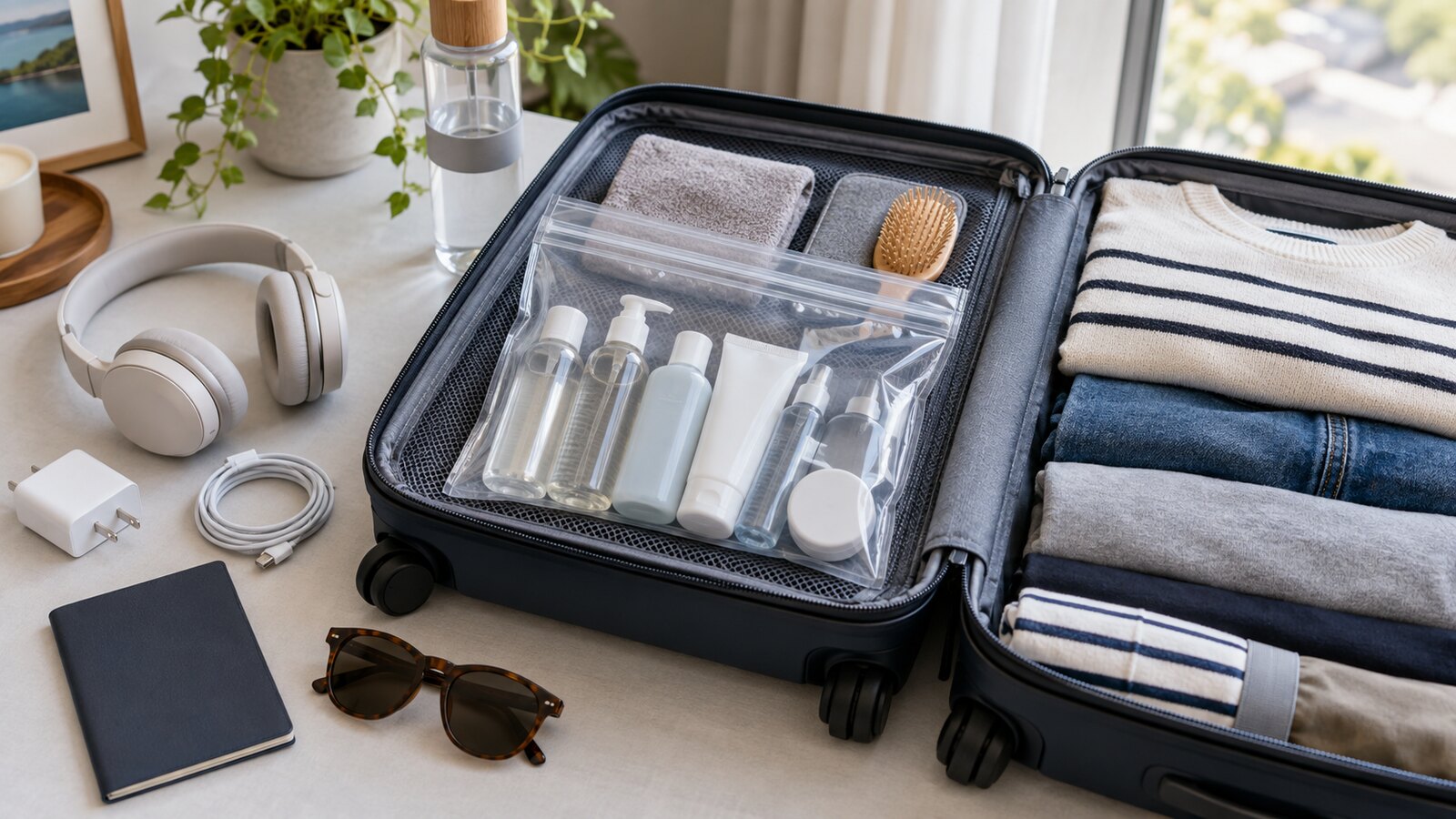
- A basic first-night kit: underwear, socks, sleepwear or a spare top, and simple toiletries that comply with carry-on rules.
The U.S. Department of Transportation advises passengers to avoid placing valuables, critical items, fragile items, irreplaceable items, and perishables in checked luggage. IATA gives similar practical baggage guidance: valuable or irreplaceable items should stay out of checked bags, and checked baggage should have identification both outside and inside.
That advice applies even when you are not flying through the United States. Airline liability rules, reimbursement limits, and claim processes differ by country and route, but a missing passport, medicine, house key, or laptop can disrupt a trip before any claim is settled.
Build A Small Delay Kit
Think in terms of one night and one morning.
Your delay kit does not need to be large. It might fit in a pouch inside your personal item:
- One change of underwear and socks.
- A spare shirt or lightweight layer.
- Toothbrush, travel-size toothpaste, deodorant, and any skin-care item you would strongly miss.
- Essential medicine for at least a few days, if safe and allowed for your trip.
- Phone charger, plug adapter, and battery pack where allowed.
- Copies or offline access to hotel address, airline booking, insurance details, and emergency contacts.
If you are already using a medication list for appointments or travel, keep it with the medicines rather than buried in checked luggage. GDU’s guide to keeping a medication list before you need one explains what to include so a clinician, pharmacist, or caregiver can understand the basics quickly.
For liquids, gels, creams, sprays, and pastes in your carry-on, follow the security rules for every airport on your route, not only your departure airport. GDU’s guide to packing carry-on liquids covers the stricter 100 ml / 3.4 oz approach that travels well across many routes.
Keep Batteries And Electronics Where Rules Require Them
Some items are not just inconvenient in checked luggage. They may be restricted.
The FAA and IATA both warn that spare lithium batteries and power banks generally belong in carry-on baggage, not checked baggage. If a device with a lithium battery is placed in checked luggage, airline and regulator guidance commonly requires it to be switched off and protected from accidental activation. Smart luggage with a removable lithium battery may need the battery removed before the bag is checked.
Rules can vary by battery size, device type, airline, and route, so check official airline or aviation-authority instructions before packing unusual electronics, camera gear, drones, mobility aids, or medical devices. The simple default for everyday travel is this: keep power banks, spare batteries, phones, tablets, laptops, e-readers, and important chargers with you whenever possible.
Label The Bag Twice
External luggage tags can break, tear, or hide under straps. Internal identification gives the airline another way to match the bag to you if the outside tag disappears.
Use a sturdy outside tag with:
- Name.
- Mobile number with country code.
- Email address.
- Destination city or lodging contact if appropriate.
Inside the bag, place a simple sheet with your name, phone number, email, itinerary dates, and destination lodging or local contact. Do not put your full home address on a tag where it can be read by everyone in a queue. If a home address is needed for a claim later, provide it directly to the airline through the official process.
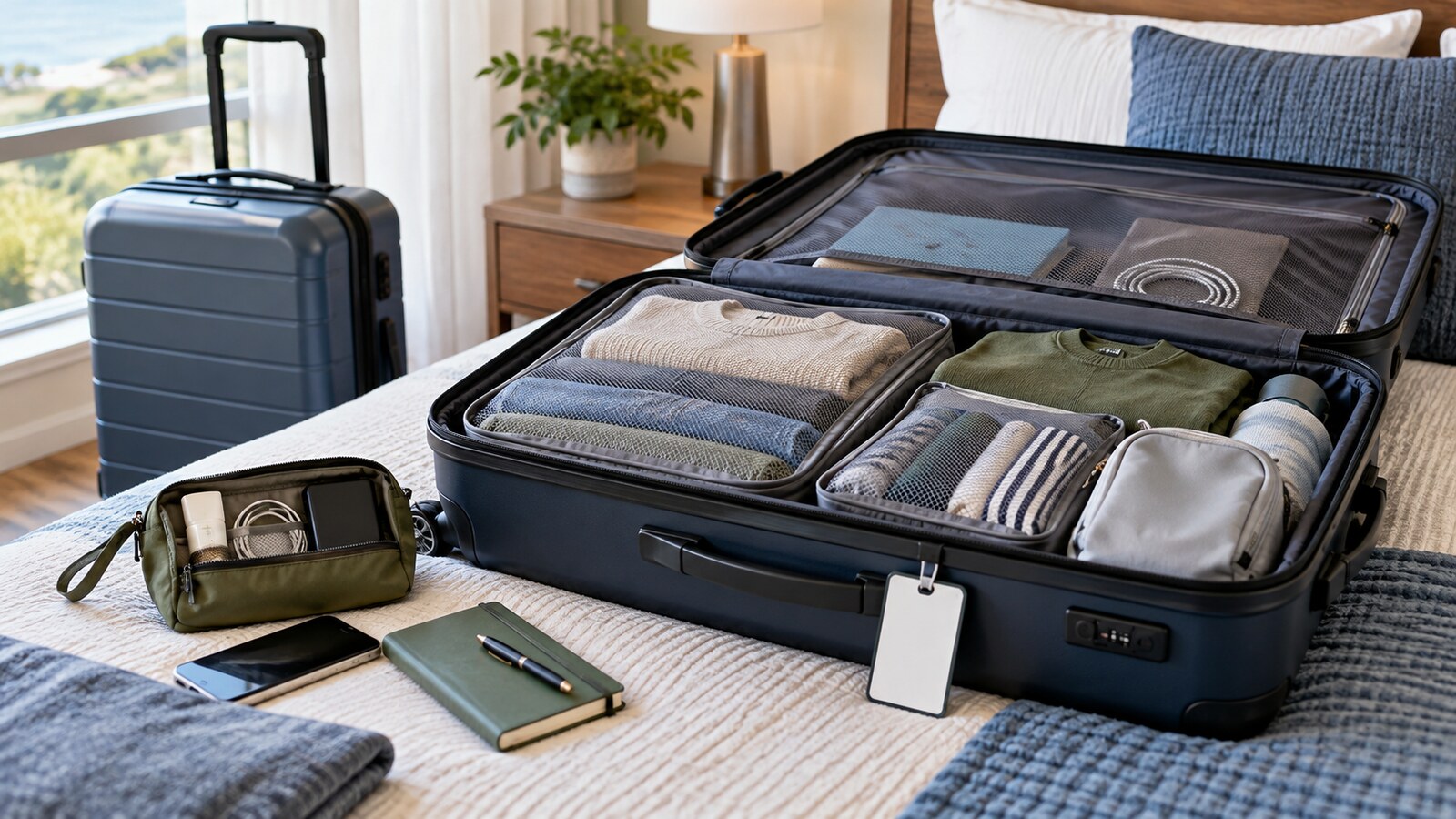
Take a clear photo of the outside of the bag before check-in. Include color, shape, wheels, handle, brand-free distinguishing features, and any tag or ribbon you added. A photo helps when staff ask you to describe a black suitcase that looks like many other black suitcases.
Make The Bag Easy To Identify, Not Easy To Open
A checked bag should stand out enough that you can describe it, but not so much that it attracts unnecessary attention.
Good identifiers include a colored luggage strap, a distinctive but ordinary tag, a small patch, or a ribbon tied securely to the handle. Avoid anything that dangles loosely or could catch in baggage handling equipment.
Before closing the bag:
- Remove old airline barcode tags and stickers.
- Keep the new baggage receipt or claim tag.
- Close pockets fully.
- Use a lock only if it is permitted and practical for your route.
- Avoid overpacking so zippers and seams are not under heavy strain.
- Put leak-prone toiletries in sealed bags.
If you are checking fragile or valuable items because there is no alternative, read the airline’s terms before travel. Many carriers limit responsibility for fragile, high-value, electronic, or improperly packed items in checked baggage.
Avoid Last-Minute Check-In
A rushed passenger may make the flight while the checked bag does not.
The DOT specifically warns travelers not to check in at the last minute because a bag can miss loading even when the passenger boards. Short connections, airport disruption, late bag drop, and transfer points are common places for baggage problems to start.
Arrive early enough to meet the airline’s bag-drop deadline with margin. This matters even more when you are connecting internationally, changing airlines, traveling with special items, or flying from a busy airport during holiday periods.
If your itinerary uses separate tickets, be extra careful. Airlines may not be able to check a bag through to the final destination, and you may need enough time to collect, clear formalities, and recheck it.
Keep Receipts And A Basic Inventory
You do not need a spreadsheet for every pair of socks. You do need enough proof to support a claim if the bag is delayed, damaged, or lost.
Before travel, photograph the packed bag while it is open. For higher-value items that are allowed in checked luggage, keep purchase records where possible. If you buy essentials because a bag is delayed, save receipts and check the airline’s claim rules before assuming every expense will be reimbursed.
For bigger trips, travel insurance may also matter. Baggage benefits often come with limits, waiting periods, exclusions, and proof requirements. GDU’s guide to comparing travel insurance explains why baggage cover should be read alongside medical, cancellation, delay, and documentation rules rather than treated as automatic replacement money.
If The Bag Does Not Arrive
Do not leave the airport without reporting the missing bag through the airline’s baggage service desk or official process.
IATA and DOT guidance both point travelers toward filing a missing or mishandled baggage report promptly, usually before leaving the baggage-claim area. The report creates a record, connects your contact details to the bag tag, and gives you the reference number you may need for updates, delivery, reimbursement, or insurance.
Before you leave the airport:
- Confirm the report reference number.
- Give a reachable phone number and email address.
- Provide a local delivery address if you have one.
- Ask how to track the bag.
- Ask what reasonable interim purchases may be covered and what receipts are required.
- Keep the baggage tag, boarding pass, and report details together.
If your travel documents are affected, start with the airline and then contact the relevant embassy, consulate, police, insurer, or local authority as needed. This is why passports, IDs, visas, and essential documents should not ride in the checked bag in the first place. Before international trips, it also helps to check passport validity before booking travel so documentation problems are not stacked on top of baggage problems.
A Simple Checked-Bag Prep Checklist
Before you zip the checked bag:
- Move medicines, documents, keys, payment cards, valuables, and electronics to your carry-on.
- Add one small delay kit to your personal item.
- Check battery and dangerous-goods rules for anything unusual.
- Put identification outside and inside the checked bag.
- Photograph the bag and the packed contents.
- Remove old airline tags.
- Keep the baggage receipt after check-in.
- Arrive early enough for bag drop and connections.
Checked luggage is useful because it lets you travel with more than a cabin bag can hold. It just should not carry the items your first day depends on. Pack the bag for the trip, but pack your carry-on for the possibility that the checked bag needs a little longer to catch up.