Preparing vegetables ahead works best when you start with the next few meals. A container of pepper strips is useful when it already has a destination; a fridge full of chopped ingredients can become another job to manage. Choose two or three meals you expect to make, then prepare the vegetables those meals share.
You do not need matching containers or a whole afternoon. A clean board, a suitable knife, space in the refrigerator and a small plan are enough. The aim is to remove a repeated washing or cutting task while keeping ingredients suitable for the dishes you want.
Start With the Meals, Then Choose the Vegetables
Write down what you actually expect to cook next. Be specific enough to know the shape you need: carrot sticks for a lunch box, thin pepper strips for a quick pan meal, or larger pieces for roasting. Check the fridge before buying anything extra.
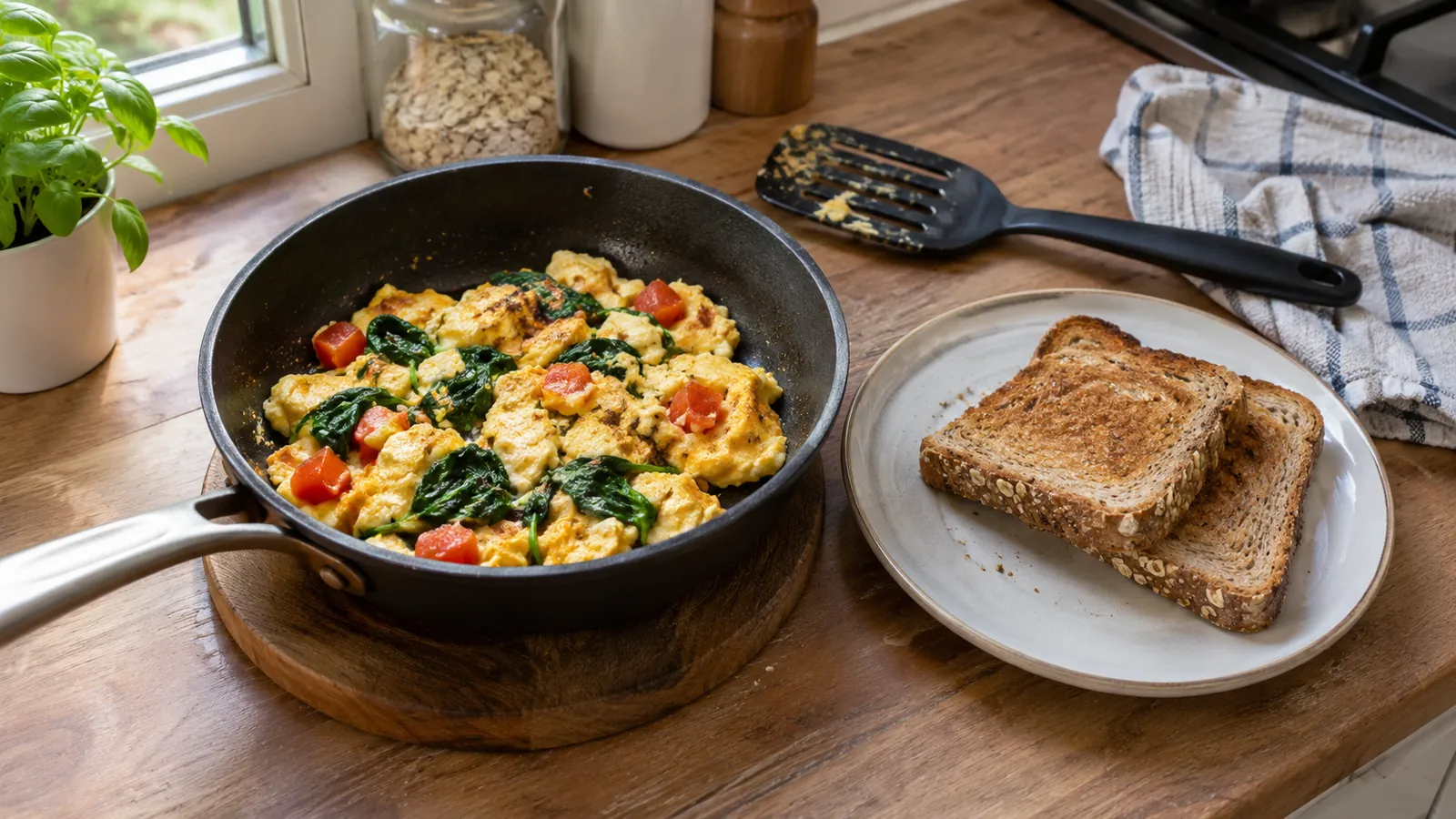
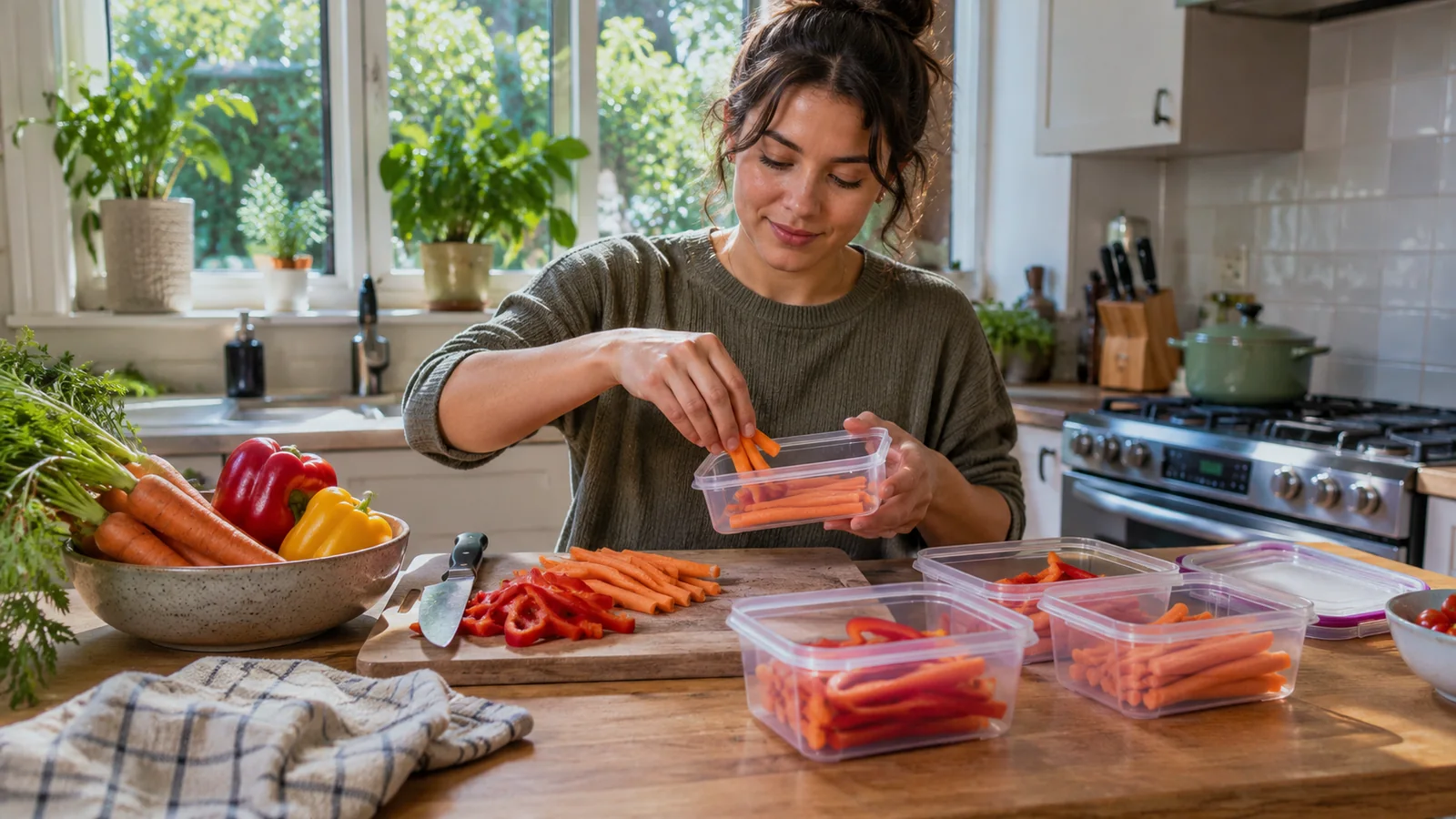
For example, you might plan a vegetable omelette tonight, a bean wrap tomorrow and a small tray of roasted vegetables at the following dinner. Peppers could serve the first two meals, while carrots fit the wrap as sticks and the roasting tray as chunks. You can wash the carrots together, then cut each portion appropriately.
Keep the batch modest. Preparing enough for two or three meals means the number of meals, not a guaranteed storage period. Three meals could fall within one day or be spread farther apart. The ingredient, its condition, package directions and cold storage determine what is appropriate.
If you need a broader plan for grains, sauces and cooked components, our weekend meal-prep guide covers that larger task. Here, leave those jobs aside and concentrate on the vegetables you will soon use.
Decide What Is Worth Cutting Now
Choose ingredients that solve a real preparation problem. A carrot already cut into the shape you need can make lunch easier. Finely chopping every remaining carrot, regardless of the next meal, may leave you with the wrong shape and less flexibility.
Think through these choices before you begin:
- Prepare the shared ingredient. If two dishes need pepper strips, make those portions together.
- Leave uncertain ingredients whole. If you have no definite use for a tomato or cucumber, postpone cutting it.
- Keep delicate finishing work for the meal. Chopping herbs or slicing a tomato just before serving may suit the texture you want better.
- Respect the package. Follow storage and use-by instructions on bought cut vegetables. Your own label does not extend them.
Different vegetables respond differently to preparation. There is no single container method or storage time that makes all chopped produce suitable for several days. When uncertain, prepare less and keep the rest in its usual whole-vegetable storage conditions.
Wash, Dry and Cut in a Clean Sequence
Set out containers before cutting so you can put portions away promptly. Clear the work surface and keep raw meat, poultry and seafood away from the produce area. Use clean utensils and a clean cutting board; wash equipment after it has touched raw animal foods before using it for vegetables.
Follow this sequence:
- Wash your hands. Use soap and water for at least 20 seconds before preparing produce and after handling anything that could contaminate it.
- Check the vegetables. Remove damaged or bruised areas, and discard rotten produce. Do not turn an ingredient that should be discarded into a larger batch.
- Rinse before cutting or peeling. Use clean running water, rubbing the surface gently. A clean produce brush can help with firm vegetables. Avoid soap, household detergent and commercial produce washes.
- Dry with a clean towel. Use a clean cloth or paper towel; a dirty tea towel can undo careful handling. Remove excess moisture from leafy vegetables with clean equipment.
- Cut for the intended dish. Keep pieces reasonably consistent within each portion so you can handle them together when cooking.
- Cover and refrigerate promptly. Do not leave finished containers on the counter while you tackle unrelated kitchen jobs.
Washing reduces contamination but does not sterilise vegetables. Produce labelled prewashed or ready-to-eat can generally be used without rewashing; follow its instructions and avoid introducing contamination during handling.
Store Portions So You Can Find and Use Them
Use clean food-storage containers with covers and keep cut produce in a refrigerator at 4°C/40°F or below. A refrigerator thermometer helps you check the temperature rather than relying on how cold the shelf feels. Place vegetables where raw meat juices cannot drip onto them.
Keep portions separate when their uses differ. Pepper strips intended for a raw wrap should not share a container with ingredients that have contacted raw meat. Separate containers also let you take what you need without repeatedly handling the whole batch.
Label each portion with the vegetable, preparation date and intended meal. “Pepper strips — Tuesday — omelette and wrap” is enough. The date records when you prepared it; it is not a safety certificate or a new use-by date.
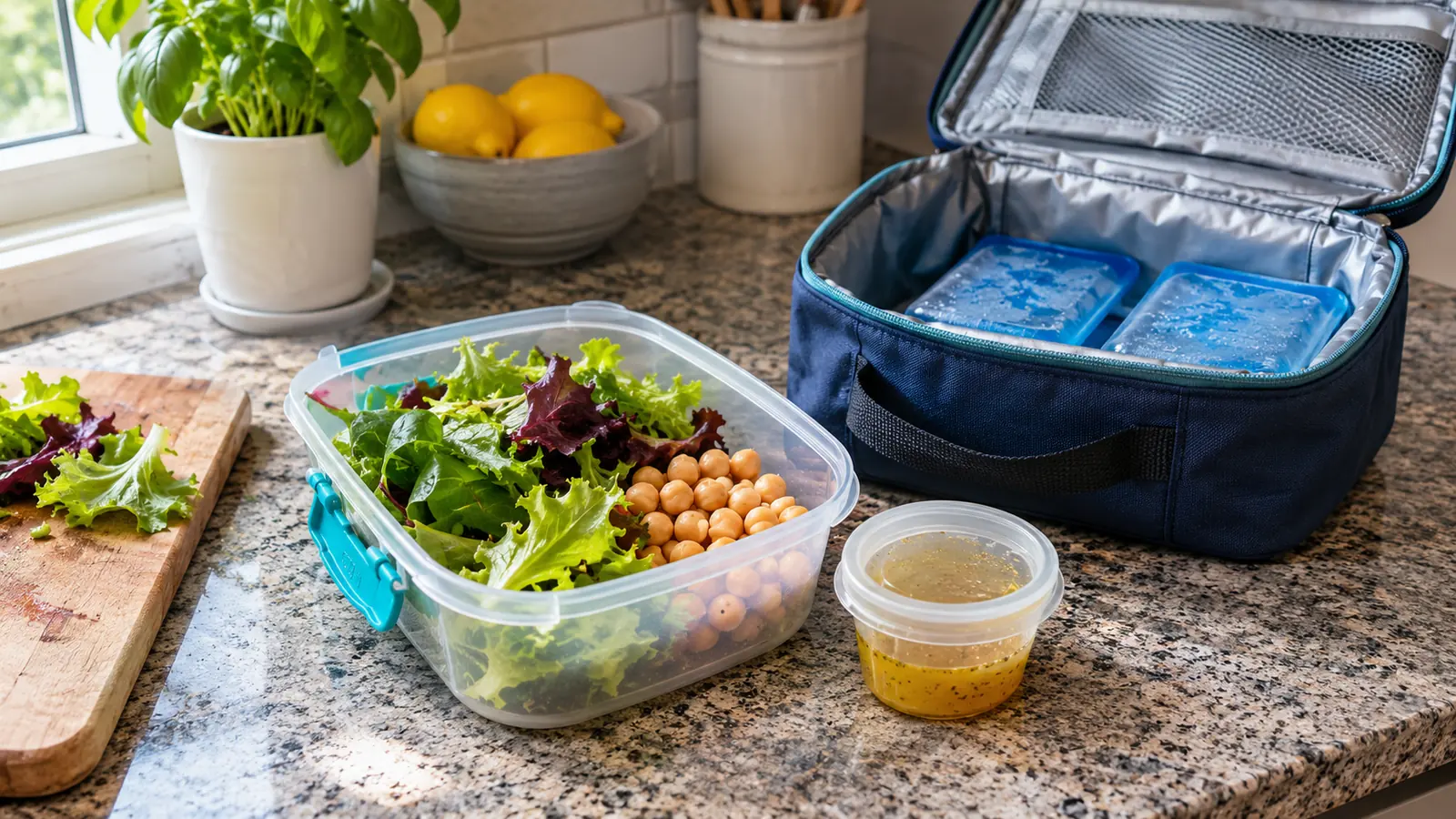
Put the portion needed first where it is easy to see. Avoid burying older containers beneath a fresh batch. For a packed meal, our salad lunch guide explains the separate issue of keeping lunch cold away from home.
Make One Small Batch Work Across Different Meals
You can keep flavours flexible by leaving sauces and dressing until the meal. Plain prepared pepper strips can go into an omelette or a wrap without requiring both meals to taste alike. Add seasoning to the portion you are about to use.
A practical batch might contain one small box of pepper strips, one portion of carrot sticks and one portion of carrot chunks. Pair them with foods you already have rather than shopping for three complicated recipes. If only one meal is certain, prepare one meal’s vegetables and stop there.
When plans change, review the unused portion promptly. Do not assume cooking will rescue food that has been stored unsafely, and do not keep delaying its use because the container looks tidy. Follow ingredient-specific guidance and discard anything spoiled or of uncertain safety. Once vegetables are cooked, follow the appropriate leftover-storage routine.
After the last planned meal, ask which preparation actually helped. Keep that part next time and drop the rest. A small batch you use is more useful than an ambitious row of containers you struggle to finish.