Power outage preparation starts with knowing what your household needs when electricity stops: light, a way to communicate, safe food and water, and support for anyone whose health depends on powered equipment. Before buying anything, gather what you already own and write down the gaps. A small, usable plan is easier to maintain than a cupboard full of unfamiliar emergency gadgets.
The right preparation depends on your home, climate and medical needs. A short evening interruption and a prolonged outage during extreme temperatures require different decisions. Follow local emergency instructions, and make leaving for a safer place part of your plan.
Map What Stops Working
Walk through an ordinary day and identify the tasks that rely on electricity. Include cooking, refrigeration, lighting, internet access, building entry systems and water pumps. In an apartment, ask building management about lifts, shared doors and emergency arrangements.
Make a short household note with three columns: essential task, temporary alternative, and the point at which that alternative becomes inadequate. For example, a charged phone can cover communication initially, but you still need a contact plan if mobile service fails.
Discuss this with everyone who lives with you. Decide where supplies belong and who may need help reaching them. Keep access routes clear; equipment stored on a high shelf may be useless to the person who needs it.
Assemble Light and Charging Before Buying More
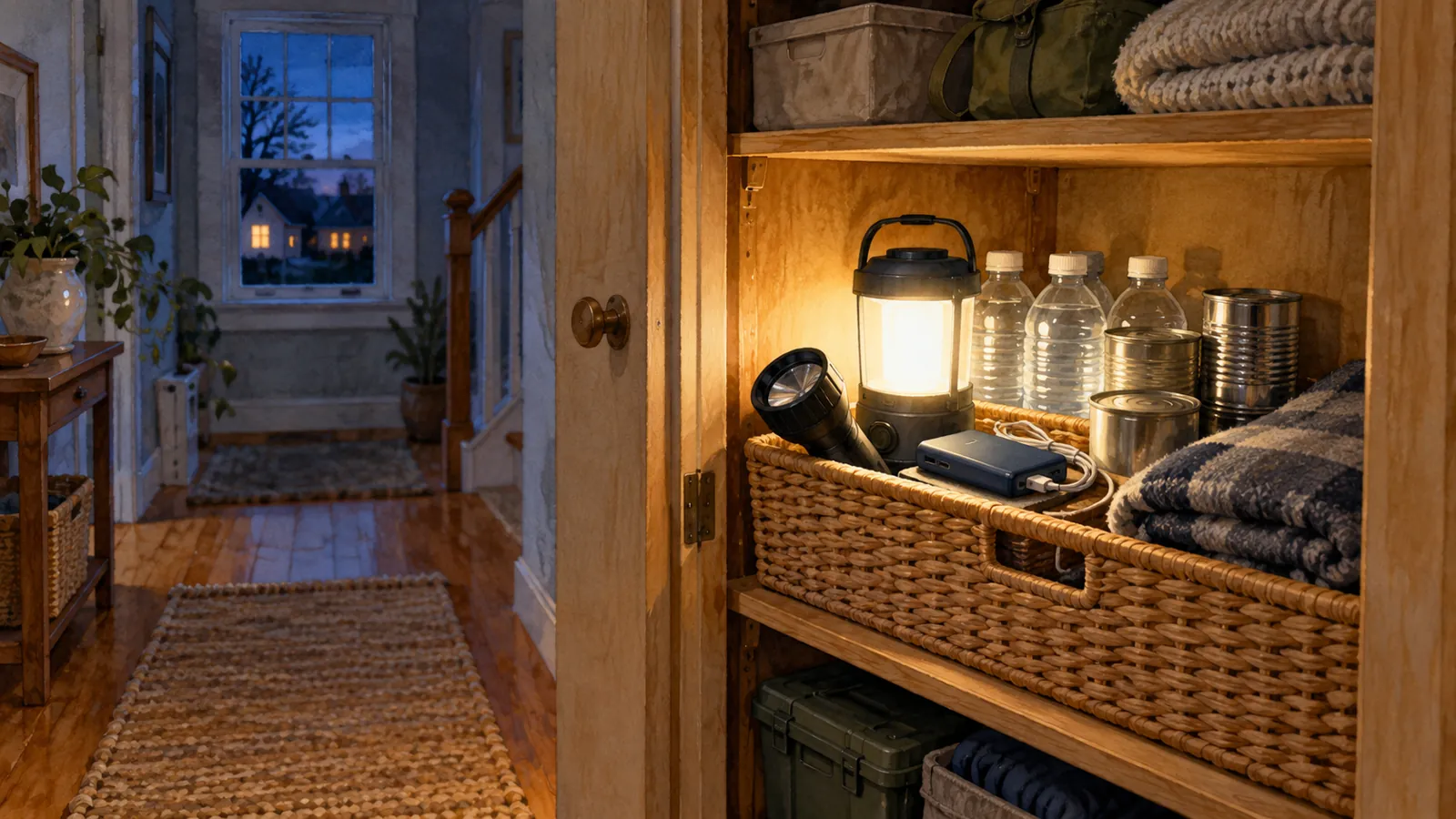
Find your torches, headlamps, battery lanterns, chargers and spare batteries. Test them rather than assuming they work. Choose an accessible storage location and keep the batteries appropriate to each device nearby, following the manufacturer’s storage instructions.
Battery lighting avoids the open flame of candles. Position a lantern where it can illuminate a shared room, and keep a torch available for moving around. Include spare hearing-aid batteries or other small essentials relevant to your household.
Charge phones and rechargeable lights when an outage is forecast. A power bank can help keep a phone available, but check its condition and compatibility first. Our guide to choosing a power bank explains the specifications to compare before spending money.
Reduce unnecessary phone use during an interruption. Save important information offline and keep a paper copy of emergency numbers. A battery radio can provide another route to official updates where local broadcasts are available.
Plan Meals That Do Not Need Electricity
Look at the food you normally eat and identify meals that need no refrigeration or cooking. Build a modest reserve of familiar shelf-stable foods, taking allergies, infant feeding and pets into account. Include a manual can opener if your choices require one.
Store drinking water according to local emergency guidance and household needs. Water systems may also depend on electricity. Follow official notices if supplies become unsafe; clear-looking water is not proof that it is safe.
Rotate stored food through ordinary meals and replace what you use. Buying large quantities of unfamiliar supplies can create waste and leave the actual problem unsolved. Put a simple review date on your household calendar.
Make Cold-Food Decisions Before the Fridge Warms
Keep an appliance thermometer in the refrigerator and freezer. Aim for a refrigerator at or below 4°C (40°F) and a freezer at or below −18°C (0°F). Have a cooler and frozen gel packs available if practical. The refrigerator temperature check guide covers routine monitoring.
When power fails, note the time and keep appliance doors closed. CDC guidance gives these approximate limits when doors remain shut: four hours for a refrigerator, 48 hours for a full freezer, and 24 hours for a half-full freezer. They are planning guides, not a reason to ignore measured temperatures.
After four hours without power or another cold source, discard refrigerated perishables such as meat, milk, eggs and leftovers. Never taste food to test its safety. Frozen food that still contains ice crystals or is at or below 4°C (40°F) may be refrozen or cooked. If you cannot establish that a perishable food remained safe, discard it.
Give Medical Needs Their Own Plan
If anyone uses an electrically powered medical device, contact the care team and equipment supplier before an outage. Ask about approved backup power, expected operating time, alarms, transport and where to get help if the backup runs out. A phone power bank is not automatically suitable for medical equipment.
For refrigerated medicines, ask a pharmacist about the specific product’s storage limits and what to do after a temperature excursion. Do not apply refrigerator food rules to medicine or assume that every refrigerated drug has the same limit. Keep the relevant instructions and contact details with your emergency information.
Identify an accessible place with reliable support where the person could go. Ask your utility whether medical-needs registration is available, while keeping an independent backup plan. Registration should not be treated as a guarantee of uninterrupted supply or immediate restoration.
Review ordinary supplies too, using a home first-aid kit checklist to find missing items without duplicating everything you already own.
Avoid Dangerous Backup Shortcuts
Never run a fuel-burning generator inside a home, garage or other enclosed or partly enclosed space. Keep it outdoors at least 6 metres (20 feet) from doors, windows and vents, with exhaust directed away from buildings. Opening a garage door does not make indoor operation safe.
Carbon monoxide is invisible and has no smell. Install working battery-powered or battery-backup CO alarms near sleeping areas. If an alarm sounds or poisoning is suspected, move outside to fresh air immediately and call local emergency services.
Never use a charcoal grill indoors or a gas oven to heat your home. Do not connect a generator to a household wall socket: this can send electricity back into utility lines. Any connection to home wiring needs a qualified electrician and appropriate transfer equipment. Follow the generator’s instructions for weather protection, loading and refuelling.
A generator is not a compulsory first purchase. In a small flat without a safe outdoor location, it may be unsuitable. Start with the needs you can meet safely, then seek qualified advice about larger backup systems.
Rehearse a Simple Outage Response
Try this short discussion while the lights are still on:
- Find the lighting kit and confirm everyone can reach it.
- Locate the utility’s official reporting number and outage updates.
- Agree who will contact relatives or neighbours who need assistance.
- Identify a safer destination if medical support, heat or cooling becomes inadequate.
- Write down what you would check after power returns, including food temperatures and used supplies.
During a real outage, stay away from fallen wires and damaged electrical equipment. Use official information rather than rumours about restoration times. If conditions become unsafe, follow emergency advice and leave when needed instead of waiting for a predicted repair.
Afterwards, replace used batteries and food, recharge equipment and note what was missing. Choose the next purchase from that experience. Preparedness becomes manageable when each item has a purpose, a storage place and someone who knows how to use it.