To work out pasta portions per person, measure it dry and consider what else is on the plate. For an ordinary main meal, 75–100g of dried pasta per adult is a useful planning starting point. Adjust it for the people eating, their appetite and the accompanying food. It is an estimate for cooking, not a limit on what anyone should eat.
The most useful number is the one that works in your kitchen. Measuring once, noticing the result and making a small adjustment next time is more reliable than pouring an extra handful into the pan just in case.
Choose an estimate that fits the meal
Portion guides do not all use the same amount. UK food-waste guidance commonly uses 75g of dried pasta for a main meal, while Love Food Hate Waste New Zealand’s planning table uses 100g. Barilla’s product guide uses 56g, or 2 ounces, as its dry-pasta serving reference. These figures describe different starting points rather than a universal requirement.
Before choosing yours, picture the finished meal:
- Pasta as the main attraction: start with an amount you expect to find satisfying, then adjust after trying it.
- Pasta alongside other substantial dishes: plan a smaller amount than you would for a pasta-centred dinner.
- Pasta in soup or a shared salad: use the recipe’s total and the number of servings, rather than automatically allocating a full main-meal portion to everyone.
- A meal plus tomorrow’s lunch: count the planned lunch separately so it is intentional extra food.
Ask guests about appetite when practical. Children and adults will not necessarily want the same amount, and one person’s preference can change from day to day. A portion estimate should help you cook; it should not become a rule imposed on everyone at the table.
Measure the dry amount in four steps
Decide how many meals you are making
Count tonight’s diners, then add any lunches or other planned portions. Write down what each extra portion is for. An unnamed leftover serving is easy to forget once it is in the fridge.
For example, two dinners and one lunch make three planned portions. If the lunch is intended to be smaller, calculate it separately rather than assuming all three are equal.
Choose a starting weight for each person
Suppose you choose 80g for each of two dinners and 60g for a smaller lunch. Your total is 80 + 80 + 60 = 220g of dried pasta. These are illustrative choices, not recommended intakes.
If you choose 90g each for four similar main-meal portions, the total is 360g. Changing the number of diners should change the calculation, rather than automatically changing the size of everyone’s portion.
Weigh it before it reaches the pan
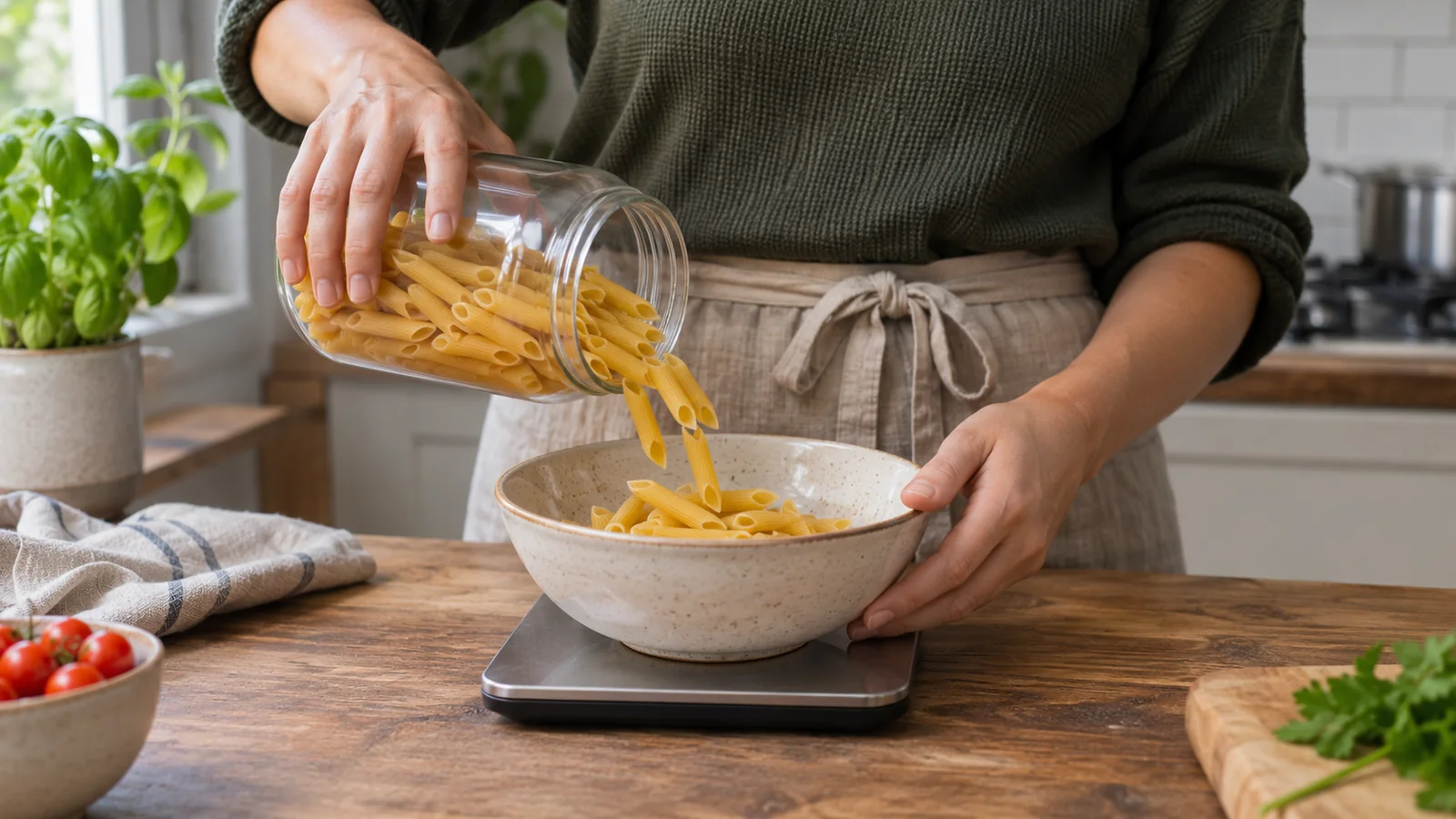
Put an empty bowl on the kitchen scale and press tare or zero. Add the dry pasta until you reach your chosen total. Check that the display uses grams if your calculation is in grams.
Put the remaining dry pasta away before cooking. That small separation makes it easier to follow your plan instead of adding the rest of an open packet because it looks inconvenient to store.
Cook according to the particular product
Follow the packet’s water and cooking instructions, checking the texture near the stated time. Different shapes and products need different treatment. Having measured the pasta does not mean you should guess the cooking time.
After serving, notice whether the total suited the meal. If people still want food, respond to that. The calculation is there to support dinner, not to make anyone ignore hunger.
No scale? Make a repeatable household measure
A cup of one pasta shape does not necessarily weigh the same as a cup of another. Large shells leave different gaps from small macaroni, and long strands do not fit neatly into the same measure. Handfuls also vary between people.
If the packet gives a volume measure for that exact product, use it as an estimate. Otherwise, divide a known packet weight into approximate equal parts. For example, one fifth of a 500g packet is 100g. This is less precise than weighing, but more deliberate than an unmeasured pour.
When you next have access to a scale, weigh the amount you usually cook and pour it into a familiar cup or container. Note the level and the pasta shape. Keep that reference with your kitchen supplies, and recheck it when you switch products.
Avoid treating a spaghetti-measuring hole as suitable for every long pasta. Strand thickness changes the amount that fits. A familiar measuring method is useful only when it stays reasonably consistent.
Keep dry and cooked weights separate
Pasta absorbs water during cooking, so its cooked weight will be higher than its dry weight. The increase varies with the product and cooking, which makes a single conversion unreliable for every meal.
If a recipe specifies 300g of dried pasta, measure it before cooking. If it asks for cooked pasta, do not substitute the same weight of dry pasta. Check which form the recipe means before starting, especially when using leftovers.
Fresh, filled and specialist pastas need their own estimates. A dry-penne calculation should not automatically be applied to ravioli or fresh tagliatelle. Follow the relevant packet or recipe and adjust from experience.
Learn from the meal without keeping a food diary
A short kitchen note is enough: pasta shape, dry amount, diners and whether you wanted more or had extra. You might write, “Penne, 240g, three dinners with bean sauce; a little left.” Next time, change one part of the plan and see whether it fits better.
Keep the context attached. An amount that worked with a substantial sauce may not suit a simpler dish. Add your preferred household quantity to a practical grocery list so shopping and cooking use the same estimate.
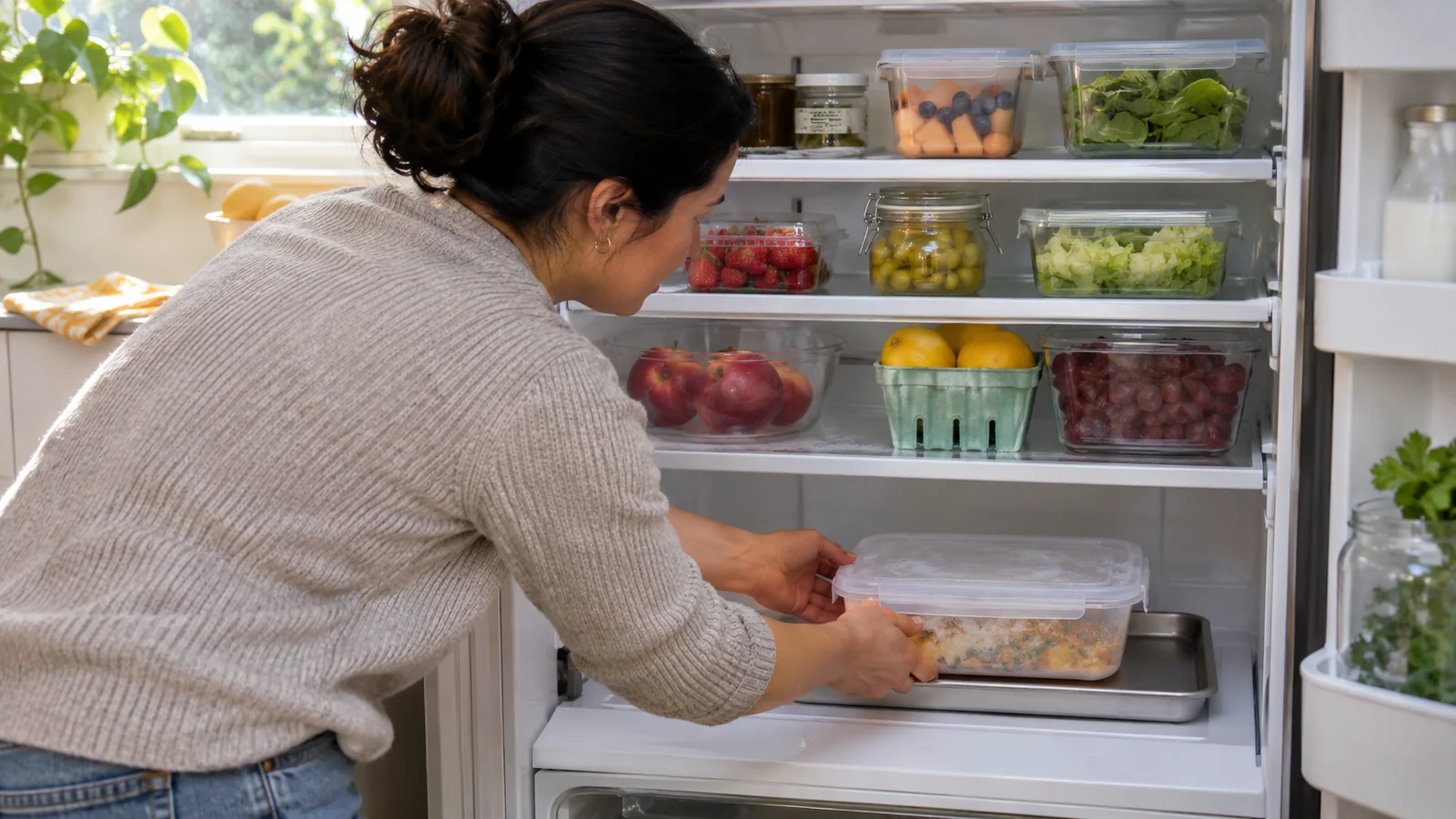
If extra pasta is planned, store it safely. NSW Food Authority advises dividing leftovers into smaller portions, refrigerating within two hours, keeping them below 5°C and eating cooked pasta within two days. Follow local guidance and any stricter requirements for the other ingredients. Our guide to freezing meals in portions can help you organise suitable extras.
Start with one measured meal. Keep what worked, adjust what did not, and let your own household’s meals become the reference.