A broken appliance, faulty phone, missing accessory, or failed repair can turn into a small investigation. Where is the receipt? Did the warranty require registration? Was the problem inside the return window, the manufacturer’s warranty, an extended plan, or a legal consumer guarantee? What was the serial number? Who repaired it last time?
The best time to answer those questions is not when the product has already stopped working. A simple warranty and return file can save time, reduce disputes, and help you explain the problem clearly when you contact a shop, manufacturer, marketplace, repair center, insurer, or payment provider.
This is not about keeping every scrap of paper forever. It is about saving the records that prove what you bought, when you bought it, what protection applied, and what happened after the purchase.
Quick Checklist
For important purchases, save:
- Proof of purchase, such as a receipt, invoice, order confirmation, card statement, or marketplace order page.
- The product name, model number, serial number, and purchase date.
- Warranty terms, guarantee documents, and any extended-service-plan details.
- Return-window information and seller contact details.
- Photos of the product, packaging, accessories, and visible damage or fault.
- Manuals, care instructions, and safety notices.
- Registration confirmation, if you register the product.
- Repair tickets, chat transcripts, emails, service reports, and replacement confirmations.
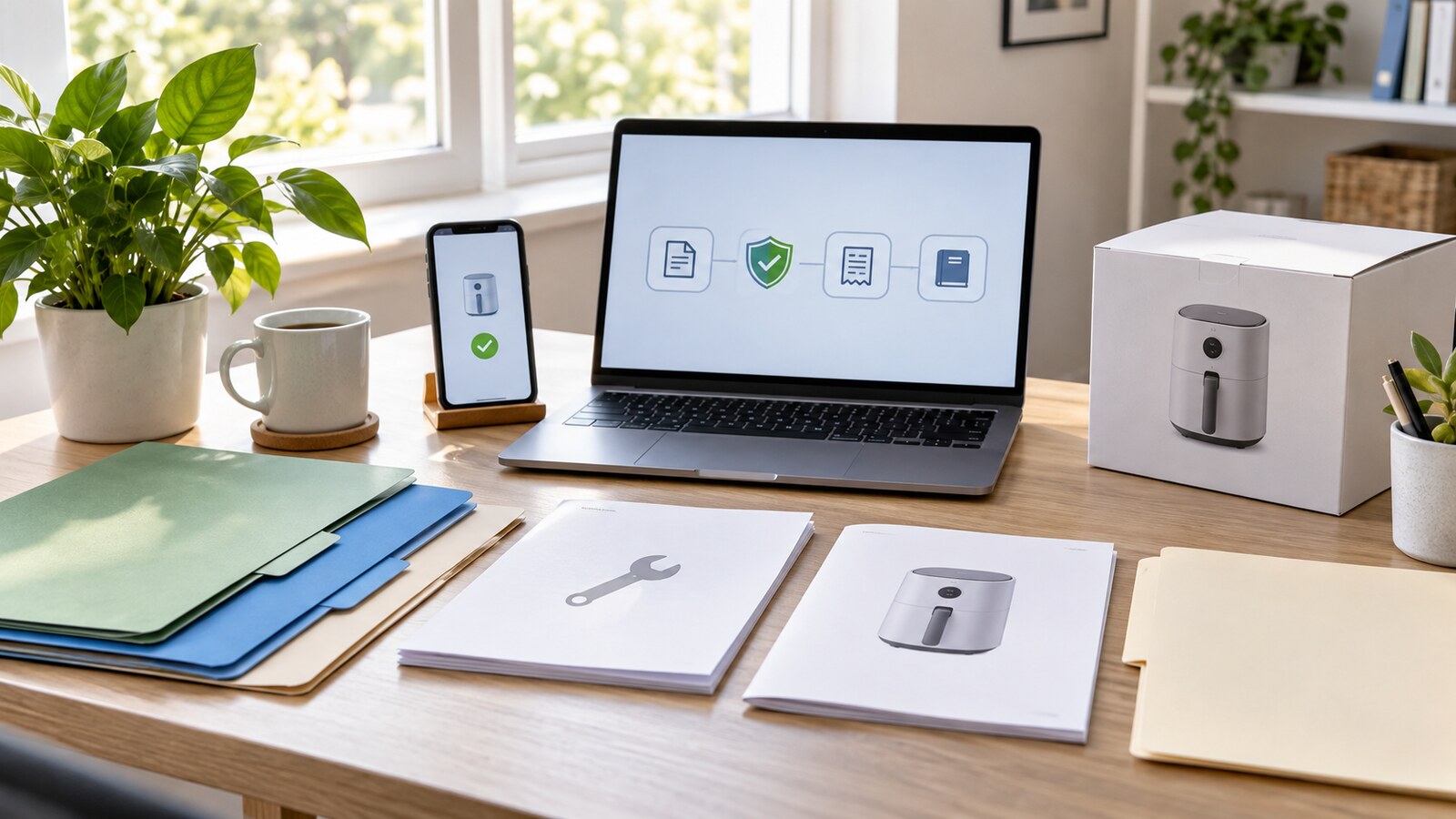
Keep the records in one digital folder, and keep paper originals for higher-value items when they may be required locally. A folder that takes five minutes to create can save hours later.
Proof of Purchase Comes First
Most warranty, repair, return, refund, and consumer-rights conversations begin with proof that you bought the item. A paper receipt is useful, but it is not the only possible proof in many places. Online order confirmations, invoices, delivery notes, card statements, marketplace account pages, and store account history may also help show where and when the item was purchased.
The practical lesson is simple: save more than one form of proof when the purchase matters. Receipts fade, emails get buried, marketplace accounts can be closed, and phone photos can disappear during a device change. A digital copy plus a backup location is safer than relying on a single slip of paper.
For expensive, long-life, or hard-to-replace items, save:
- The full receipt or invoice.
- The payment confirmation or card statement line.
- The order number.
- The seller’s name and contact details.
- The delivery confirmation, if bought online.
- The product page or listing screenshot, especially if the item description, included accessories, or warranty wording may matter later.
If a receipt contains sensitive payment details, store it securely and avoid sharing more than the business needs for the claim.
Save The Warranty Terms, Not Just The Box
Packaging can be useful for transport or returns, but the warranty terms matter more. A warranty is usually a promise from the seller, manufacturer, or plan provider about what they will do if the product fails under covered conditions. It may explain the length of coverage, what parts or labor are included, whether shipping is covered, what counts as misuse, and where to request service.
Save the warranty document or a clear photo of it. If the warranty is online, save a PDF or screenshot near the purchase record. Product pages can change after you buy, and customer-service agents may ask what warranty was advertised at the time.
Also save any extended-service-plan or protection-plan document separately from the manufacturer’s warranty. These are not always the same thing. They may have different claim processes, deductibles, exclusions, repair networks, or start dates.
If you register a product, save the confirmation email or screenshot. Registration may make service easier, but consumer rights can vary by country and may not disappear simply because a product was not registered. Treat registration as an admin step, not as your only protection.
Record Model And Serial Numbers
Model and serial numbers are often the quickest way to identify the exact product. They can appear on a label, under a battery cover, inside device settings, on an appliance plate, on packaging, or on the invoice.
Write them down or photograph them while the item is new and accessible. This is especially useful for:
- Phones, laptops, tablets, cameras, and headphones.
- Kitchen appliances and home electronics.
- Power tools, bicycles, strollers, and mobility devices.
- Furniture with replaceable parts.
- Heating, cooling, water, and security equipment.
Serial numbers can also support insurance claims, theft reports, recall checks, and repair histories. If you already keep a household inventory, connect the warranty folder to it. GDU’s guide to creating a home inventory for insurance claims explains the broader record-keeping habit; warranty records are a more focused version for purchases that may need service.
Know The Difference Between A Return, Warranty, And Legal Right
People often use “warranty” for several different situations, but the route matters.
A return policy is the seller’s rule for taking back an item. It may cover a change of mind, wrong size, duplicate gift, or unopened product. Return policies are often short and may depend on condition, packaging, tags, and purchase channel.
A commercial warranty or guarantee is a promise from a seller, manufacturer, or plan provider. It may cover defects for a stated period, but it can include conditions and exclusions.
Legal consumer protections are rights created by law. They differ by country and region, but many consumer agencies make the same broad point: a shop policy or commercial warranty does not necessarily replace legal rights when goods are faulty, not as described, unsafe, or not fit for normal use.
That distinction is why your records should show more than the warranty card. Save proof of purchase, product description, dates, photos, and communication. Those details help whether you are asking under a store policy, a manufacturer’s warranty, an extended plan, or local consumer law.
Photograph Condition And Missing Parts Early
For higher-value items, take a few quick photos when the product arrives. You do not need a studio shoot. Capture the product, the accessories included, the packaging condition, and any visible damage or missing parts.
This helps in several common situations:
- A courier damage claim.
- A seller saying the item was returned damaged.
- A missing accessory dispute.
- A repair center needing evidence of the original fault.
- A warranty provider asking for the serial-number label.
- A product recall or safety notice requiring model identification.
If the product fails later, take photos or short videos that show the issue clearly. For example, capture an appliance error light, a cracked part, a screen fault, a leak, a noise, or a failure to power on. Do not create unsafe demonstrations. If the product smells hot, sparks, leaks gas, overheats, or creates a safety risk, stop using it and follow the manufacturer’s safety guidance or contact a qualified professional.
Keep Manuals And Care Instructions
Manuals are not only for setup. They often explain cleaning, maintenance, safe use, approved accessories, troubleshooting steps, and conditions that could affect a warranty claim. A product that fails after ignored maintenance may be handled differently from one that fails during ordinary use.
You do not need to keep every paper booklet if digital copies are easy to find. But for appliances, electronics, tools, child products, mobility items, and home systems, save the PDF manual or a photo of the care page. Keep it in the same folder as the receipt and warranty.
Manuals also help when selling, gifting, donating, or recycling a product later. Before handing over a phone or laptop, privacy matters too. GDU’s guide to wiping an old phone or laptop before selling covers that separate step.
Track Repairs And Replacements
Once a product has been repaired, replaced, refunded, or inspected, the paper trail becomes part of the warranty story. Save every repair ticket, service report, replacement shipment notice, customer-service case number, and chat transcript.
Important details include:
- Date you first reported the problem.
- Name of the business, manufacturer, repair center, or marketplace.
- Case or ticket number.
- What fault you described.
- Photos or videos you sent.
- What remedy was offered.
- Whether the item was repaired, replaced, refunded, or rejected.
- Any new warranty period on a replacement or repaired part.
When conversations happen by phone, write a short note immediately afterward: date, time, number called, person or department, and what they said would happen next. If you later need to escalate, calm and specific records are much stronger than memory.
For purchases connected to contractors, subscriptions, invoices, or services, payment-verification habits also help. GDU’s guide to verifying invoice payment details is useful when the dispute involves a business, repairer, or service provider.
Build A Simple Folder System
Do not overcomplicate the system. If it is annoying, you will stop using it.
Create one folder called something like Purchases and Warranties. Inside it, use either year folders or category folders:
- Appliances
- Electronics
- Furniture
- Tools
- Baby and family equipment
- Travel gear
- Home systems
- Repairs and service plans
For each important item, use a consistent file name:
2026-09-air-fryer-receipt-model-serial.pdf
or
2026-09-laptop-warranty-repair-case-1234.pdf
If you prefer paper, use a folder with sections and put a small note on each record: product, purchase date, store, warranty end date, and where the digital backup lives.
For shared households, make sure another trusted adult knows where the records are. Important product records are not as sensitive as identity documents, but they still belong in a household admin system. If you already keep an emergency folder for essential documents, do not overload it with every receipt. Instead, include a note that says where purchase and warranty records are stored.
What Not To Keep Forever
Keeping records is useful; keeping everything forever is not. Delete or shred low-value receipts once the return window has passed and the item has no realistic warranty or tax relevance. Be careful with receipts that show payment details, loyalty numbers, names, addresses, or order references.
For larger purchases, keep records for at least as long as the return window, warranty, extended plan, expected dispute period, or insurance need. For built-in appliances, home systems, furniture, and expensive electronics, keeping records longer may make sense because repairs, recalls, resale, or insurance questions can arise years later.
When you dispose of a product, archive or delete its records depending on value and privacy. If the item was sold or donated, keep only the information you may need for proof of transfer, tax records where relevant, or later questions.
Bottom Line
A warranty file is a small household habit with a practical payoff. Save proof of purchase, warranty terms, product identifiers, manuals, photos, and repair records in one place. Keep the system simple enough that you will actually use it.
When something fails, you will be able to explain what happened, prove when and where you bought the item, identify the exact model, and follow the right claim path without searching through drawers, inboxes, and old boxes under pressure.