To organize a potluck, agree on the basics first: who is coming, when you will eat and what each person will bring. Then check allergies, serving equipment and how food will stay safely hot or cold. One shared message or short list is usually enough for a small gathering of friends.
A potluck works best when contributions fit the kitchen and the people attending. A dish that needs an hour in an already-full oven creates more work than a simpler contribution everyone can serve on arrival.
Organize the meal in six manageable steps
Set the meal time and the limits of the space
Give guests an arrival time and an eating time. These are different pieces of information: someone bringing a hot dish needs to know when it will actually be served. Include the address, approximate finish time and anything useful about access or seating.
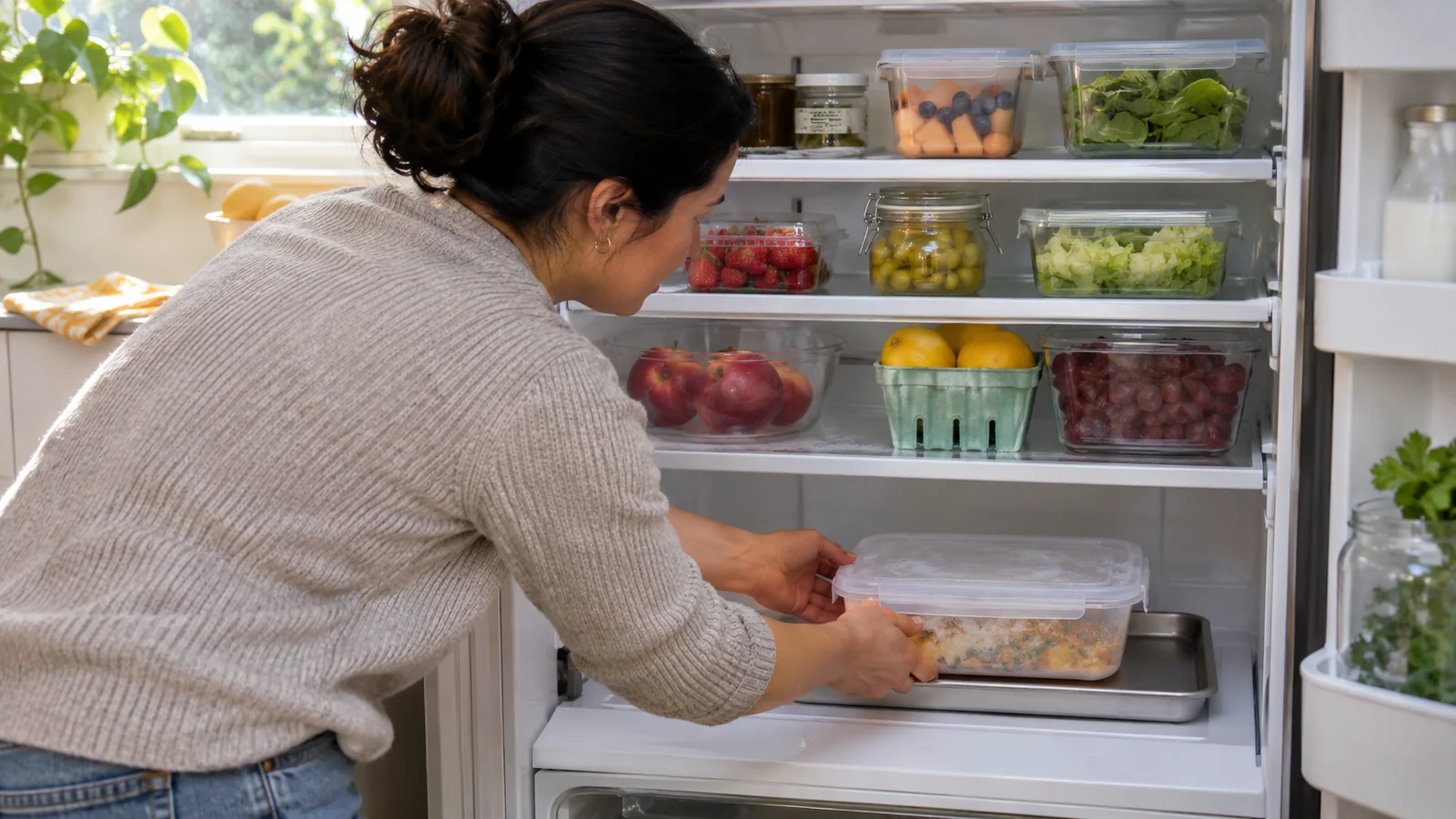
Before inviting contributions, check fridge space, oven capacity and available serving surfaces. If the gathering is outdoors, include a weather alternative and confirm access to handwashing. Do not plan a chilled buffet around a fridge that is already full.
Tell people how informal the meal will be. You might suggest familiar home cooking, shop-bought contributions or dishes that can be served without further preparation. Make non-cooking jobs welcome too. Bringing plates, setting the table or helping clear up can be a useful contribution.
Give each contribution a clear job
Use broad categories rather than prescribing a recipe for every guest. For example, a small group might divide responsibility for a substantial main dish, a second filling option, vegetables, bread and dessert. Adjust the mix to the people eating and the type of meal.
Ask each contributor to confirm three things: their dish, roughly how many people it serves and whether it needs refrigeration, reheating or cooking on arrival. That last detail can change whether the plan is workable.
Avoid asking everyone to bring a full meal for the entire group. Instead, explain that several dishes will be shared. Check the combined menu once people reply; three small side dishes may still leave you without a filling main course.
A useful confirmation message could be:
We are eating at 18:30. Please reply with your dish, approximate servings and any fridge or oven needs. Bring its serving spoon and ingredient details. Shop-bought food or help setting up is welcome.
Keep the final list in one place. If someone changes a dish, update that list so guests are not working from an earlier version.
Discuss allergies before the menu is fixed
Ask guests privately about food allergies, intolerances and other dietary requirements. Discuss what they need rather than guessing from a broad label such as vegetarian or dairy-free. Let them decide what information they want shared with other contributors.
Ask cooks to retain ingredient lists, including those for sauces and dressings. Clean preparation surfaces and equipment, keep relevant allergens separate and wash hands before handling food. A dish name alone does not provide enough information to assess ingredients.
Be honest about what each kitchen can manage. Do not promise an allergen-free meal when preparation or serving conditions are uncertain. Agree on a workable alternative with the guest rather than pressuring them to try a dish.
Keep each dish’s serving utensil with it. If an ingredient or preparation method is unknown, say so. Picking an allergen off a finished plate does not make that food suitable for someone with an allergy.
Match transport to the food and the journey
Choose dishes with the trip in mind. A contribution that needs careful temperature control may be unsuitable for a long journey without the right equipment. Change the dish or the arrangements before the day if you cannot keep it safely stored.
For cold perishable foods, use an insulated cooler with enough ice or frozen packs. Keep containers closed and protect ready-to-eat food from raw ingredients. For hot dishes, arrange suitable insulated transport and immediate hot holding at the destination; an ordinary covered pan is not a temperature-control plan.
US consumer guidance recommends keeping cold food at 4°C/40°F or below and hot food at 60°C/140°F or above. Local guidance may use different holding requirements, so follow the advice where you live. Use a thermometer to check rather than relying on how warm a container feels; our food thermometer guide explains the basic checks.
Tell the host when you leave and what storage the dish needs on arrival. If safe transport is impractical, bring something else or take a non-food role.
Set up serving before guests arrive
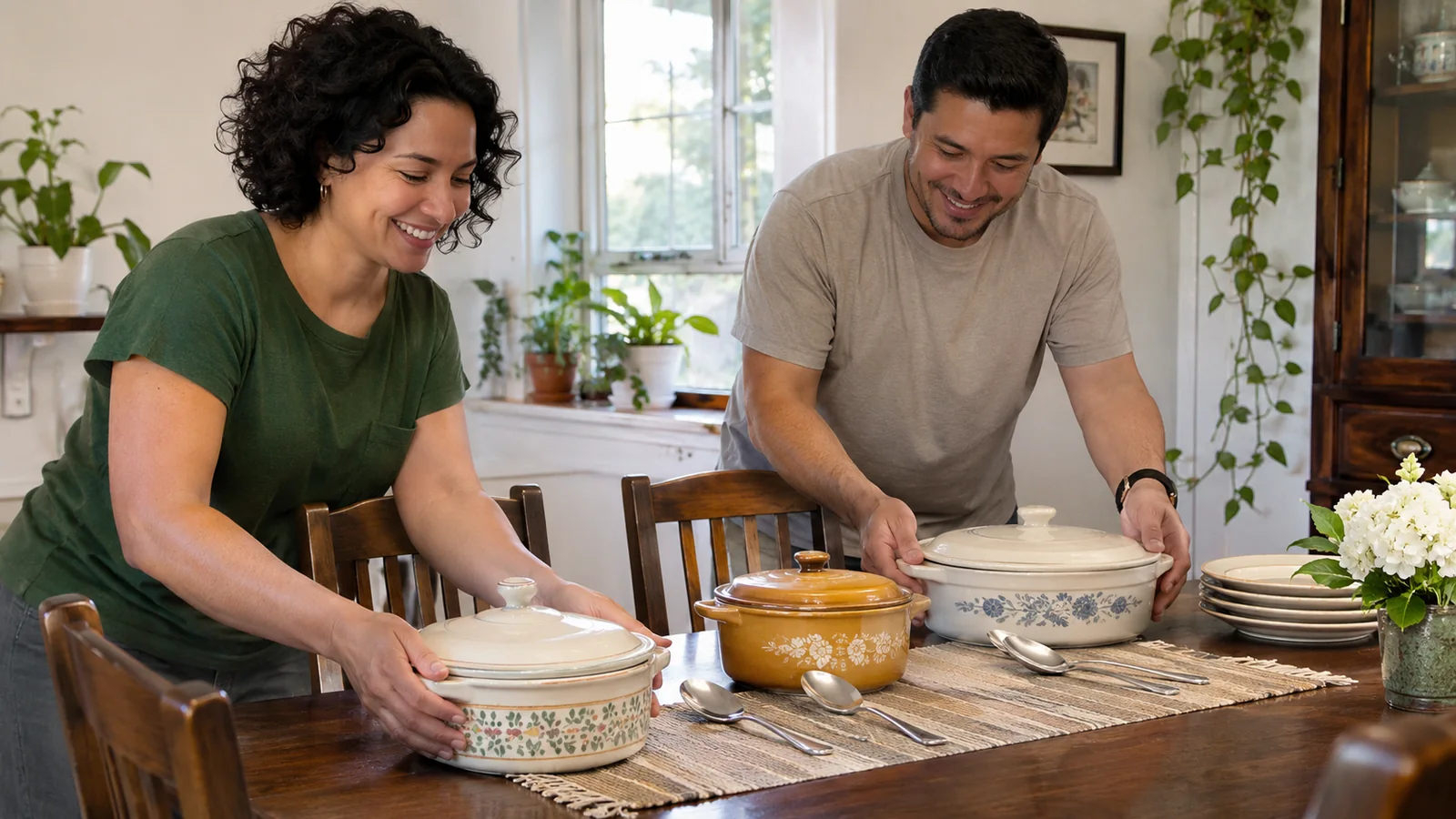
Lay out clean plates, cutlery and serving tools in advance. Keep drinks away from the food queue if space allows. Make room for containers and lids so the table does not become crowded as everyone arrives.
Put out small quantities and keep reserve portions under appropriate temperature control. Replace an emptied serving dish with a fresh one rather than topping it up. Keep ingredient information beside the corresponding dish and check that serving spoons have not been swapped.
Track time as well as temperature. Under US consumer guidance, perishable food without safe hot or cold holding should not remain out for more than two hours, reduced to one hour above 32°C/90°F. Count transport and serving time together. Discard food that exceeds those limits; refrigeration does not undo earlier unsafe storage.
Decide what happens to leftovers and dishes
Before settling into a long conversation, pack food that can safely be kept. Divide leftovers into shallow containers and refrigerate promptly. Do not wait for a large pot to cool completely on the worktop. Only send leftovers home when the journey and storage arrangements are suitable.
Label containers with the dish and date, and keep ingredient information available. For food suitable for freezing, our guide to freezing meals in portions can help with the next step. Freezing is an option for properly handled food, not a rescue for food left out too long.
Finally, match lids to dishes and share the clearing up. A successful potluck needs a manageable menu and a few clear agreements. Confirm those early, keep the food arrangements realistic, and leave the rest of the evening for enjoying the company.