
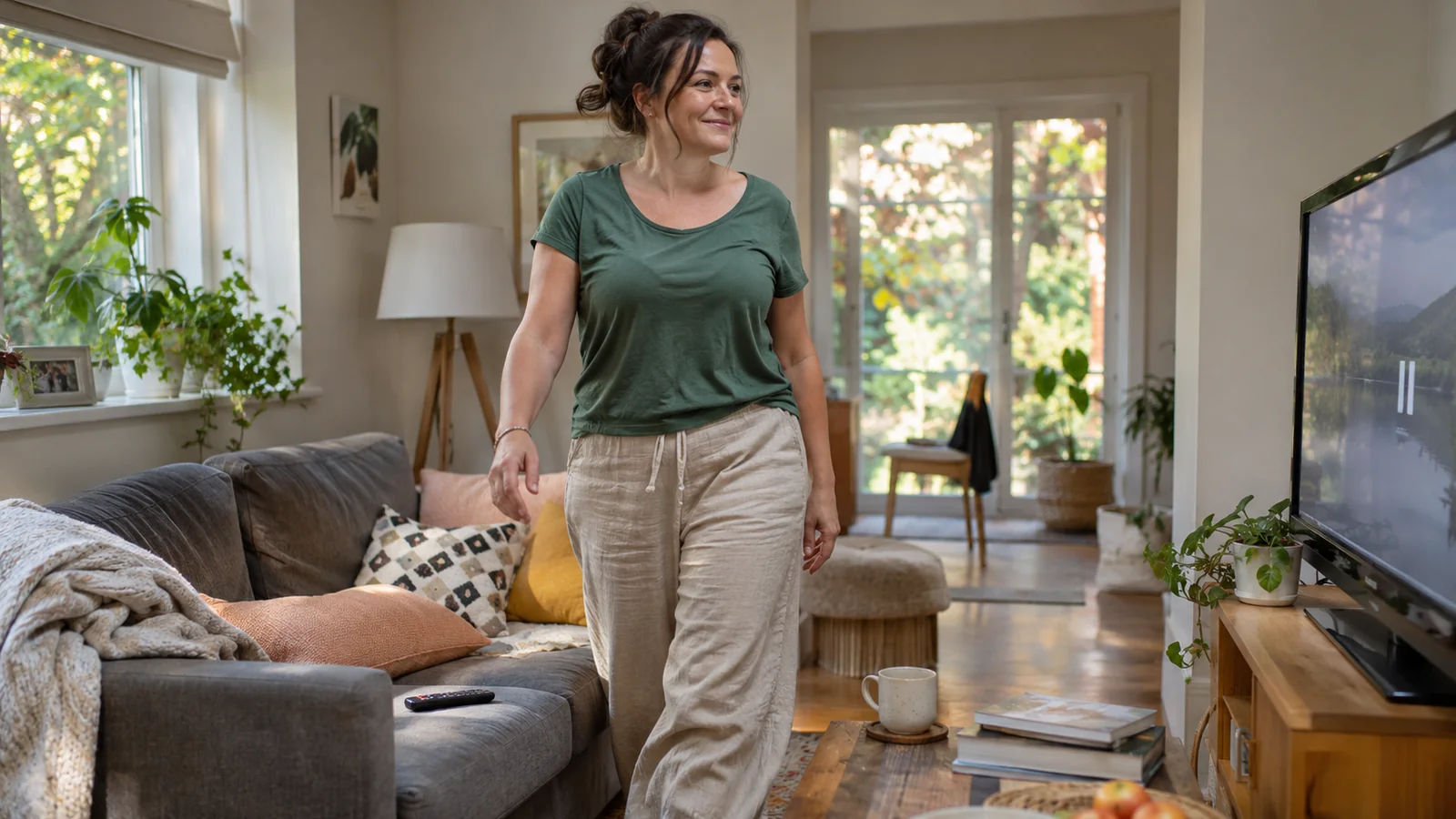
An episode ends, the next one starts and the evening quietly becomes one long stretch on the sofa. To move while watching TV, start with the gap between programmes: pause playback, stand if that suits you and take a comfortable movement break before deciding what to watch next. You can keep the evening restful while giving it a few changes of pace.
You do not need equipment, a step target or an exercise challenge tied to the plot. The useful change is making movement an ordinary part of the viewing routine, with enough attention to your surroundings to do it comfortably.
Give the Break a Clear Cue
Choose a moment you can recognise without checking the clock repeatedly. The closing credits, an advertising break or the end of a film can provide that cue. If the service rolls straight into the next episode, pause it before you lose the opportunity. Where an autoplay control is available, consider changing it so starting another programme becomes a deliberate choice.
For a long film or live broadcast, choose a suitable pause rather than waiting for an ending that is hours away. You might use an interval or briefly pause an on-demand programme. A reminder can help if natural breaks are easy to miss, but it should fit your viewing rather than become a stream of interruptions.
An episode is a convenient habit cue, not a medically established interval. Programmes vary greatly in length. The broader aim is to avoid spending the whole evening in one position, rather than to follow a universal timer rule.
Set Up the Room Before Settling In
Look at the path from your seat to the open part of the room. Put charging cables, bags and loose items away, and make sure the floor is dry and well lit. Check where pets or children may be playing. Keep a lamp on if a darkened room makes obstacles hard to see.
Leave the remote somewhere easy to reach. You should be able to pause playback before moving, without leaning awkwardly over a table. Put drinks down before standing and give yourself time to get steady. There is no need to carry a mug while trying to fit in extra steps.
A small room does not need a walking circuit around every piece of furniture. If turns feel cramped, choose a simple movement in one clear spot or move to another suitable area. Our guide to preparing a home workout space offers more detailed room checks if you also exercise there.
Try a Simple Between-Episodes Sequence
Use this as a practical sequence and change it to suit your abilities. It is an organisation aid, not a prescribed exercise dose.
Pause and put things down. Finish eating or drinking, set the remote aside and check the floor before changing position.
Stand comfortably, if appropriate. Use your usual safe way of getting up. Take a moment to feel steady rather than immediately turning or stepping away.
Choose one easy action. Walk along a clear route, take relaxed steps in place or go to another room for an ordinary task. Keep your eyes on where you are moving.
Return without rushing. Sit when you want to, then decide whether to start another episode or finish viewing. You do not have to complete a certain number of steps first.
A brief, manageable break is easier to repeat than a complicated routine you dread. If the first option is awkward, change it next time. You may find a short walk before the next programme more natural than standing beside the screen throughout it.
Keep Movement and Viewing Compatible
Easy movement during a familiar programme may suit some people, but the screen should not pull your attention away from balance or foot placement. If you need to look down, turn carefully or learn a movement, pause the programme. Subtitles and fast scenes can make dividing attention particularly unhelpful.
Keep demanding exercise for a separate session where you can concentrate on technique. Avoid balancing challenges, fast direction changes or using weights while absorbed in a story. Getting up between episodes is enough to begin changing the routine; there is no need to make leisure time a test of coordination.
If walking indoors is a useful option beyond TV time, our rainy-day movement plan can help you choose alternatives for other parts of the day. Keep the viewing break simple rather than adding that entire plan to your evening.
Adapt the Plan to Your Body and Household
Standing is not the right option for everyone. If you use seated movement, choose familiar actions already suited to your abilities and any advice you have received. A seated break can still be a change of activity, but simply remaining seated does not necessarily reduce sedentary time. Avoid copying an unfamiliar routine from a television scene.
With other viewers, agree on a pause before the programme begins. One person can take a break while another stays seated; nobody needs to join a challenge. Keep routes clear for mobility aids and avoid blocking another person’s view or access through the room.
If you are tired, shorten the break or choose an easier option. Stop if movement causes pain or makes you feel unwell. If you have not exercised for some time, have a medical condition or are unsure what is suitable, speak with a healthcare professional and follow your existing care guidance.
Understand What These Breaks Can Do
Public-health guidance encourages breaking up long periods of sitting with activity. These pauses are one way to put that advice into an evening routine. They do not erase hours of sitting or guarantee a particular effect on weight, blood sugar or fitness.
Gentle steps also do not automatically count as moderate aerobic exercise. That depends on the effort involved. A broader activity routine includes aerobic movement and muscle strengthening, adjusted to your circumstances. For a separate outdoor habit, see our guide to starting a walking routine.
Begin tonight with one clear decision: when the next suitable pause arrives, stop playback and choose a comfortable movement before continuing. Keep the option that works in your home, then use it again on another evening.