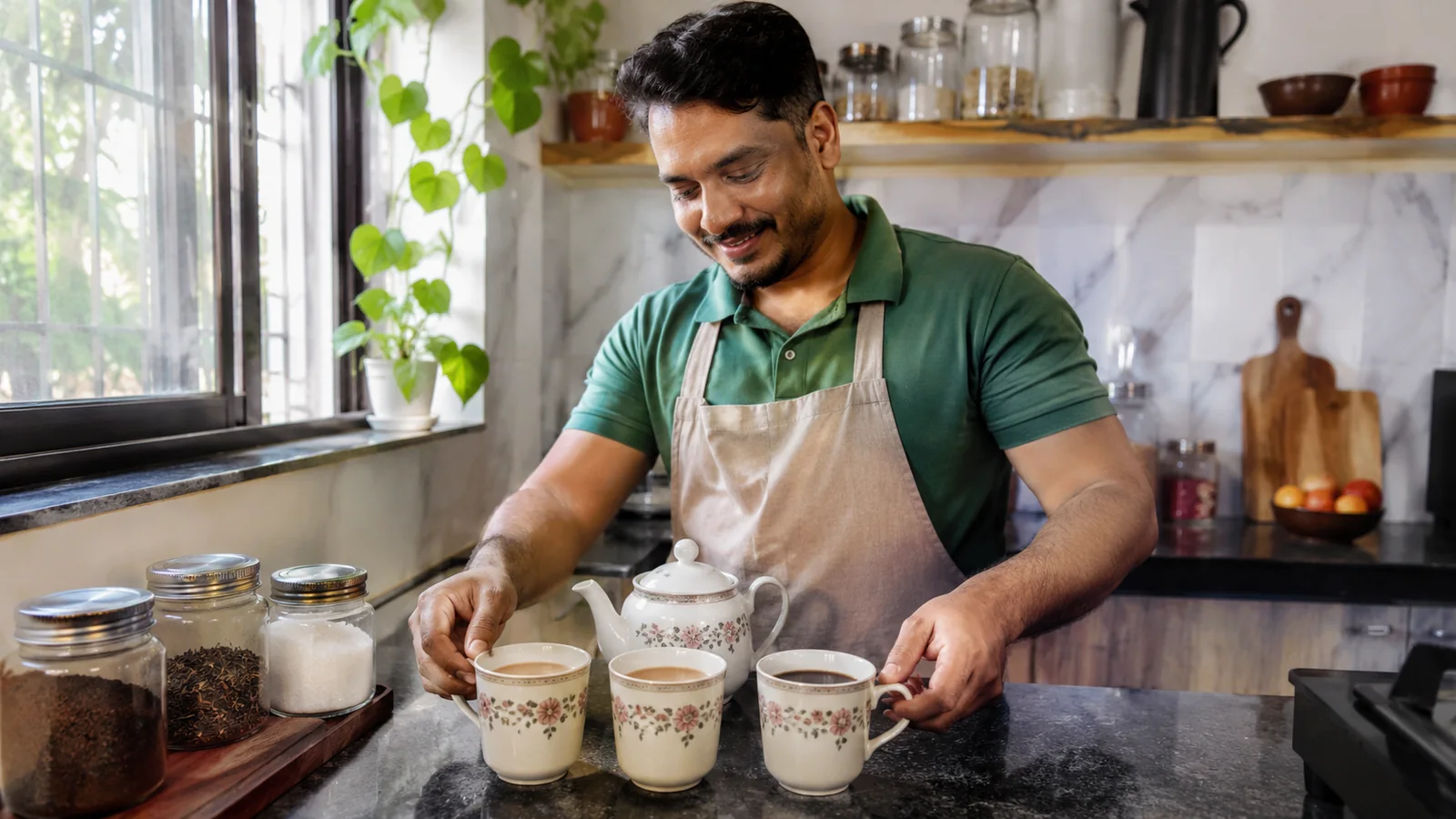
To make drinks for guests without leaving a full pot behind, ask what each person wants before heating water or brewing coffee. Count the first round, use the cups you will actually serve in and offer another round later. A small, accurate order is usually easier to manage than guessing how much everyone might drink throughout the visit.
You do not need a café menu or new brewing equipment. A familiar tea, your usual coffee and an easy alternative can be enough. The useful preparation is knowing where everything is, how much your equipment makes and how you will serve it safely.
Ask for an order you can remember
“Tea or coffee?” is a start, but it leaves several decisions until you are already pouring. Ask whether the person wants a drink now, which available option they prefer, and whether they take milk or sugar. Offer water as an ordinary choice rather than assuming everyone wants something hot.
Keep the choices realistic. If you have one tea and instant coffee, say so. You can mention decaffeinated coffee if you actually have it, without explaining or questioning anyone’s preference. Avoid promising a particular drink before checking the cupboard.
For a larger group, make a short note rather than trying to remember several variations while talking. Record the drink beside the person’s name or seat. A request for no milk should stay attached to that person’s cup until it reaches them.
Ask about allergies separately from taste preferences. If someone has an allergy, discuss the ingredients and preparation with them before making the drink. Keep packaging available to check; do not assume that a plant-based option is suitable for every guest or that removing an ingredient after mixing makes the drink safe.
Count cups rather than everyone in the room
The number of visitors is not necessarily the number of hot drinks. Someone may decline, another may want water, and two people may arrive later. Prepare for the people who have asked for the current round.
Choose the serving cups first. A small teacup and a large mug require different volumes, so a pot described as holding several “cups” may not fill that many of your mugs. Check with cool water before the visit if you are unsure of the usable capacity.
For example, imagine four visitors: two want tea, one wants instant coffee and one wants water. You need two tea servings and one coffee serving, not a four-person pot of each. Leave room in each cup for additions and comfortable carrying. This example is a planning method, not a fixed brewing ratio.
For electric kettles, heat the amount needed while following the appliance’s minimum and maximum fill marks. Never run below the minimum to avoid leftovers. Energy Saving Trust advises against heating surplus water; there is no need to turn that into a promised saving for every household.
Use the instructions for the drink you own
Different teas, coffees and brewers do not share one reliable dose or steeping time. Follow the packet and equipment guidance, then adjust future rounds to preferences. A familiar method is a better hosting choice than experimenting with unfamiliar equipment while people wait.
For individually prepared tea, separate cups make mixed preferences easier to track. Remove the bag or infuser at the appropriate point rather than leaving it in indefinitely while you organise everything else. Provide somewhere clean to put used bags or infusers.
If several people want the same tea, a small teapot may be convenient. Check how many of your chosen cups it fills and follow the tea’s directions for the amount and brewing time. Avoid automatically making your largest pot simply because it is available.
With instant coffee, prepare the requested servings individually using the product guidance. With a filter brewer or another batch method, check its smallest supported batch. If one serving is below the brewer’s intended range, explain the options you can reasonably offer instead of improvising an unsupported setup.
Arrange a clear serving space
Before heating anything, clear a stable section of counter for the cups, spoons and ingredients. Keep it separate from the edge, loose cables and the route people use to walk through the kitchen. Put the kettle where you can lift and replace it comfortably.
A simple sequence keeps the job manageable:
- Confirm the first-round order and select the cups.
- Set out clean utensils and check the ingredients needed.
- Measure water within the appliance’s safe fill range.
- Prepare the drinks using their individual instructions.
- Match additions to each guest’s request and serve a manageable number at a time.
- Ask about another round later rather than brewing it in advance.
If a guest has an allergy, agree on appropriate precautions with them, including clean equipment and avoiding cross-contact. A shared milk spoon or a splash from another cup can undermine an otherwise careful ingredient check. Be candid if you cannot meet their requirements; let them decide on an alternative.
Keep hot drinks away from small hands
Put hot drinks on stable surfaces well out of young children’s reach. Keep kettle leads inaccessible and avoid serving over a child or placing a cup near an edge. Do not hold a baby while preparing or drinking something hot.
Hot drinks can remain a scald risk after the obvious steam has faded. Adding milk does not establish that a drink is safe to touch or spill. Treat carrying and placement as part of serving, rather than focusing only on the moment water leaves the kettle.
Use a tray only if you can carry it steadily without overcrowding it. Two calm trips are preferable to balancing more than you can manage. Tell the recipient that the drink is hot, and put it down securely before continuing the conversation.
Finish one round before planning the next
Leave milk refrigerated until needed and return it promptly, following its storage instructions. Put out a modest quantity rather than leaving the whole supply beside warm appliances throughout the visit. Keep ingredient containers identifiable so guests can check what they are being offered.
Ask about refills when people are ready. “Would anyone like another?” gives you a fresh count and lets someone change drinks without leaving an unwanted serving behind. If visits regularly produce leftovers, note whether the problem is cup size, too many assumed refills or an oversized brewing method.
The same habit helps with wider kitchen planning: our freezer inventory guide explains how to keep track of stored portions, while the leftover-storage guide covers a separate food-handling task.
Good hosting does not require predicting every possible request. Offer what you have, listen to the answer and make the amount people want now. A clear first round leaves more attention for your visitors.