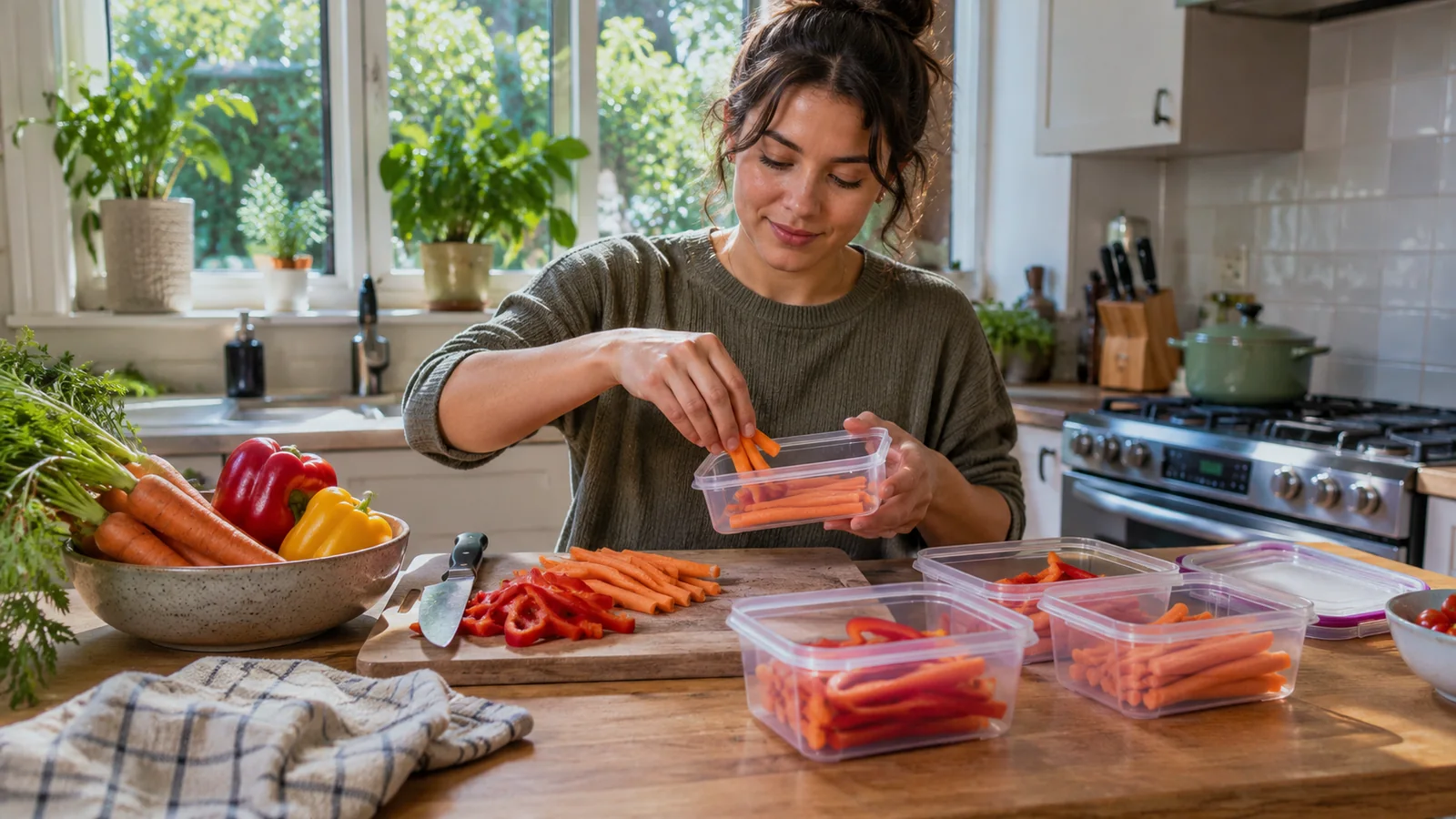
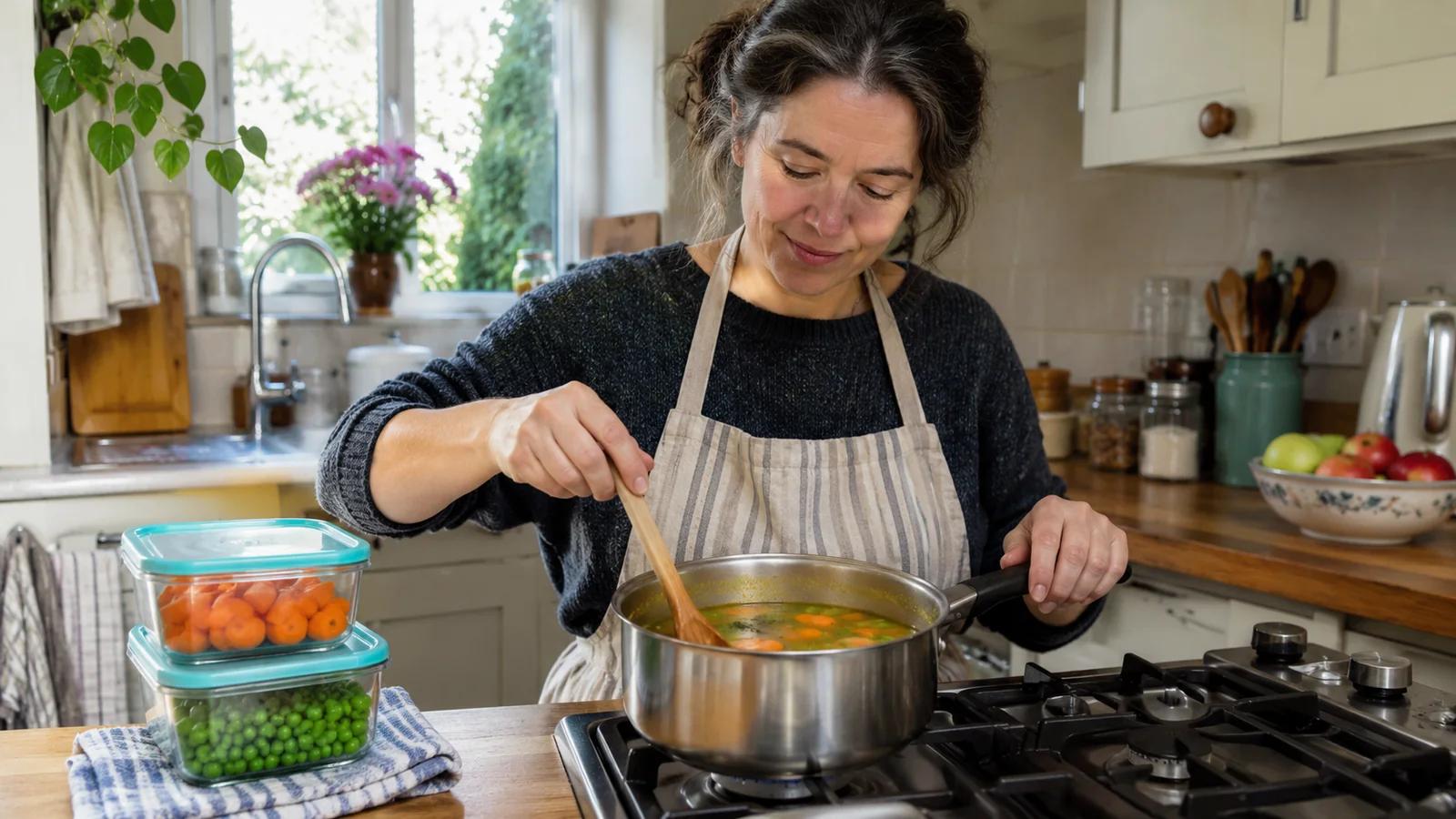
A few spoonfuls of roasted carrots, some cooked courgette and half a container of peas can become lunch without becoming a complicated recipe. Leftover vegetable soup works when you choose ingredients that belong together, add enough liquid and heat the mixture thoroughly. Start with a small pot and let the vegetables you actually have guide the result.
This is a flexible cooking method rather than a recipe with a fixed cooking time. Already-cooked vegetables need different treatment from raw potatoes, and heavily seasoned leftovers need different additions from plain steamed vegetables. The useful skill is deciding what each ingredient still needs.
Choose a Small, Compatible Batch
Begin with safely stored cooked vegetables that you know you will use. Plain carrots, squash, potatoes, peas, green beans and similar vegetables can fit many soups. Choose two or three rather than emptying every container into one saucepan. Roasted vegetables bring their existing seasoning; vegetables in a strong sauce will carry that sauce into the broth.
For a first attempt, try cooked carrots and peas in a tomato base, or cooked squash and potato in a lighter broth. These are suggested combinations, not tested recipes with guaranteed yields. A small trial lets you adjust texture and flavour before committing all your leftovers.
Check the storage history before cooking. Reject spoiled ingredients and anything whose safe handling is uncertain; boiling does not make questionable food a suitable starting point. Smell and appearance cannot establish that food is safe. Follow local food-safety guidance and package instructions, including any shorter storage limits.
The wider habit of labelling, chilling and choosing leftovers is covered in our guide to storing leftovers safely. For this meal, choose ingredients you can confidently identify and use now. Soup should be the next planned use of good food, rather than a last attempt to rescue it.
Set Out a Flexible Base
Use a saucepan large enough to stir without splashing. Have a spoon, chopping board, knife and a food thermometer ready. Wash your hands and use clean utensils and work surfaces. Keep raw meat and its equipment away from the cooked ingredients; this method does not require adding raw animal products.
The following is a starting arrangement for a small batch, with amounts adjusted to appetite and the vegetables available:
- About two loosely filled cups of cooked vegetables, cut into spoon-sized pieces.
- A small chopped onion or a little garlic, if you want an aromatic base.
- A little cooking oil for softening the onion.
- Water or vegetable stock, added gradually until the vegetables move freely.
- Optional tinned tomatoes, cooked beans, herbs or a small finishing squeeze of lemon.
You do not need all the optional ingredients. Read stock and sauce labels for allergens, and check whether the original vegetables contain butter, milk or other ingredients relevant to anyone eating. Soup made with vegetables is not automatically vegan or free of allergens.
Build the Soup in Order
Soften the fresh flavour base. Warm a little oil over moderate heat and add the onion if using. Stir until softened, adjusting the heat so it does not burn. Add garlic briefly near the end of this stage. If you have neither, begin with the liquid and chosen vegetables instead.
Cook any raw vegetables first. If you are adding raw carrot or potato, cut it into small, even pieces and simmer it in the liquid until tender. Do not assume leftover cooked vegetables and raw roots need the same time. Keep the additions modest so the soup remains easy to manage.
Add the cooked vegetables and liquid. Stir in the leftovers and any tinned tomatoes or drained cooked beans. Add liquid gradually. You can thin a thick soup later; removing excess water is slower and can overcook delicate ingredients. Scrape the bottom gently as you stir.
Heat thoroughly. Bring the soup to a rolling boil while stirring, and check that reheated leftovers reach at least 74°C/165°F with a food thermometer. Check more than one area, especially around larger pieces. Cooking time alone cannot confirm the temperature; the starting temperature, batch size and ingredients all vary.
Adjust after heating. Once the soup is safely heated, taste a small cooled spoonful. Add seasoning a little at a time, remembering that stock and previously seasoned vegetables may already supply salt. A little lemon can change the flavour, but it cannot correct unsafe ingredients or replace thorough heating.
For help checking dense pieces and avoiding a misleading surface reading, see our guide to using a food thermometer. Keep the thermometer clean between checks.
Choose Chunky or Partly Smooth
Leave the soup chunky if the vegetables are pleasant to eat as they are. Soft potatoes, squash or cooked beans can also be mashed against the side with a spoon or potato masher to give the broth more body. This is an easy option when you do not want another appliance to wash.
If you use a blender, follow its instructions for hot liquids. Some sealed blending cups are unsuitable for hot soup. Avoid filling beyond the manufacturer’s limit, protect yourself from splashes and do not improvise with equipment that is not designed for the task. A smoother texture is optional; it is not worth a burn.
Correct one thing at a time. Thin a dense soup with a little liquid and heat it through again. Add body with suitable cooked vegetables or beans. If the original vegetables are already strongly seasoned, keep the finishing ingredients simple instead of adding more competing flavours.
Serve What You Need
Serve the soup promptly, with bread or another accompaniment if wanted. Prepare a batch sized for the meal when possible. Making soup from older leftovers does not give those ingredients a fresh storage history, so avoid building a new multi-day plan around vegetables already close to their safe-use limit.
If some soup must be saved, divide it into shallow containers and refrigerate promptly rather than leaving a deep pot on the counter to cool. Label it with the ingredients’ original dates as well as the soup-making date, and follow the shorter applicable guidance. Reheat only the portion needed; freezing cannot repair earlier unsafe storage.
For future meals, preparing vegetables with a specific next use makes this easier. A modest container of plainly cooked vegetables is more adaptable than an unidentified mixture. Choose a compatible pair, build a simple base and make enough soup to enjoy now.