
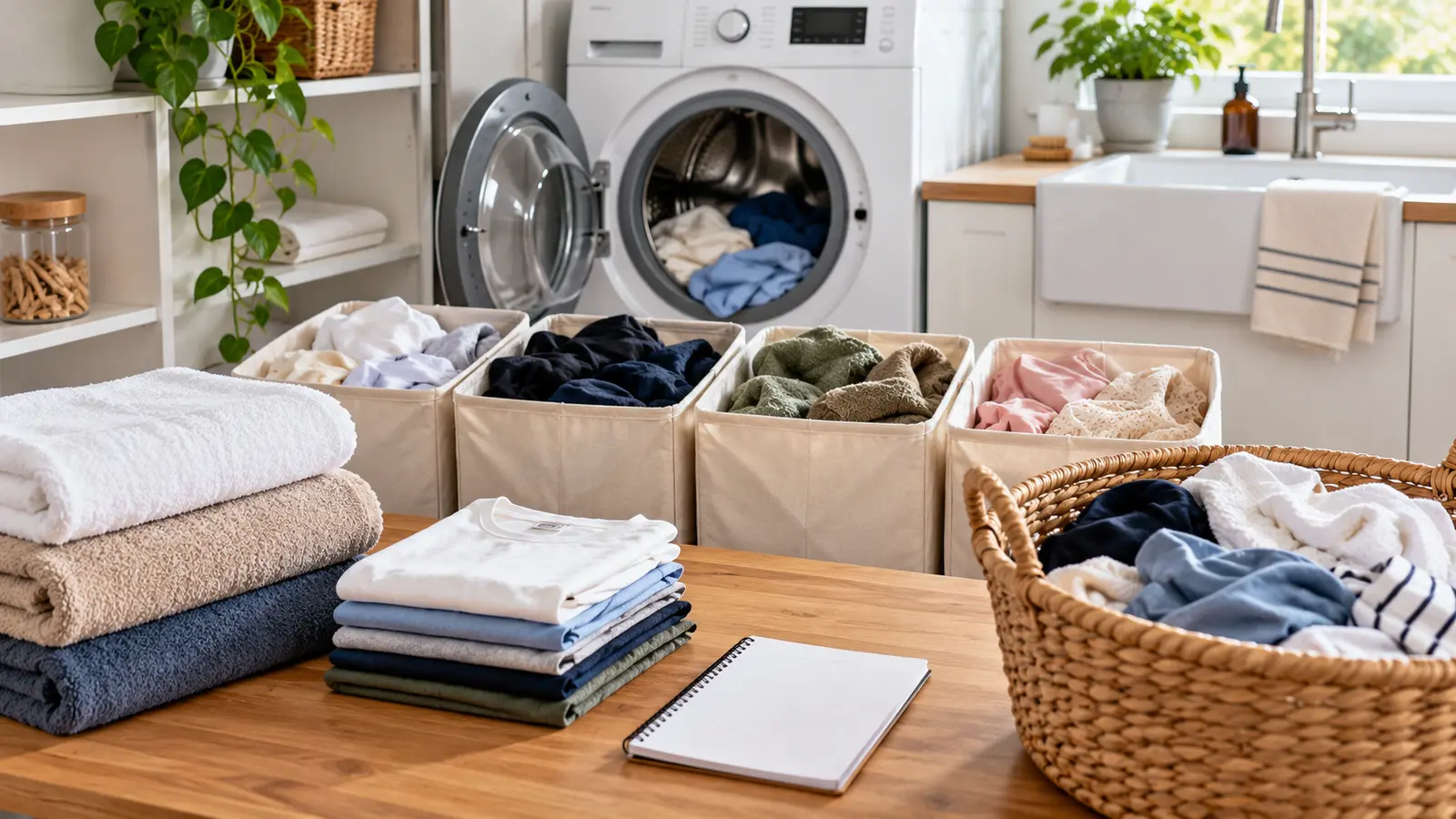
Laundry becomes expensive when it turns into emergency work: clothes washed in the wrong load, towels left damp, detergent guessed by habit, delicate items thrown into high heat, and clean clothing buried in a basket until it wrinkles.
A better laundry routine does not need complicated rules. It needs a repeatable order: sort the load, check care labels when fabric matters, choose the mildest setting that will clean the item, dry everything completely, and put clothes away while you can still find them.
The goal is simple: fewer ruined garments, less re-washing, lower energy waste, and a laundry day that does not consume the whole weekend.
Start With a Smaller Sort
Sorting is not only about separating whites and colors. It is about preventing one item from damaging the rest of the load.
For most households, four practical groups are enough:
- Towels, washcloths, cleaning cloths, and sturdy cotton items.
- Everyday dark clothes.
- Everyday light clothes.
- Delicate, stretchy, wool, silk, embellished, or special-care items.
Add a fifth group only when it solves a real problem. Heavily soiled sports gear, workwear, baby items, pet bedding, or clothes from someone who is sick may deserve their own load. New dark denim and bright new clothes should also be washed with similar colors until you know they do not bleed.
Do not let sorting become the reason laundry never starts. If a small household cannot fill every category, combine compatible items and use a gentler cycle.
Read the Care Label Before Guessing
The care label is the best starting point when an item is new, expensive, delicate, unfamiliar, or easy to shrink. It may tell you whether to machine wash or hand wash, which water temperature to use, whether bleach is allowed, how to dry the item, and whether ironing or dry cleaning is recommended.
Labels matter because fabric, dye, trim, lining, elastic, glue, and decoration can react differently. A cotton T-shirt may survive almost anything. A lined jacket, wool sweater, pleated skirt, performance fabric, or beaded top may not.
When you are unsure, use the lower-risk option:
- Turn dark or printed clothes inside out.
- Close zippers, hooks, and fasteners.
- Use a mesh bag for small delicate items.
- Choose cold water unless the label, soil level, or hygiene need points elsewhere.
- Avoid high heat until you know the garment can handle it.
If the label says dry clean only, hand wash only, do not bleach, dry flat, or low heat, treat that as a real instruction rather than a suggestion.
Match the Cycle to the Soil
Most laundry is not equally dirty. A shirt worn once in an office, a towel used after a shower, muddy sportswear, and bedding from a sick day do not need the same treatment.
Use a normal or regular cycle for sturdy everyday loads. Use a delicate or gentle cycle for fragile fabric, knits, lingerie, lightweight synthetics, and items that stretch or snag easily. Use heavy-duty settings only for loads that genuinely need more agitation or time.
Cold water is enough for many everyday loads, especially when the clothes are lightly soiled and the detergent is designed to work in cold water. It can also reduce color fading and energy use because heating water is one of the largest energy demands in washing. Warm or hot water may still be useful for oily stains, some towels, certain bedding, or hygiene situations, but it should be a choice, not a default.
The same principle applies to load size. A washer that is jammed tight cannot move clothes properly. A load that is too tiny may waste water, time, and energy. Aim for a full but loose load, with enough space for items to circulate.
Use Detergent Like a Measurement, Not a Mood
More detergent does not automatically mean cleaner clothes. Too much can leave residue, trap odors, irritate skin, make towels feel stiff, and force extra rinsing. Too little may leave soil behind.
Use the product instructions and adjust for load size, soil level, water hardness, and machine type. High-efficiency washers usually need less detergent than older machines that use more water. Detergent pods should be stored securely away from children and used exactly as directed.
When comparing laundry products, price per bottle is not enough. Check how many loads the package claims, how much detergent each load needs, and whether you often need extra stain remover or re-washing. GDU’s guide to comparing unit prices at the grocery store can help with the same habit for detergent and other household supplies.
If fragrance, dyes, or harsh scents bother your household, look for unscented or fragrance-free options and recognized safer-ingredient labels where available.
Treat Stains Before Heat Sets Them
Stains are easier before they go through the dryer. Heat can make some marks harder to remove, especially oil, protein, sweat, and dye transfer.
Build a small stain routine:
- Act early when practical.
- Blot instead of rubbing hard.
- Rinse from the back of the fabric when that helps push the stain out.
- Use a suitable stain remover or detergent pre-treatment.
- Check the item before drying.
Do not mix chemicals casually. Bleach, ammonia, vinegar, stain removers, disinfectants, and specialty cleaners are not interchangeable, and some combinations are unsafe. Follow product labels, ventilate the area, and use the mildest option that works for the fabric.
For clothes that are important or expensive, test a hidden area first. If the item is structured, lined, vintage, heavily dyed, or sentimental, professional cleaning may be cheaper than a failed experiment.
Dry Clothes Completely Without Cooking Them
Drying is where many clothes quietly wear out. High heat can shrink fabric, weaken elastic, fade color, set wrinkles, and make lint build faster. Use the lowest heat that dries the load in a reasonable time, and remove items once they are dry.
Air drying is useful for knits, delicates, activewear, bras, wool, silk, items with prints, and clothes that tend to shrink. Dry sweaters flat so they do not stretch on a hanger. Hang shirts neatly to reduce ironing. Give towels and thick items enough airflow so they do not stay damp in the middle.
If you dry indoors, pay attention to moisture. Wet laundry adds humidity to the room, which can become a problem in poorly ventilated spaces. GDU’s guide to managing indoor humidity at home explains how to watch for condensation, musty smells, and damp storage areas.
Also clean the dryer lint filter every load. A blocked filter slows drying, wastes energy, and can create a fire risk.
Keep Clean Laundry Moving
The final step is not folding perfectly. It is getting clean laundry out of the danger zone: the washer, dryer, drying rack, or basket where it can wrinkle, smell damp, attract dust, or disappear.
Use a simple finish rule:
- Move wet clothes promptly after the wash ends.
- Fold or hang the easiest items first.
- Put delicate or hang-dry items in their place before they tangle.
- Keep one small basket for items that need repair, stain re-checking, or special storage.
- Stop keeping clean and dirty laundry in identical piles.
If laundry regularly piles up, reduce the batch size. One load washed, dried, and put away beats four loads washed and abandoned.
Make the Routine Fit the Week
A laundry routine should match real life. A single person may need two loads a week. A family may need a small daily rhythm. Shared housing may need scheduled machine times. A laundromat routine may need sorted bags, correct coins or payment app, and a shorter drying plan.
Try a weekly pattern:
- One main clothing load.
- One towel load.
- One bedding or specialty load.
- One catch-up slot for uniforms, sportswear, work clothes, or travel laundry.
Then adjust. If towels smell musty, wash them sooner and dry them better. If clothes fade quickly, use colder water, turn items inside out, and reduce heat. If laundry day feels endless, split the work across the week.
A good laundry routine is not about perfection. It is about making the next load easier, protecting the clothes you already paid for, and keeping small household work from becoming a large household problem.