A breaker panel is easy to ignore when every light, outlet, appliance, charger, and internet router is working. Then something trips, a repair person asks which circuit feeds a room, or a storm leaves part of the house without power, and the old labels suddenly matter.
Too many panels still say things like “lights,” “old room,” “plugs,” or nothing at all. Those labels may have made sense to someone years ago, but they do not help much when you need to turn off the right circuit quickly and calmly.
Labeling a breaker panel is not electrical repair. You should not remove the panel cover, touch internal wiring, replace breakers, or diagnose overheating yourself. But you can make the directory clearer, safer to use, and easier for everyone in the household to understand.
Quick Answer
To label a breaker panel, keep the panel cover closed except for the normal door, work with another adult if possible, turn one breaker off at a time, and check which lights, outlets, or fixed appliances lose power. Write specific labels such as “kitchen counter outlets,” “main bedroom lights,” or “water heater” instead of vague labels such as “kitchen” or “misc.” Use durable labels or a neat directory inside the panel door, mark unknown circuits for later checking, and call a licensed electrician if a breaker is warm, buzzing, repeatedly tripping, oversized, damaged, or unclear.
Why Clear Breaker Labels Matter
A breaker is a protective device, not just a switch. When a circuit is overloaded, shorted, or affected by certain faults, the breaker is meant to interrupt power before the wiring overheats or the problem becomes worse.
The label does not make the breaker safer by itself. It makes the system easier to use correctly.
Clear labels help when:
- You need to turn off power before changing a light fixture or replacing an outlet cover.
- A breaker trips and you need to understand what was affected.
- A refrigerator, water heater, oven, air conditioner, pump, or internet setup loses power.
- A repair person needs the right circuit identified.
- A renter, housemate, caregiver, or family member needs to act when the usual homeowner is away.
- You are preparing a broader home maintenance calendar.
Electrical safety organizations and regulators consistently emphasize legible identification, working space around electrical equipment, correct breaker sizing, and professional help for unsafe conditions. A good home directory supports that bigger safety habit: fewer guesses, less panic, and a clearer line between homeowner organization and professional electrical work.
Start With Safety Boundaries
Before mapping anything, set limits.
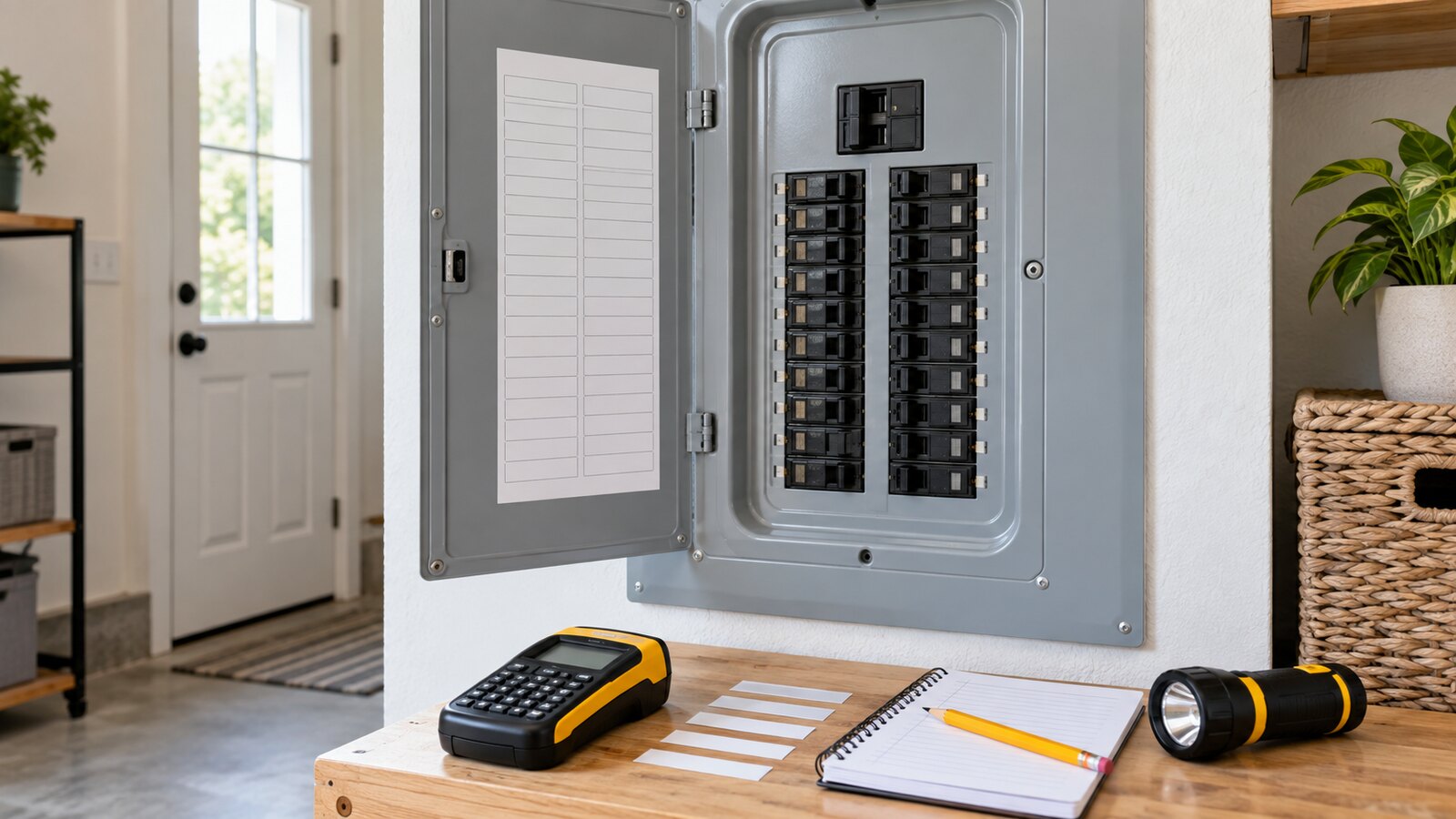
Open only the hinged panel door that exposes the breaker handles and directory. Do not remove the metal cover around the breakers. Do not reach behind breakers. Do not loosen screws inside the panel. Do not touch wires. Do not use this project to investigate sparks, buzzing, burning smells, heat, scorch marks, rust, water damage, or missing covers.
If you notice any of those warning signs, close the panel if it is safe to do so, avoid using the affected circuit, and contact a licensed electrician. The Electrical Safety Foundation International advises professional help when switches or outlets are warm, noisy, loose, or otherwise behaving abnormally, and it also warns that incorrect breaker or fuse sizing can create overheating and fire hazards.
Also clear the area around the panel. Do not store boxes, cleaning products, tools, clothing, or furniture where someone must stand to reach the breakers. A panel that is physically blocked is harder to use in a hurry.
If the panel is outside, in a damp area, near water damage, or difficult to reach safely, do not force the project. Get help.
Gather Simple Tools
You do not need special electrical tools for basic labeling if you are only switching breakers and checking ordinary lights or plug-in devices.
Useful items include:
- A notebook or printed panel map.
- Pencil and eraser.
- Painter’s tape or sticky notes for temporary labels.
- A label maker or neat permanent label sheet for the final directory.
- A phone charger, small lamp, radio, or outlet tester for checking receptacles.
- A flashlight or headlamp.
- Two phones, if one person is at the panel and another is in the room being checked.
Avoid using high-power tools, heaters, or large appliances as test devices. A small lamp or charger is enough to tell whether many outlets are live.
If you live alone, you can still do the project, but it will take longer. Turn off one breaker, walk through the home, write down what changed, turn the breaker back on, then move to the next one. Do not rush.
Map One Breaker at a Time
The safest beginner method is slow and boring, which is exactly what you want near electricity.
Start with the existing directory. Photograph it before changing anything. Then number your notes to match the breaker positions. If the panel already has numbers, use those. If it does not, make a simple left-column and right-column map that matches the physical layout.
Then test one breaker at a time:
- Tell everyone in the home what you are doing.
- Save computer work and avoid testing while someone is using medical, work, or essential equipment.
- Turn one breaker off.
- Check which lights, outlets, fans, or appliances stopped working.
- Write the result in pencil.
- Turn the breaker back on.
- Confirm power returned where expected.
- Move to the next breaker.
For outlets, test more than one in a room. It is common for one room to have outlets on different circuits, or for one breaker to feed parts of several rooms. A label such as “living room east wall outlets and entry light” is more useful than “living room” if the room is split across circuits.
For built-in appliances, be careful. A refrigerator, freezer, boiler, furnace, water heater, sump pump, security system, medical device charger, aquarium, server, or internet gateway may be inconvenient or risky to shut off. Check those circuits deliberately, restore power promptly, and avoid long off periods.
Write Labels That Future People Understand
Good breaker labels are specific, plain, and durable. They should make sense to someone who did not create them.
Use labels such as:
- Kitchen counter outlets
- Refrigerator
- Dining room lights
- Main bedroom north outlets
- Hall bathroom GFCI outlet
- Laundry washer
- Garage door opener
- Water heater
- Internet router closet
- Smoke and CO alarms if on a dedicated or identifiable circuit
Avoid labels such as:
- Back
- Lights
- Plugs
- Old
- Bob’s room
- Misc
- Maybe kitchen
- Do not know
If you are unsure, write “unknown - verify” in your notes, not a confident guess on the final label. A wrong label can be worse than a blank label because it encourages someone to trust the wrong switch.
Use room names your household actually uses, but add permanent clues where needed. “Small bedroom” may become an office next year. “Bedroom over garage” or “front upstairs bedroom” will age better.
Mark Shared and Split Circuits Clearly
Homes are not always wired in the way people expect. One breaker may control a bedroom light and a hallway outlet. A kitchen may have several circuits. A bathroom outlet may be connected to a ground-fault interrupter in another room. Older homes, renovations, additions, and panel changes can make labels even less obvious.
Do not try to simplify the directory by pretending every room has one breaker. It is better to write a longer truth.
Examples:
- “Kitchen island outlets; pantry light”
- “Office outlets east wall; hall outlet”
- “Upstairs bath lights; hallway fan”
- “Outdoor front outlets; porch light”
If a breaker controls something important but hard to describe, add a small household map in a folder or home binder. That pairs well with a broader warranty and receipt file because appliance model numbers, installer notes, manuals, and breaker information often belong together.
Know When a Labeling Project Should Stop
Breaker labeling is a low-risk organizational task only if the panel and circuits behave normally.
Stop and call a licensed electrician if:
- A breaker will not reset or trips repeatedly.
- A breaker feels warm or hot.
- You hear buzzing, crackling, or sizzling.
- You smell burning or see discoloration.
- A breaker is loose, damaged, missing, or mismatched.
- The panel has rust, water marks, missing covers, or exposed parts.
- Lights flicker in a way that seems connected to a circuit problem.
- You cannot identify an important circuit after careful checking.
- You suspect a breaker or fuse is the wrong size for the wiring.
The CPSC’s home electrical safety material points homeowners toward inspection and correction of wiring hazards rather than casual repairs. That distinction matters. A clear label is helpful; an amateur repair inside a panel can be dangerous.
Keep the Directory Updated
A breaker directory is not a one-time artifact. It should change when the home changes.
Update it after:
- Renovations.
- New appliances.
- Added outlets or lighting.
- Solar, battery, generator, EV charger, or heat-pump work.
- Panel replacement or service upgrades.
- Rental turnover or room-use changes.
- A professional electrician corrects a circuit.
Ask the electrician to update the directory before the job is finished. That is much easier while the work is fresh.
Keep the final labels legible. Pencil is useful during mapping, but the permanent directory should resist smudging and fading. A label maker, printed directory, laminated sheet, or neat permanent ink can all work if they stay readable and do not interfere with the panel door.
Pair Labels With Other Home Safety Habits
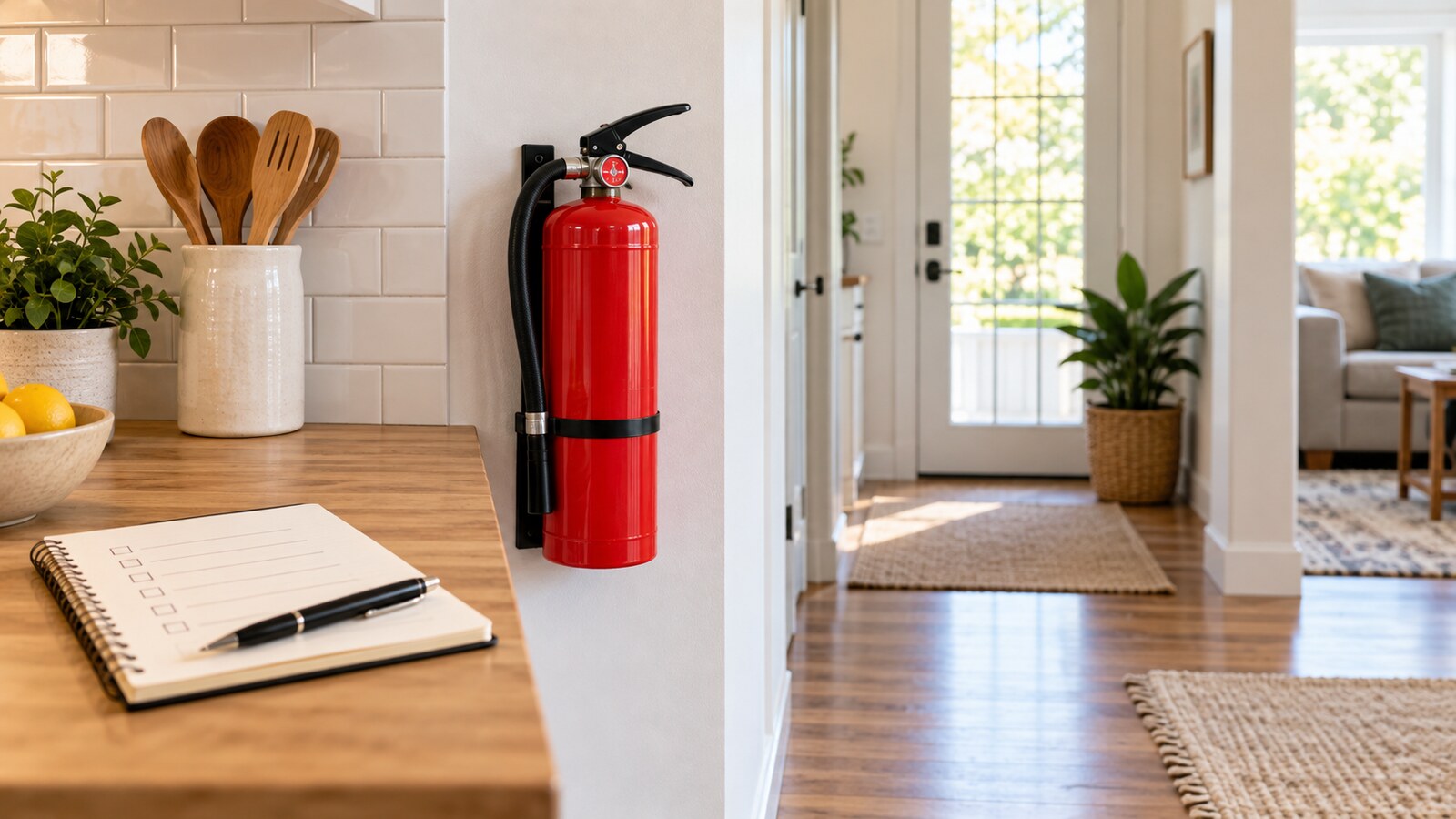
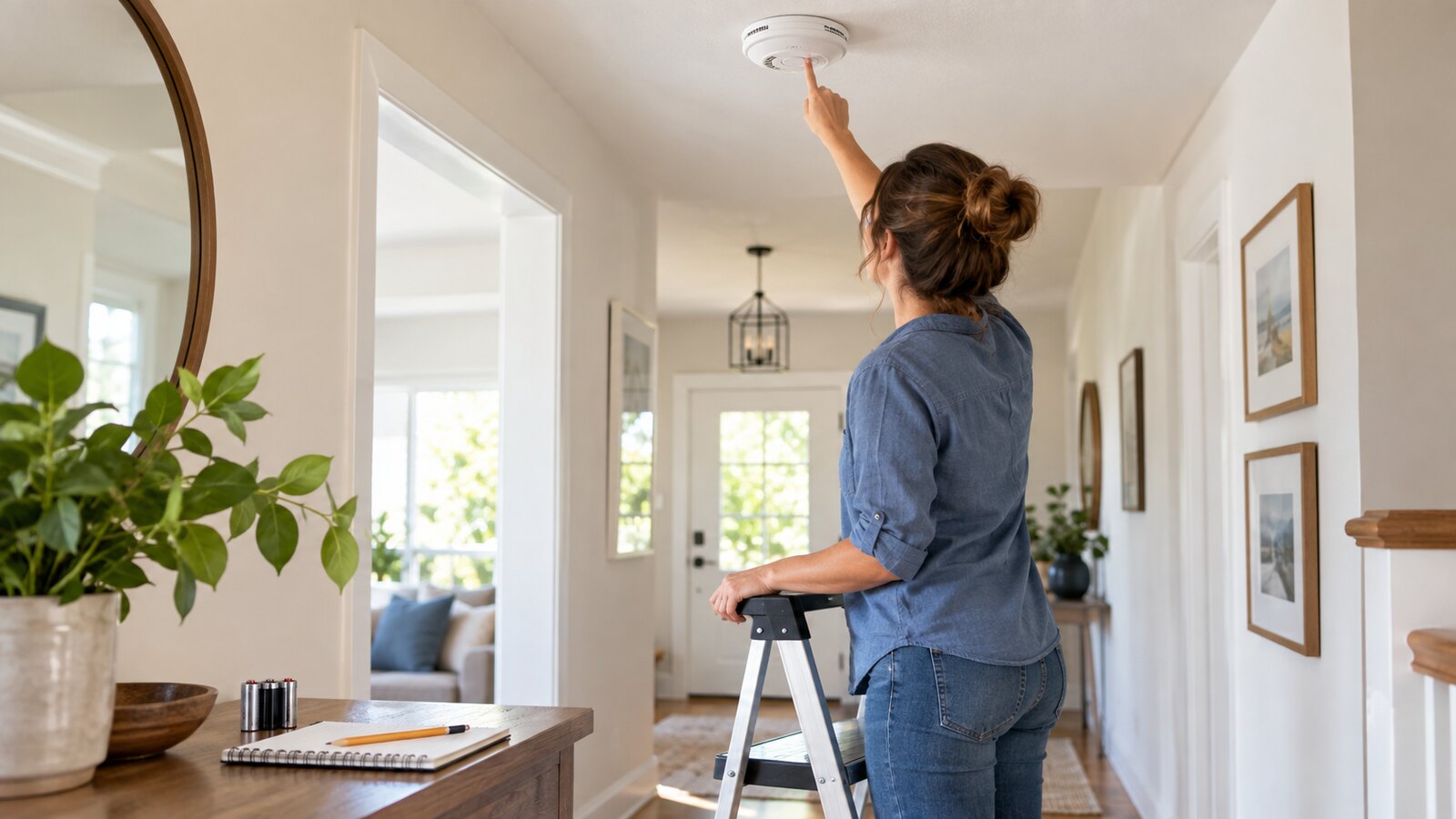
Breaker labels are one small piece of household readiness. They work best beside other simple routines: testing smoke alarms, knowing where the main water shutoff is, keeping a flashlight where it is easy to find, choosing the right home fire extinguisher, and not relying on extension cords as permanent wiring.
If a power problem happens at night, during bad weather, or while someone else is home alone, a clear directory can prevent frantic trial and error. It can also make a professional visit faster because you can describe the affected circuit more accurately.
The goal is not to become an electrician. The goal is to make the home easier to understand without opening anything dangerous.
A Simple Breaker Labeling Checklist
Use this as a quick final pass:
- Every active breaker has a readable label.
- Labels name rooms, appliances, or outlet groups specifically.
- Unknown circuits are marked for follow-up, not guessed.
- Important loads such as refrigerator, internet equipment, pump, heating, cooling, or security systems are identified where possible.
- The panel area is clear and easy to reach.
- No warning signs were ignored.
- The household knows where the panel is.
- The directory gets updated after electrical work.
A breaker panel should not be a memory test. A clear directory turns it into a practical household reference, which is exactly what you want when the lights are off, the repair person is waiting, or one circuit needs to be handled carefully.