
Indoor humidity rarely announces itself in one dramatic moment. It usually shows up as foggy windows, a musty cupboard, peeling paint near a bathroom, bedding that never feels fully dry, or dry air that makes a room uncomfortable in the cold season. By the time mold, damp patches, or warped materials are obvious, the home has often been giving smaller signals for weeks.
Managing humidity is not about making every room feel the same all year. Weather, building type, heating, cooling, cooking, showering, laundry, and ventilation all change the amount of moisture in indoor air. The goal is simpler: know the range you are aiming for, notice when a room is drifting out of it, and deal with moisture at the source instead of only treating symptoms.
Quick Answer
For many homes, a practical indoor humidity target is about 30% to 50% relative humidity. The U.S. Environmental Protection Agency recommends keeping indoor humidity in that range to reduce the chance of mold and other indoor air problems. If humidity is often above 50%, look for moisture sources, improve ventilation, use exhaust fans, fix leaks, and consider a dehumidifier. If humidity is very low, a well-maintained humidifier may help comfort, but it should be cleaned carefully so it does not spread minerals or microbes.
What Indoor Humidity Means
Indoor humidity is the amount of water vapor in the air inside your home. Most household humidity gauges show relative humidity, which means how much moisture the air is holding compared with how much it could hold at that temperature.
Warm air can hold more moisture than cold air. That is why a room can feel muggy on a warm day and why moisture may condense on a cold window even when the room does not feel especially wet. It is also why indoor humidity is a moving target: the same home can be too damp in one season and too dry in another.
A small digital hygrometer is enough for most households. Put one in the room where you notice the problem, not only in the neatest room. Bathrooms, bedrooms, basements, kitchens, laundry areas, wardrobes, and rooms with outside walls can all behave differently.
Signs Your Home May Be Too Humid
High humidity often creates clues before it becomes a repair bill.
Watch for:
- Condensation on windows, mirrors, pipes, or cold walls.
- Musty smells in closets, cupboards, basements, or behind furniture.
- Black, green, gray, or white spotting on walls, ceilings, grout, fabric, or stored items.
- Paint bubbling, wallpaper lifting, or plaster staying damp.
- Clothes, towels, bedding, or rugs taking a long time to dry.
- Wooden doors, drawers, floors, or furniture swelling or sticking.
- Dust mite or mold concerns that seem worse in specific rooms.
The CDC explains that mold can grow where moisture is present and that people with allergies, asthma, or weakened immune systems may be more sensitive to mold exposure. That does not mean every spot on a wall is an emergency, but it does mean repeated dampness deserves attention.
Signs The Air May Be Too Dry
Low humidity has its own pattern, especially in colder climates or homes with strong heating.
Possible signs include:
- Dry skin, lips, throat, or eyes.
- Static electricity.
- Wood furniture, floors, or musical instruments cracking or shrinking.
- Houseplants drying quickly.
- Nose or throat irritation that improves away from the room.
Mayo Clinic notes that humidity that is too low or too high can cause problems and describes 30% to 50% as an ideal home range. If your home feels dry but the gauge already shows a reasonable level, look at other causes too: dust, smoke, cleaning products, allergies, ventilation, temperature, and hydration can all affect comfort.
Start With Measurement, Not Guesswork
Before buying equipment, measure the room for several days. A single reading is less useful than a pattern.
Check:
- Morning and evening readings.
- Readings after showers, cooking, laundry, or rain.
- Bedrooms after a night of closed windows.
- Closets or corners where air does not move.
- Basement or ground-floor spaces after humid weather.
- The difference between a problem room and a room that feels fine.
Write down the room, time, weather, humidity reading, and what was happening. You may discover that the bathroom spikes after showers but recovers quickly, or that a bedroom stays damp all day because furniture blocks an outside wall. The fix for those two problems may be different.
Reduce Moisture At The Source
The most effective humidity control is usually source control. A dehumidifier can help, but it should not be used as a permanent substitute for fixing a leak, improving drainage, or venting wet air.
Start with the basics:
- Run bathroom exhaust fans during showers and for a short time afterward.
- Use a kitchen exhaust fan when cooking, boiling water, or washing dishes.
- Dry laundry outdoors or in a vented dryer where practical.
- Avoid drying large loads indoors without ventilation.
- Keep lids on pots when cooking long-simmering foods.
- Move furniture slightly away from cold outside walls so air can circulate.
- Fix roof, pipe, window, appliance, and plumbing leaks promptly.
- Clean gutters and direct water away from the building where you control exterior drainage.
- Use mats and drying habits for wet shoes, umbrellas, and sports gear.
EPA mold guidance is blunt about the central issue: moisture control is the key to mold control. Cleaning visible mold without addressing the water source often turns into a repeating chore.
Use Ventilation Carefully
Opening windows can help when outdoor air is drier than indoor air. It can make things worse when outdoor air is humid, polluted, smoky, extremely cold, or extremely hot.
A practical rule is to compare conditions. If the bathroom is steamy after a shower and outdoor air is comfortable, ventilation may help. If it is a very humid day, an air conditioner, dehumidifier, or mechanical ventilation may be more useful than leaving windows open.
Ventilation also matters for closets and storage. Damp air trapped behind boxes or furniture can create musty pockets even when the main room feels fine. Leave space for air movement, avoid storing paper and fabric against exterior walls, and check rarely opened cupboards during humid seasons.
If indoor air quality is a broader concern, a purifier may help with particles, but it will not fix dampness. GDU’s guide to choosing a home air purifier explains why filtration and moisture control solve different problems.
When A Dehumidifier Helps
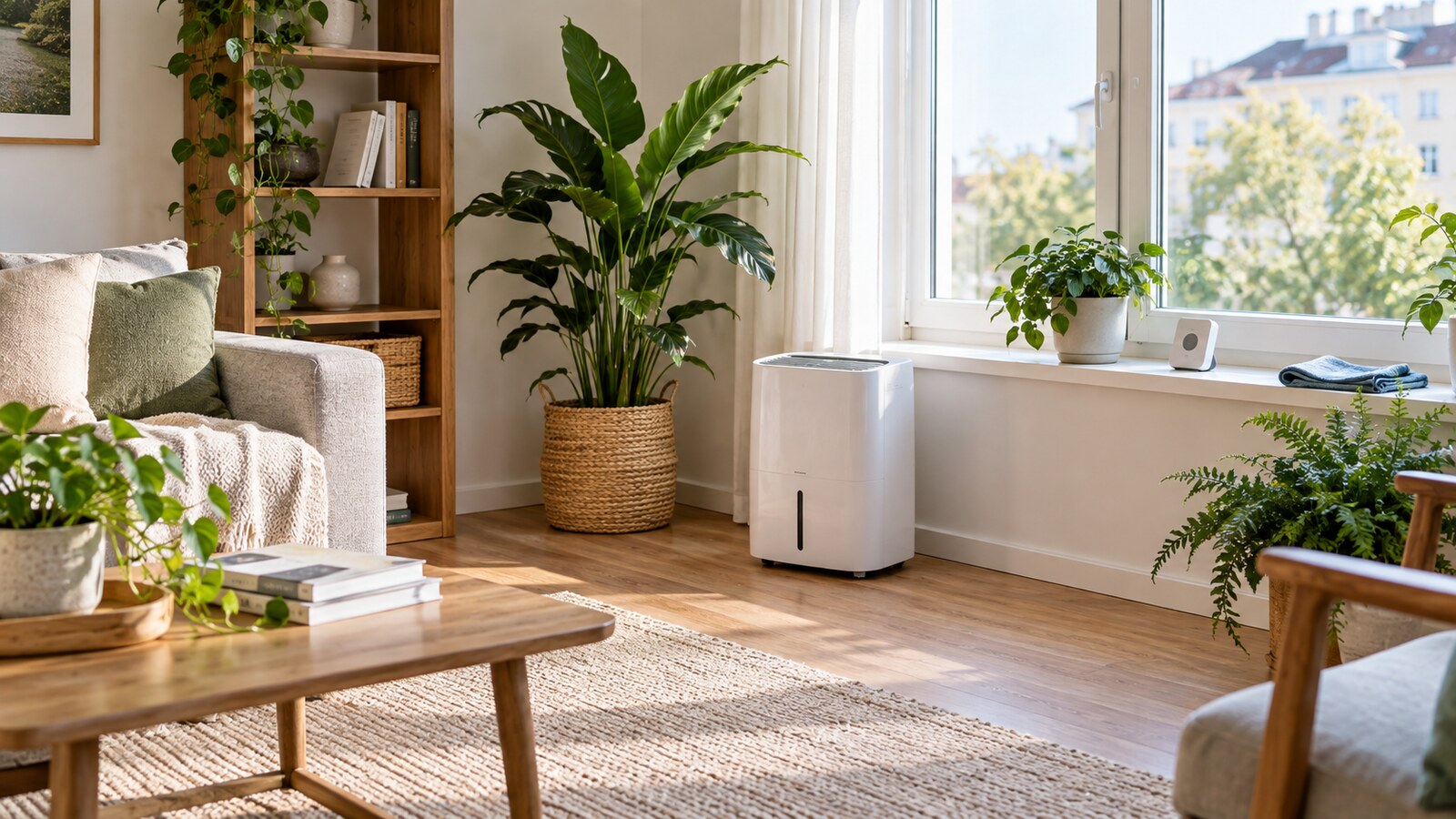
A dehumidifier can be useful in damp rooms, basements, rainy seasons, poorly ventilated areas, and homes where air conditioning is not enough to keep humidity comfortable.
Use it well:
- Choose a size appropriate for the room and dampness level.
- Place it where air can move around the unit.
- Empty the tank before it overflows, or use a safe drain setup if supported.
- Clean the filter and tank according to the manufacturer instructions.
- Keep doors and windows mostly closed while it runs.
- Use the built-in humidistat if available instead of running it endlessly.
- Watch whether humidity falls into range and stays there after the unit stops.
If a room needs constant dehumidification because water keeps entering, treat that as a clue. Look for leaks, seepage, poor drainage, blocked vents, unvented appliances, or hidden condensation rather than assuming the machine is the whole solution.
Use Humidifiers With Care
Humidifiers can make dry rooms more comfortable, especially in heating season. They also need attention. A dirty humidifier can release unwanted particles or microbes into the air, and over-humidifying a room can create condensation and mold risk.
Safer habits include:
- Measure humidity before and during use.
- Aim for comfort within a reasonable range, not maximum moisture.
- Use distilled or demineralized water if the manufacturer recommends it.
- Empty, rinse, and dry the tank frequently.
- Clean the device according to the instructions.
- Stop or lower use if windows fog, walls feel damp, or humidity rises too high.
Do not add fragrances, oils, disinfectants, or homemade mixtures unless the device is specifically designed for them. A humidifier is not a medical treatment, and people with asthma, allergies, respiratory conditions, or immune concerns should be especially cautious about cleanliness and indoor dampness.
Deal With Condensation Early
Condensation is not just a window nuisance. It is a visible sign that warm, moist indoor air is meeting a cold surface.
If condensation appears often:
- Wipe water from windows and sills so it does not soak into wood, paint, curtains, or walls.
- Improve bathroom and kitchen ventilation.
- Move wet laundry drying away from cold rooms.
- Keep heating and airflow more consistent if safe and affordable.
- Check whether heavy curtains trap damp air against glass.
- Consider whether insulation, window repairs, or professional advice are needed.
Short-lived condensation during extreme weather may be manageable. Daily condensation with damp frames, peeling paint, or mold spotting deserves a closer look.
Know When To Get Help
Some moisture problems are too large or too hidden for a simple home routine.
Consider professional help when:
- Mold covers a large area.
- Dampness follows flooding, sewage backup, roof damage, or repeated leaks.
- You smell mold but cannot find the source.
- Materials such as drywall, insulation, carpet, or subflooring are wet.
- Someone in the home has worsening asthma, allergies, immune problems, or unexplained symptoms.
- You rent and the problem may require building repairs.
Health Canada advises addressing moisture and mold by identifying the source, correcting the moisture problem, and cleaning or removing contaminated materials as needed. For renters, document the issue with dates and photos and report it through the proper housing or landlord process in your location.
A Simple Weekly Humidity Routine
You do not need a complicated system. Try this:
- Check humidity in the main problem room twice a week.
- Look at windows, corners, closets, bathroom grout, and under sinks.
- Run fans during moisture-heavy activities.
- Dry towels and wet items promptly.
- Empty and clean dehumidifier or humidifier parts on schedule.
- Fix small leaks before they become background moisture.
- Review stored paper, fabric, and seasonal items during humid months.
The best routine is boring in a good way. Measure, ventilate, dry, repair, and clean before moisture becomes a bigger story.
Bottom Line
Indoor humidity sits between comfort, home maintenance, and health. Too much moisture can support mold and damage materials. Too little can make rooms uncomfortable and dry. A simple humidity gauge, a few source-control habits, careful use of dehumidifiers or humidifiers, and quick action on leaks can prevent many common problems.
You do not have to make your home perfect. You only need to keep the air from quietly drifting into a range where dampness, condensation, and mold get easier to ignore than to fix.