Dinner is easier to plan when the food is ready to cook, but a frozen centre is no reason to leave a perishable meal on the counter. To thaw frozen food safely, use the refrigerator, an appropriate cold-water method, or the microwave immediately before cooking. Start with the package: some products should be cooked from frozen instead.
Choose a method you can complete properly. A slow thaw suits tomorrow’s dinner; a faster method needs your attention and a plan to cook straight afterwards. If neither fits, change the meal rather than inventing a warm-water shortcut.
Check what the food actually needs
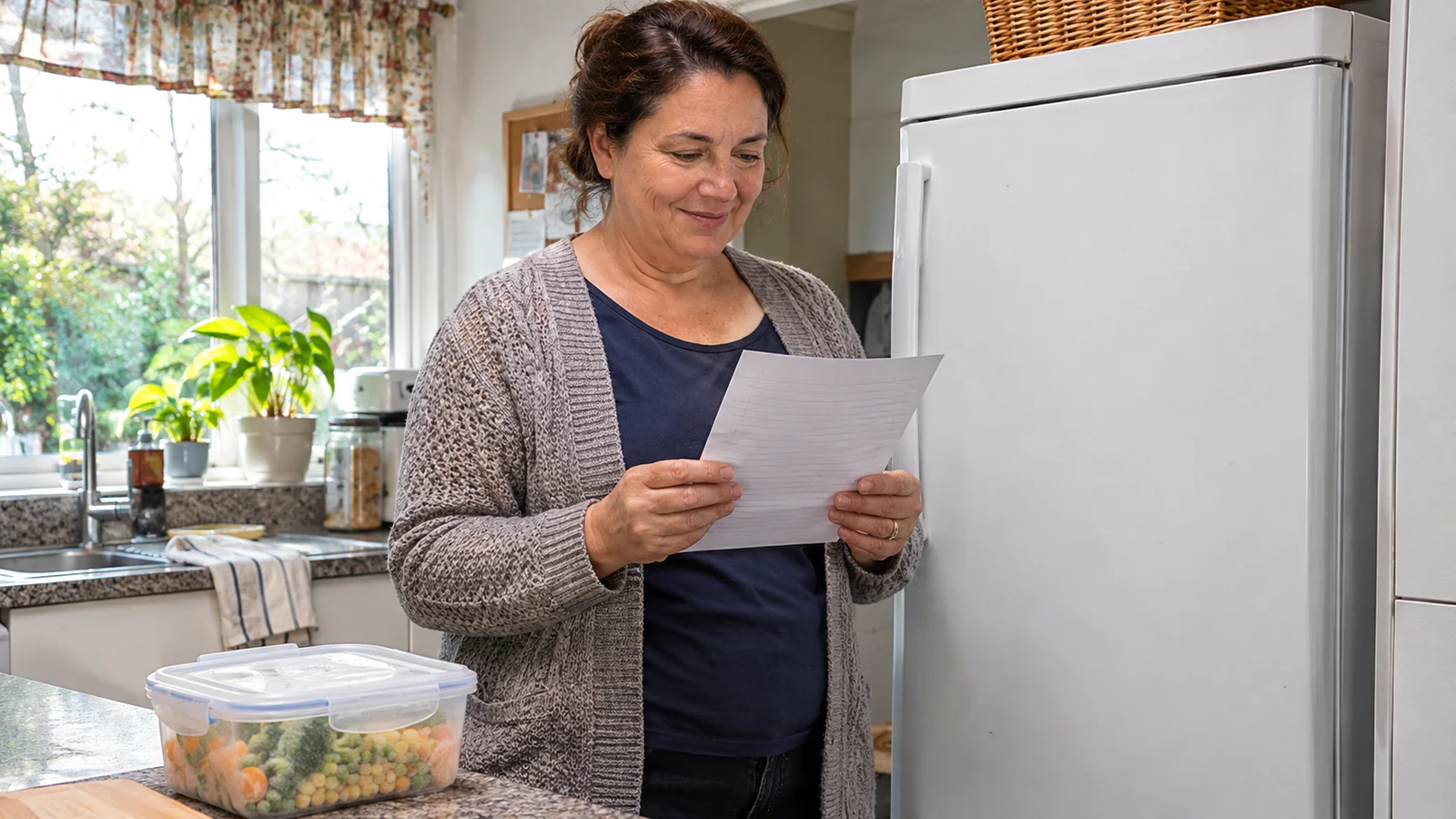
Before moving anything, read the storage, defrosting and cooking directions. Keep them available until the meal is finished. A bag of vegetables intended for cooking from frozen needs a different plan from a large raw joint or a homemade cooked dish.
Check the portion as well as the name. A thick block and a shallow single serving will not thaw on the same timetable. Avoid promising dinner at a particular hour just because a similar-looking pack thawed quickly last week.
For example, if tomorrow’s meal is a frozen casserole, check its instructions while clearing dinner tonight. Decide where it will thaw and which dish will catch any leakage. That small decision is more useful than discovering the frozen centre after everyone is hungry.
If the food’s safe storage history is uncertain, thawing is not a way to repair it. Keep unknown handling separate from an ordinary timing problem.
Use the refrigerator when you can plan ahead
Refrigerator thawing keeps food cold as it softens. Use an appliance thermometer rather than judging the temperature by touch. A practical target is 4°C or below; follow the product’s storage directions and your local food-safety guidance.
- Choose the amount you intend to use and keep the remaining portions frozen.
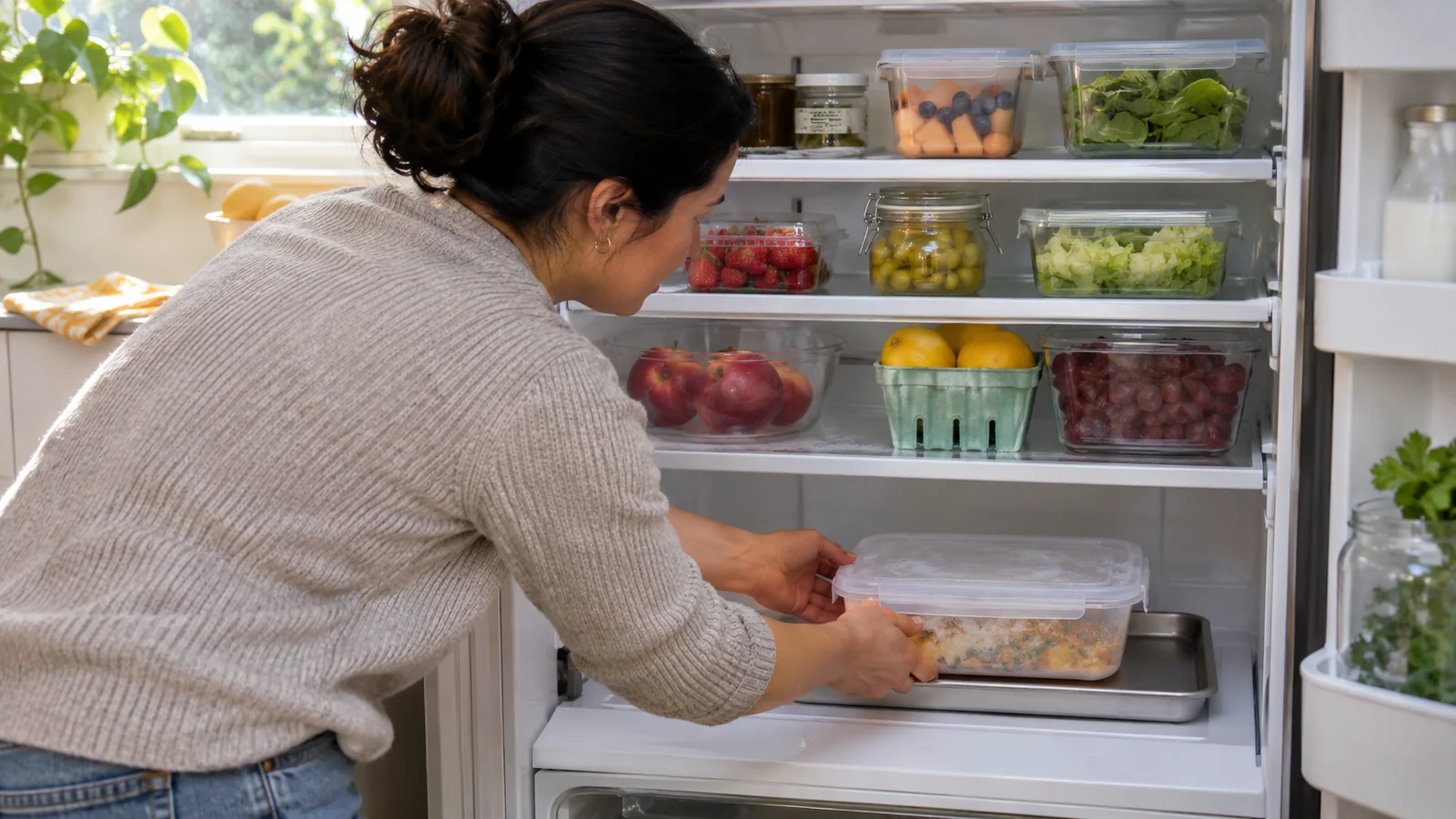
- Put the pack in a clean container or tray large enough to collect drips.
- Keep raw meat, poultry and seafood contained on the bottom shelf, away from ready-to-eat food.
- Leave sufficient time and check that the food has thawed as required before beginning its cooking instructions.
An overnight stay is a planning starting point, not a guarantee. USDA guidance notes that even small beef packs may need a day, while large roasts can need two days or longer. The fridge temperature, pack thickness and food all affect the result.
When arranging the tray, make space before removing the food from the freezer. Do not balance a leaking package above a salad or squeeze it into a spot where the door will not close properly. If the fridge is crowded, choose a smaller portion or another meal.
Our freezer inventory guide can help you find the right pack without repeatedly searching through drawers.
Use cold water only when you can supervise
Cold-water thawing can be useful when the fridge method is too slow, but it is an active task. USDA advice and university food-safety guidance describe a sealed, leak-proof pack submerged in cold water, with the water replaced every 30 minutes. Cook the thawed food immediately.
- Check the food’s directions permit this method and inspect the packaging for leaks.
- Enclose it in a suitable leak-proof food bag if needed, keeping water away from the food.
- Submerge the sealed pack in cold water in a clean bowl or container.
- Set a 30-minute reminder, replace the water when it rings, and continue until properly thawed.
- Move directly to cooking, then clean the container and any contaminated surfaces.
Do not substitute hot water to hurry the process. A cold or icy centre does not mean the outer layers have stayed at a safe temperature. If you need to leave home, take a call that cannot be interrupted or collect children, choose refrigerator thawing earlier instead of starting an unattended water bath.
Use a timer you will actually notice. A reminder is particularly helpful when the task is easy to forget because the package is sitting quietly in a bowl.
Reserve microwave defrosting for immediate cooking
Microwave defrosting suits an imminent meal when the food and appliance instructions allow it. Check the manual for the defrost programme, weight settings and any turning or separating directions. Transfer the food to a microwave-safe container when its original packaging is unsuitable.
Some areas can become warm or begin cooking while others remain frozen. That is why microwave-thawed perishable food should go straight into cooking rather than wait on the counter or return to the fridge for tomorrow.
For cooked leftovers, continue reheating after defrosting. USDA guidance recommends checking that they reach 74°C/165°F throughout with a food thermometer. Stir or rearrange when appropriate to the dish and instructions, and check more than one location. A steaming edge alone is not a measurement of the centre.
Set out the pan, utensils and other ingredients before starting the defrost cycle. If the microwave is needed for several separate dishes, work out the sequence first so the thawed portion does not become an unplanned waiting task.
Keep the after-thaw plan specific
There is no universal number of safe fridge days for every thawed food. Instructions and national recommendations differ. UK guidance advises using food within 24 hours of full defrosting; US guidance gives food-specific periods for refrigerator-thawed products. Follow the label and applicable local advice rather than borrowing the longest period from another food.
Refreezing advice also depends on the method and handling. US guidance allows some safely refrigerator-thawed foods to be refrozen without cooking, although quality may decline. Other consumer guidance is more restrictive. Do not refreeze raw food after cold-water or microwave thawing without first cooking it safely; follow product-specific restrictions.
For everyday planning, avoid creating this dilemma: thaw a portion you intend to use, note when it finished thawing, and prepare the meal as planned. Our guide to freezing meals in usable portions explains how to make the next thaw more manageable.
If a perishable pack has been left out overnight or its temperature history is uncertain, do not taste it to decide whether it is safe. Smell and appearance cannot establish safety. Discard food when safe handling cannot be established.
The useful habit is to connect thawing with a real cooking time. Check the pack, choose a safe method you can finish, and have a fallback meal ready when the frozen food needs longer.