Choose walking shoes by how they fit both feet while you stand and move. Look for room around your toes, a heel that stays comfortably in place and a fastening that holds your foot without squeezing it. The size printed on the box is a starting point, not the final test.
A useful shopping trip ends with a pair you can explain: it fits your feet, suits your usual routes and feels comfortable during a proper try-on. You do not need a brand ranking to make that decision.
Start With the Walking You Actually Do
Before shopping, write down where the shoes will be used. A daily pavement commute, short neighbourhood walks and uneven country paths present different practical questions. Note the usual surface, weather and length of outing, then bring that description to the shop.
For example, someone who walks to work and spends the rest of the day indoors may prioritise an everyday pair that is easy to adjust. Someone buying shoes specifically for muddy paths should ask about footwear intended for that terrain. Avoid choosing solely because a display calls a shoe “walking” or “outdoor”.
Set a spending limit before comparing options. A discount only helps if the pair passes your fit checks. If your current shoes remain comfortable and sound, you can also use this process to identify what you want from a future replacement rather than buying immediately.
Prepare for a Fair Comparison
Feet can become larger during the day, so an afternoon or early-evening fitting is useful. Wear the socks you normally walk in. If you use prescribed insoles, bring them and follow the advice you were given about suitable footwear.
Try both shoes, even when you have always bought the same size. Feet can differ, and sizes vary between styles. Ask for your feet to be measured when possible, but still assess the actual pair while standing and walking.
Choose two or three plausible pairs rather than carrying a dozen options through the shop. Keep the comparison consistent: the same socks, similar time spent walking and the same questions for each pair. A short note on your phone can help you remember which pair pinched and which felt secure.
Follow a Simple Try-On Sequence
Take your time with each pair. Do not let the colour or a sale sign settle the decision before you have moved in it.
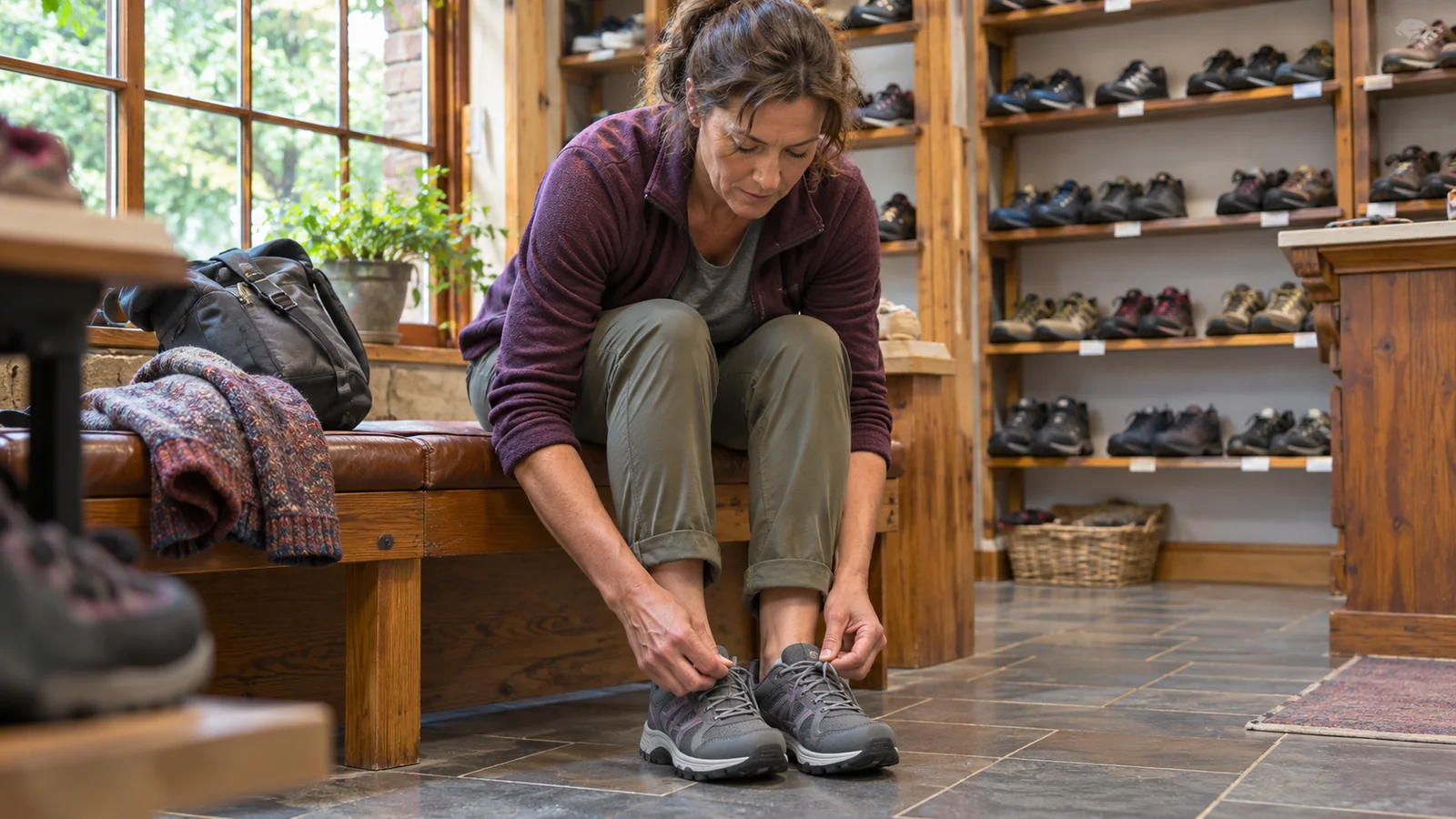
- Put on both shoes and fasten them properly. Settle your heels into the backs and adjust the laces or straps. You should not need to grip with your toes to keep the shoes on.
- Stand and check the front. Leave roughly 1 cm of space beyond the longest toe. Check that your toes can move and that the upper does not press down on them. This is a fit check, not a reason to buy an oversized shoe.
- Check width separately from length. Notice pressure across the widest part of your foot and around the little toe. If the length seems right but the sides squeeze, ask about a different width or shape.
- Walk around and turn. Use the permitted shop space and, where available, different floor surfaces. Notice whether the heel lifts excessively, your foot slides forward or a seam rubs.
- Pause and compare both feet. One shoe feeling fine does not cancel discomfort in the other. Recheck the fastening, then reject the pair if the problem remains.
Do not assume that painful pressure will disappear after “breaking in” the shoes. New materials may feel unfamiliar, but discomfort during a short fitting is a reason to reconsider the choice.
Judge the Whole Shoe, Not One Feature
A very soft sole can feel appealing for a few seconds. Give yourself enough walking time to decide whether the complete shoe feels comfortable and secure. Equally, a firm-looking shoe is not automatically the better choice for every person.
Look at the heel area, fastening, upper and sole together. Check the actual pair for uneven construction or visible damage, rather than assuming every box of the same model is identical. Ask what the sole is intended for if the surface you normally walk on is an important part of the purchase.
If a salesperson uses unfamiliar terms, bring the conversation back to your needs: “Does this come in a wider fit?” or “Can I try this with my usual insole?” Clear questions are more useful than accepting a technical label you cannot connect to comfort.
Do not choose a shoe because it promises to fix your posture or solve persistent pain. Those claims require more than a shop-floor impression, and footwear advice for an individual condition belongs with an appropriate health professional.
Keep Online Orders Returnable While You Check
When ordering online, read the seller’s size guide and return conditions before paying. Check whether you may try the shoes indoors, how long you have to return them and who pays the return postage. Our guide to checking an online return policy explains the details worth recording.
Keep the box, labels and receipt until you decide. Try the shoes on a clean indoor surface within the seller’s rules. Do not take them on a long outdoor walk to discover whether they fit if that would remove your return option.
A practical comparison note might read: “Pair A: enough toe room, heel slips when turning. Pair B: secure heel, pressure at little toe. Neither suitable.” That is a useful outcome. You have ruled out two options without forcing a purchase.
Recognise When to Reassess an Old Pair
Inspect the soles and uppers periodically. Worn-smooth tread, a sole beginning to separate, a damaged fastening or a heel area that has lost its shape are reasons to reassess whether the shoes still suit your walking. A pair can look tidy from above while being heavily worn underneath.
There is no single replacement date that fits every walking shoe and every routine. Materials, frequency of use and walking surfaces affect wear. Check condition rather than treating a calendar reminder as proof that a pair is either finished or safe to keep using.
If fit has changed, repeat the try-on checks instead of automatically ordering the same size again. Persistent pain, numbness, recurring skin damage or difficulty finding suitable footwear deserves professional advice. People with diabetes or reduced sensation should seek individual foot-care guidance rather than relying on comfort alone.
Once you have a comfortable pair, make it part of a manageable walking routine. Keep your shopping decision simple: enough space, a secure fit on both feet, a suitable use and no pressure to keep a pair that feels wrong.