
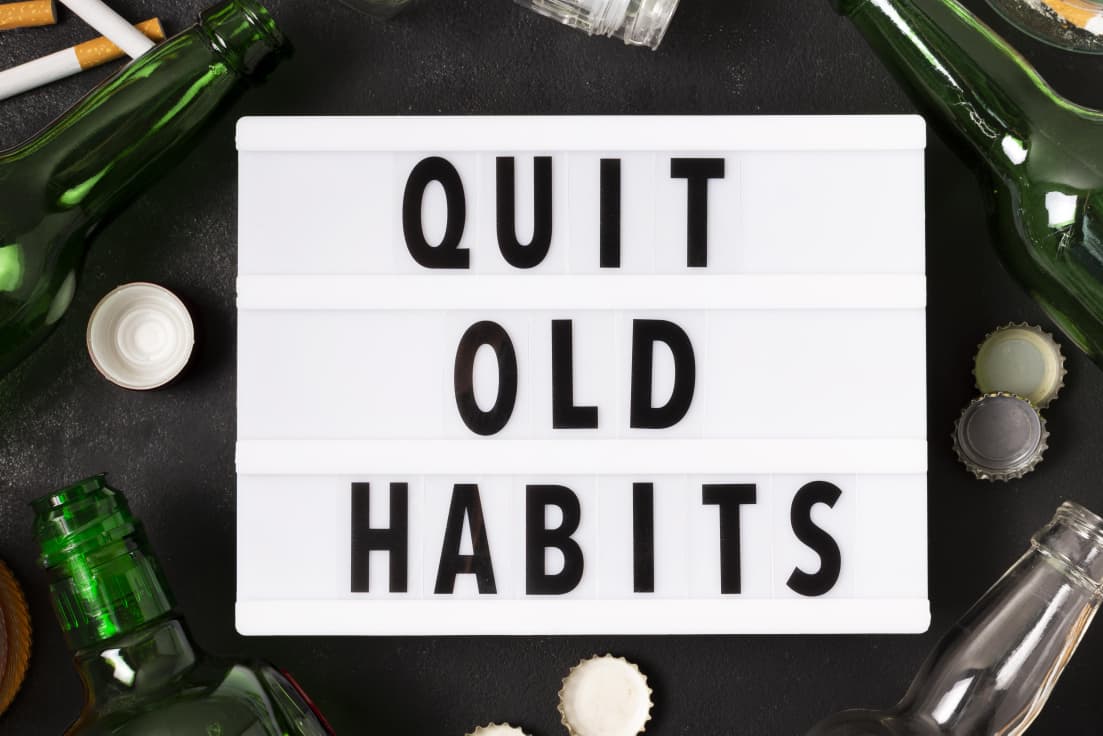
That’s nearly half of everything you do happening on autopilot, driven by patterns you’ve established over time. What you repeatedly do—what you spend time thinking about and doing each day—ultimately forms the person you are, the things you believe, and the character you portray .
When you learn to change your habits, you can change your life. This is especially important for people navigating career development, relationship growth, or personal self-improvement, like many of us are doing in Kenya today.
The good news is that habits are not set in stone. Using the right strategies, evidence-based approaches, and persistence, you can build better habits that stick and break bad ones that hold you back. Let’s explore thoroughly exactly how to do that. Understanding How Habits Actually Work. Before you can change your habits, you need to understand what they are and how they form.
Habits are the small decisions you make and actions you perform every day . They’re not major gestures or one-time achievements; they’re the tiny, repeated behaviors that compound over time into major life changes.
The habit loop consists of three key components:
a cue (something that triggers the habit), a routine (the behavior itself), and a reward (what you get out of it) . Something has to trigger a habit, and a cue can be anything—a time of day, an emotional state, a location, other people, or an immediately preceding action . For example, if you have a habit of browsing social media when you’re bored, the cue might be feeling bored or picking up your phone. The routine is the actual scrolling behavior. The reward is the dopamine hit from new content or the temporary escape from boredom. Understanding this loop is crucially important; you can’t break a habit unless you understand what’s driving it.
Six Basic Steps to Changing Habits.
The American Heart Association outlines six basic steps to develop new, healthy behaviors that stick . These steps provide a functional framework for anyone wanting to make lasting change.
Step 1: Identify Cues.
The first step is identifying what triggers your unwanted habits. Something has to trigger a habit, and a cue can be anything . Take time to observe when your bad habits occur. What were you doing right before? Where were you? Who were you with? How were you feeling emotionally? Keep a habit journal for a week.
Whenever you catch yourself doing something you want to stop, write down the context. You’ll start noticing patterns. Maybe you reach for junk food when you’re stressed at work. Maybe you check Instagram when you’re avoiding a difficult task. Maybe you stay up late scrolling when you’re anxious about tomorrow.
Step 2: Disrupt the Pattern.
Once you know the cues, you can throw bad habits off track . This doesn’t mean you have to eliminate the cue entirely—that’s often impossible. Instead, you interrupt the automatic response.
If you always check your phone first thing in the morning, try placing it across the room so you have to physically get up to reach it. If you snack while watching TV, don’t keep snacks in the room where you watch. If you procrastinate on writing when you’re at your desk, try working from a different location initially. The key is creating friction between the cue and the automatic behavior. Make the bad habit harder to do, even if just slightly.
Step 3: Replace the Behavior.
You can’t simply erase a habit; you need to replace it with something better . This is where many people fail—they try to stop a behavior without a replacement in place. If you want to stop scrolling social media when bored, replace it with reading a few pages of a book, doing five minutes of stretching, or writing in a journal.
If you want to stop eating junk food when stressed, try drinking a glass of water, taking a short walk, or doing deep-breathing exercises. The replacement behavior should ideally provide a similar reward. If you’re using social media for connection, find other ways to connect—call a friend, text someone, or join an online community about something you care about.
Step 4: Keep It Simple.
One of the biggest mistakes people make is trying to change too much at once . Keep your new habit simple and specific. Instead of saying “I’ll exercise more,” say “I’ll do 10 minutes of stretching every morning after I brush my teeth.”The more specific and simple the habit, the easier it is to remember and execute. Your brain loves clarity. Vague goals create ambiguity, and ambiguity creates room for excuses.
Step 5: Think Long-Term.
Habits take time to form, and thinking long-term is critical . There’s a common myth that it takes 21 days to form a habit, but research shows it can take anywhere from 18 to 254 days, with an average of 66 days .
Be patient with yourself. Focus on the identity you’re building, not just the outcome. Instead of “I want to write a blog post,” think “I’m becoming a consistent content creator.” Instead of “I want to stop drinking soda,” think “I’m becoming someone who focuses on health.”This identity-based approach is powerful because it shifts your attention from what you’re trying to achieve to who you’re trying to become . When your habits match your identity, they become much easier to maintain.
Step 6: Persist. You will slip up.
That’s not failure; that’s part of the process . The key is persistence—getting back on track immediately rather than using one slip-up as an excuse to abandon the entire effort. Research shows that people who successfully build habits don’t avoid mistakes; they recover quickly from them .
Having a bad day is just one of the tiny emergencies that prevent most people from sticking to their goals and habits, but it doesn’t have to be that way . When you slip up, be kind to yourself.
Acknowledge what happened, identify what triggered it, and recommit to your habit. One missed workout doesn’t mean you’ve failed at fitness. One day of unhealthy eating doesn’t mean you’ve ruined your progress.
Five Easy, Powerful Strategies for Building New Habits.
Building on the six steps above, here are five specific strategies that make habit formation easier and more effective:
Strategy 1: Start Ridiculously Small.
One of the best ways to build a new habit is to make it so small that you can’t say no . Want to start exercising? Begin with two push-ups. Want to write more? Start with one sentence. Want to meditate? Begin with 30 seconds.
The goal isn’t the size of the action; it’s establishing consistency. Once you’ve built the habit of showing up, you can gradually increase the intensity. Two push-ups today can become five tomorrow, then ten, then a full workout.
Strategy 2: Use Habit Stacking.
You can build new habits by taking advantage of old ones . This technique, called habit stacking, involves attaching a new habit to an existing one. The formula is: “After I [current habit], I will [new habit].
”Examples :After I pour my morning coffee, I will write one blog paragraph. After I brush my teeth at night, I will read one page of a self-improvement book. After I sit down for lunch, I will take three deep breaths. After I get home from work, I will change into workout clothes immediately. Your existing habits are already automatic, so they act as reliable triggers for new behaviors.
Strategy 3: Design Your Environment.
Motivation is overvalued. The environment often matters more . If you want to build a good habit, make it visible and accessible. If you want to break a bad habit, make it invisible and difficult.Want to drink more water? Place a full water bottle on your desk within arm’s reach. Want to read more? Leave a book on your pillow so you see it before bed.
Want to eat healthier? Pre-cut vegetables and keep them at eye level in the fridge. Want to stop checking your phone constantly? Put it in another room when you’re working. Want to watch less TV? Remove the batteries from the remote. Want to quit social media scrolling? Delete the apps from your phone and only access them through a browser. Your environment shapes your thoughts and actions more than you realize . Design it intentionally to support the habits you want.
Strategy 4: Track Your Progress.
The ultimate habit tracker guide explains why and how to track your habits effectively . Tracking fulfills multiple functions: it provides visual proof of progress, creates accountability, and triggers dopamine when you see your streak grow. Use a habit tracker app, a simple calendar where you mark X’s for each day you complete the habit, or a spreadsheet. The key is to make tracking itself easy and to make progress visible.
A useful strategy is the “Seinfeld Strategy,” or “Don’t Break the Chain”—simply mark each day you complete your habit on a calendar, and your goal becomes not breaking the chain of X’s.
Strategy 5: Use Temptation Bundling.
You can stop procrastinating on your goals and boost your willpower by using temptation bundling . This technique includes pairing something you want to do with something you need to do.
Examples: Only listen to your favorite audio show while exercising. Only watch your favorite show while folding laundry. Only drink your favorite fancy coffee while writing your blog. Only call your best friend while walking. This works because you’re associating the habit you’re trying to build with immediate pleasure, making it more appealing.
Effective Tips for Making Habits Stick.
Even using the right strategies, habits can still fail. Here are extra tips to increase your chances of success:
- Make it easy.
- How to make your future habits easy is a critical question .
- Reduce friction for good habits.
- Lay out your workout clothes the night before.
- Pre-messaged your blog post titles.
- Prep healthy snacks on Sunday for the week ahead.
- The easier you make a habit, the more likely you are to do it consistently.
- Focus on Systems, Not Goals.
Forget about setting goals. Focus on systems instead .
Goals are about the outcome you want; systems are about the processes that lead to those outcomes. You don’t rise to the level of your goals; you fall to the level of your systems. If your goal is to write a bestselling book, your system is writing 500 words every morning. If your goal is to get fit, your system is exercising three times a week. Focus on upkeeping the system, and the results will follow
.Plan for Failure. Being consistent is not the same as being perfect. Plan for the days when life gets crazy, when you’re tired, when you’re stressed. Have a “minimum viable version” of your habit ready. If your habit is to exercise for 30 minutes but you’re exhausted, the minimum version is 5 minutes of stretching. If your habit is to write 1,000 words, but you’re overwhelmed, the minimum is writing one sentence. The key is never breaking the chain completely.
Reward Your Efforts, Not Just Results. Reward your efforts, not your results—even if you get something wrong or don’t get the outcome you wanted, still reward the fact that you tried . This is especially important for habit formation because results frequently lag behind actions.
Celebrate showing up, not just achieving. Treat yourself to something small after consistently practicing your habit for a week. Acknowledge your progress out loud. Share your wins with a friend.
Build Critical Thinking Skills. A lethal bad habit to get into is instant gratification—a thought pattern of reacting to information on an automatic level without truly thinking things through. Building critical thinking and analytical problem-solving skills helps you focus on solution-oriented approaches that yield positive results. Before automatically reaching for your phone, eating junk food, or procrastinating, pause and ask: Is this serving my long-term goals? What would be a better choice right now? Common Mistakes That Cause New Habits to Fail.
Understanding what goes wrong can help you avoid these pitfalls:
Mistake 1: Relying on Motivation.
Motivation is unreliable. It fluctuates based on your energy, mood, and circumstances. Habits that depend on motivation will fail. Habits that depend on systems and the environment will succeed .
Mistake 2: Trying to Change Too Much at Once.
The scientific argument supports mastering one thing at a time . When you try to change your entire life overnight, you overwhelm yourself and set yourself up for failure. Pick one or two key habits and focus on those until they’re automatic.
Mistake 3: Not Identifying the Real Cue.
If you don’t understand what’s triggering your habit, you can’t effectively change it . Spend time observing and journaling before you try to break a habit.
Mistake 4: Being Unduly Hard on Yourself.
Trying to be perfect won’t help you achieve your goals . Self-compassion is more effective than self-criticism for long-term conduct change. When you slip up, treat yourself with equal kindness you’d offer a friend
.Mistake 5: Ignoring Your Identity.
Identity-based habits help you achieve goals more easily . If you don’t see yourself as the type of person who does something, you’ll struggle to sustain that behavior. Work on shifting your self-perception alongside your actions.
The Paper Clip Strategy:
A Simple Trick for Consistency. One specific strategy that helps people adhere to good habits every day is the “Paper Clip Strategy” . This involves using paper clips (or similar markers) to track your progress visually. For example, if you’re trying to make sales calls, start with two jars: one empty and one full of paper clips. Each time you make a call, move one paper clip from the full jar to the empty jar.
The visual progress motivates you to keep going. This strategy works because it makes progress tangible and creates a satisfying visual representation of your effort. Environment Matters More Than You Think. Motivation is overvalued.
The environment often matters more . The world around you shapes your thoughts and actions in ways you may not realize . If you want to build better habits, become conscious of your environment. Who are you spending time with? What music are you listening to? What’s on your phone’s home screen? How is your workspace arranged? Arguments from Vietnam War Veterans who broke their heroin addictions show that simply removing yourself from an environment that triggers all your old habits makes it easier to break bad habits and build new ones
.Bright-Line Rules for Willpower: You can declutter your mind and tap into your willpower by using “Bright-Line” rules . A bright-line rule is a clearly defined standard with a fixed interpretation and very little wiggle room. Examples:”I never check email before 10 AM” (not “I try not to check email early”)”I don’t eat sugar on weekdays” (not “I limit sugar on weekdays”)”I’m done scrolling social media after 8 PM” (not “I’ll try to stop scrolling earlier”)These clear rules eliminate decision fatigue and make it simpler to stick to your habits when temptation arises.
Your Habits Are Your Future. The proven, reasonable, and totally unsexy secret to success is consistent habits . Rome wasn’t built in a day, but they were laying bricks every hour . The same is true for your life.
Every habit you build is a brick in the structure of your future self. Every bad habit you break removes an obstacle standing between you and the life you want. Progress happens through small, consistent actions repeated over time. Start today. Pick one habit. Make it small. Make it easy. Make it part of your identity. Then persist, even when it’s hard. Especially when it’s hard. Your future self will appreciate you for the habits you build today.