A useful home workout space starts with enough clear room for the movements you intend to do, a suitable floor and somewhere to put equipment when you finish. You can prepare a corner of a shared room without turning it into a permanent gym. Check the area each time, because a space that worked yesterday may have a bag, loose cable or damp patch in it today.
Start with the exercise you already plan to follow. A seated routine, standing movements and floor exercises need different arrangements. This is a guide to preparing the room; choose an activity suited to your ability before deciding where it will fit.
Work Out What the Room Needs to Accommodate
Look at the instructions for your chosen session before moving furniture. Will you reach overhead, extend your arms sideways, lie down or step backwards? Include any transitions between positions. Getting down onto a mat and standing up again may need space beyond its edges.
There is no single floor area that suits every home workout. A clear rectangle that fits a mat is not automatically enough for a routine with travelling movements. If an exercise machine is involved, follow its installation instructions and specified clearances, including the space needed to get on and off.
For bodyweight exercise, consider starting with movements that stay in one place. Our beginner strength-training guide can help you think about the activity before buying equipment. If the available area cannot accommodate the chosen movements, change the location or choose a suitable alternative routine.
Prepare the Space in This Order
Use this sequence before your first session, then repeat the relevant checks whenever you set up again.
Choose a spot outside household traffic. Avoid positioning yourself where someone must step over you to reach a door. Keep exits and the route through the room clear. In a shared home, agree on a time when the area can be left undisturbed and tell others before starting.
Remove obstacles from the whole movement area. Put bags, shoes, toys and small furniture somewhere they will not create another obstruction. Move trailing charging cables out of the way. Check behind you as well as in front, including the place where you will put your feet when standing up.
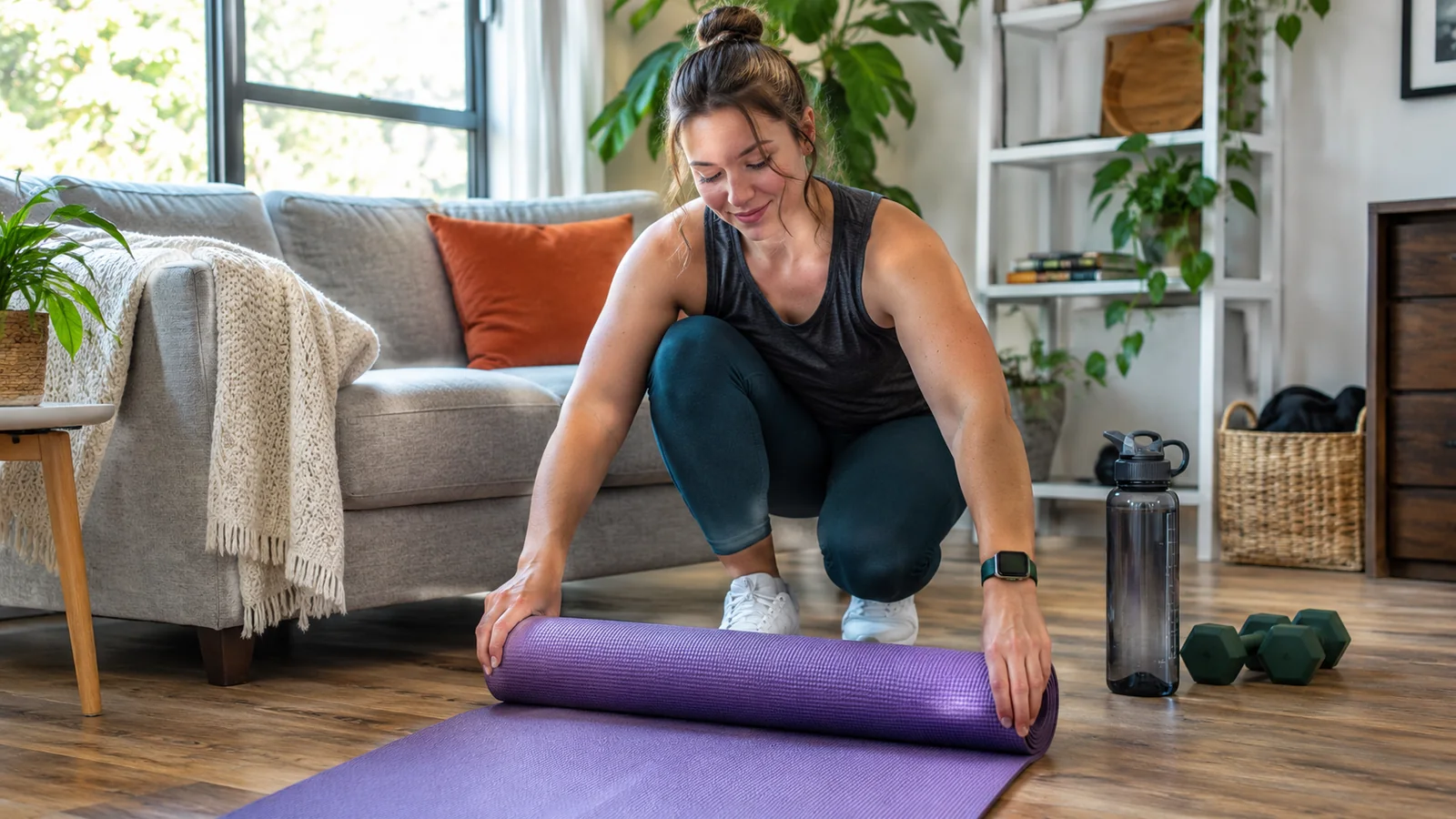
Check the floor and any mat. The surface should be dry, even and suitable for the activity. Remove loose rugs that could slide or catch a foot. If using an exercise mat, check its condition, that it lies flat and that it stays in place on your flooring. A mat that bunches or slips needs resolving before use.
Check reach and clearance gently. Without beginning the workout, check where your hands and feet would go during the planned movements. Look for low lights, ceiling fans, shelves, table corners and nearby glass. Do not test a tight space with a fast swing, jump or heavy weight.
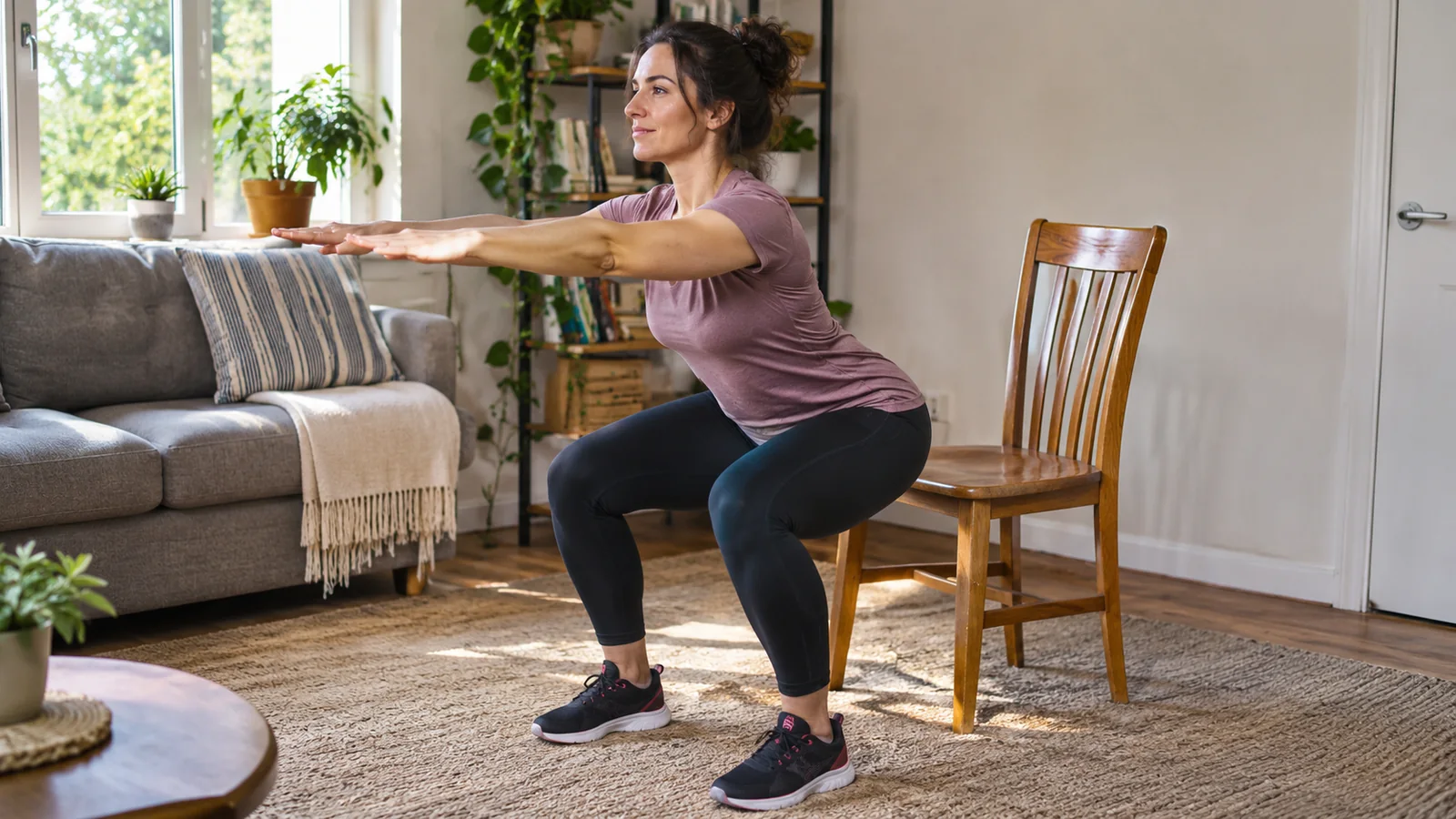
Position only the equipment you need. Keep unused weights and other items outside the active area and out of walkways. If the routine uses a chair, choose a solid, stable model without wheels and check that it does not slide. Place a screen where you can follow the instructions without repeatedly twisting to see it.
Make a final check before starting. Check lighting, airflow and the route to drinking water. Make sure a pet or child has not entered the area while you were preparing it. If the floor, chair or equipment no longer feels secure, pause and correct the setup.
Match the Surface to the Activity
A thick, soft mat is not automatically the best choice for every movement. Think about whether the session needs cushioning for floor contact, firm footing for standing work, or a particular surface specified by the equipment maker or instructor. Check the mat’s intended use rather than choosing by appearance alone.
Try the setup carefully before committing to a whole session. If your feet slide, the mat moves or the surface makes you feel unsteady, stop and change the arrangement. Adding another loose layer can introduce another moving surface rather than solve the problem.
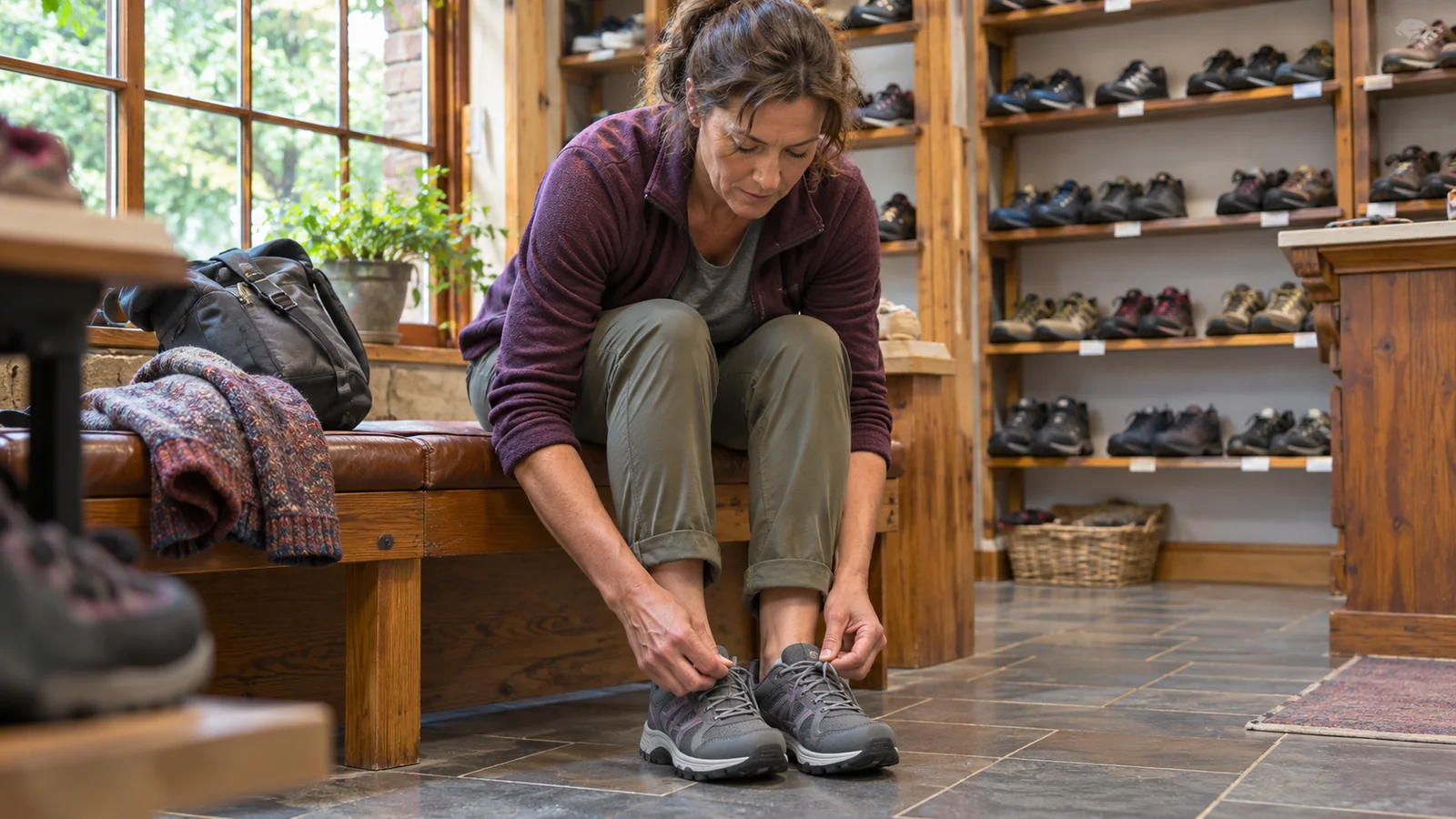
Footwear also needs to suit the activity and floor. Socks that slide on smooth flooring are a reason to reconsider the setup. Follow the guidance for your chosen routine; a room arrangement cannot compensate for an unsuitable exercise or unstable footing.
Keep Supports and Screens Practical
A chair used in an exercise routine needs to suit that particular movement. Check its legs, seat and position before starting. Do not assume a folding chair, sofa edge or wheeled office chair can replace the support shown in the instructions. For a chair-assisted movement, our guide to the beginner bodyweight squat explains the chair option in context.
Put a phone or tablet on a stable surface outside your movement area. Keep its charging lead away from your feet, and preview the instructions before starting. If you cannot see a demonstration clearly, pause to look rather than holding an awkward position while trying to watch.
You do not need a decorative gym corner to make these arrangements work. In a small living room, the practical solution might be moving a light side table, putting a phone on a shelf and returning everything afterwards. Avoid moving heavy furniture alone just to fit a session into a particular spot.
Give Equipment a Home After Each Session
Choose storage before accumulating kit. A low shelf or suitable container can keep small accessories together, provided it does not obstruct a doorway or route across the room. Store weights securely so they cannot roll, fall or become a trip hazard. Follow manufacturers’ storage instructions for larger or folding equipment.
Wipe equipment as directed and allow damp items to dry before storing them. Check accessories for damage before the next use. Put the room back into its everyday arrangement, including removing the mat if it would block normal movement.
A repeatable setup is more useful than a crowded collection of equipment. Keep what your chosen activity needs, leave enough room to move and make the final floor check part of starting. When the available space cannot support the session safely, choose another arrangement rather than squeezing the workout around obstacles.