A home maintenance calendar is not a personality test. It does not have to be perfect, color-coded, or built around someone else’s climate. It only has to help you remember the small checks that prevent expensive surprises.
Most homes create quiet jobs in the background: filters clog, batteries age, drains slow down, gutters fill, seals crack, receipts disappear, and moisture turns from a hint into a repair. Renters have maintenance work too, even when the landlord is responsible for the building itself. The difference is often knowing what to notice, what to document, and when to report it.
The best calendar is modest. It collects repeat tasks, spreads them through the year, and leaves room for your real life.
Quick Answer
Make a home maintenance calendar by listing the systems you need to check, grouping tasks by how often they realistically need attention, and assigning them to simple monthly, seasonal, and annual reminders. Start with safety devices, heating and cooling filters, moisture checks, plumbing leaks, appliance cleaning, exterior drainage where you control it, and household records. Adjust the timing to your climate, lease, building type, equipment manuals, and budget. Keep the calendar short enough that you will still use it six months from now.
Start With the Home You Actually Have
A maintenance calendar for a detached house with gutters, a garden, a basement, and a furnace will look different from one for a rented apartment with shared corridors and central building management. A hot, humid climate creates different routines from a cold climate with snow and heating season. A home with pets, children, older adults, fuel-burning appliances, or heavy cooking may need more frequent checks than a lightly used space.
Before copying a checklist, write down what exists in your home:
- Heating, cooling, fans, vents, and filters
- Smoke alarms, carbon monoxide alarms, and fire extinguishers
- Sinks, toilets, showers, drains, hoses, and visible pipes
- Refrigerator, washing machine, dryer, oven, range hood, and dishwasher
- Windows, doors, locks, screens, seals, and weather-stripping
- Outdoor drains, gutters, downspouts, balconies, roof access, yard areas, or shared building spaces
- Important records, warranties, insurance details, photos, and emergency contacts
If you rent, mark which tasks are yours and which belong to the landlord, housing office, building manager, or homeowners association. Your calendar can include “report dripping bathroom ceiling” or “send dated photos to building manager” just as clearly as it includes “clean range-hood filter.”
Choose a Few Monthly Checks
Monthly tasks should be quick. If your monthly list takes an entire weekend, you will avoid it.
Choose the small checks that catch common problems early:
- Test smoke and carbon monoxide alarms if the device instructions and local guidance call for monthly testing.
- Look under sinks for drips, damp cabinet floors, swelling, stains, or musty smells.
- Check the main problem room for humidity, condensation, or dampness.
- Clean or inspect filters that get dirty quickly, such as range-hood filters, washable appliance filters, or HVAC filters during heavy-use seasons.
- Review one drawer, shelf, or storage area that tends to hide leaks, pests, expired supplies, or broken items.
The U.S. Consumer Product Safety Commission advises monthly testing for smoke and carbon monoxide alarms and annual battery replacement for alarms that use replaceable batteries. Local rules and product instructions may differ, but the principle is useful everywhere: safety devices should not be invisible until an emergency.
For heating and cooling, ENERGY STAR notes that dirty filters can make systems work harder and may contribute to equipment problems. Your equipment manual should decide the exact filter size and schedule, but a calendar reminder keeps the task from drifting.
Put Seasonal Jobs Where They Make Sense
Seasonal maintenance is where many generic checklists become unhelpful. “Spring” and “autumn” do not mean the same thing in every country, and some places do not have four clear seasons. Instead of copying the month, copy the logic.
Before a heavy heating season, check heat sources, vents, filters, thermostats, fuel-burning appliance safety, drafty doors, and cold-weather supplies. Before a heavy cooling or humid season, check cooling equipment, shade, fans, drainage, condensation, dehumidifiers, and pest-prone damp spaces. Before a rainy season, focus on water: roof signs you can safely observe, gutters where you are responsible for them, downspouts, exterior drains, window seals, balconies, and storage areas near exterior walls.
If you live somewhere with storms, wildfire smoke, freezing weather, monsoon rain, dust, or very high humidity, your calendar should serve that risk. If you live in a managed apartment building, your seasonal job may be reporting blocked drains, checking window seals, and confirming how maintenance requests should be filed.
You do not need to inspect anything unsafe. Roofs, electrical panels, gas systems, chimneys, major plumbing, exterior ladders, and structural problems are often professional tasks. A good calendar helps you notice issues early; it should not pressure you into risky work.
Build a Water and Moisture Routine
Water causes many home problems because small leaks hide well. A stain behind a cabinet, a slow drip below a sink, a loose washing-machine hose, or condensation on a cold wall can be easy to ignore until damage spreads.
Add a short moisture routine:
- Look under sinks and around toilets.
- Check around the washing machine, dishwasher, refrigerator water line, and water heater if accessible.
- Notice musty smells in cupboards, closets, basements, bathrooms, or rooms with poor airflow.
- Watch for window condensation that returns daily.
- Keep stored items off damp floors where possible.
- Photograph and date anything you need to report.
The U.S. Environmental Protection Agency emphasizes moisture control as the key to mold control and recommends keeping indoor relative humidity roughly in the 30% to 50% range where possible. GDU’s guide to managing indoor humidity at home goes deeper on measuring and responding to dampness without overusing equipment.
If you find repeated dampness, your calendar should change from “check again next month” to “act now.” Clean what is safe to clean, dry wet materials promptly, fix or report the water source, and get qualified help for larger or hidden problems.
Tie Safety Checks Together
Home safety routines are easier when they travel as a set. Instead of remembering smoke alarms in one month, fire extinguishers in another, and emergency documents in a third, pair them with a simple recurring prompt.
For example, once a month:
- Test alarms.
- Check that escape routes are not blocked.
- Confirm the fire extinguisher is visible, accessible, and not obviously damaged.
- Review whether emergency numbers, building contacts, and household contacts are current.
Twice a year:
- Replace alarm batteries if your devices use replaceable batteries and that timing fits the product instructions.
- Review the household meeting place or evacuation basics.
- Check whether your emergency folder, insurance details, and home photos still match reality.
This does not turn your home into a safety project. It just connects tasks that are easy to forget separately. GDU’s guides to testing smoke alarms, choosing a home fire extinguisher, and building an emergency folder can help you make those parts more specific.
Make Space for Records, Not Just Repairs
Maintenance is not only physical work. It is also proof.
Keep a simple record of repairs, appliance model numbers, warranty dates, landlord requests, contractor visits, major purchases, filter sizes, alarm replacement dates, and before-and-after photos. This can be a folder, spreadsheet, notes app, paper notebook, or cloud drive. The format matters less than whether you can find it when something breaks.
Insurance and emergency-preparedness organizations commonly recommend keeping household records and property documentation somewhere safe. That does not mean every receipt needs a museum-level archive. It means your calendar should occasionally remind you to update the records that would help you file a claim, request a warranty repair, document a landlord issue, or explain a recurring problem to a professional.
Add a quarterly reminder such as:
Update home records: new purchases, repairs, warranty receipts, appliance model numbers, maintenance photos, and insurance or lease details.
That one line can save hours later.
Use the “One Room per Month” Method
If whole-home maintenance feels too big, rotate through rooms.
January might be kitchen. February might be bathroom. March might be bedroom storage. April might be laundry. May might be entry, balcony, garage, or exterior areas where relevant. The exact order does not matter.
In each room, ask the same few questions:
- Is anything leaking, damp, loose, cracked, overloaded, expired, or hard to access?
- Does anything need cleaning to work properly?
- Are cords, vents, drains, filters, or exits blocked?
- Is there a small repair that would prevent a bigger one?
- Is there anything to report, photograph, replace, or add to records?
This method works well for busy households because it avoids the fantasy of a perfect maintenance weekend. Ten focused minutes in one room beats a giant checklist that never happens.
Budget for Maintenance Before It Becomes Urgent
A calendar should include money, even if the amount is small.
Some tasks cost nothing: checking for leaks, testing alarms, cleaning vents, photographing records, and reporting problems early. Others need supplies or professional help: filters, batteries, caulk, basic tools, appliance parts, pest control, chimney service, HVAC service, plumbing repairs, or gutter cleaning.
If you own your home, include a monthly or seasonal repair fund in your budget. If you rent, keep a smaller household fund for approved supplies, replacement items you are responsible for, and temporary needs while waiting for repairs. The point is not to predict every cost. It is to reduce the shock when a normal maintenance item appears.
Be careful with false savings. Delaying a small leak, ignoring a clogged dryer vent, skipping filter changes, or leaving water near a wall can create larger costs than the original task. On the other hand, do not replace equipment just because a checklist says so. Use age, condition, safety, professional advice, manuals, and budget together.
Keep the Calendar Where You Already Look
The best system is the one you will see.
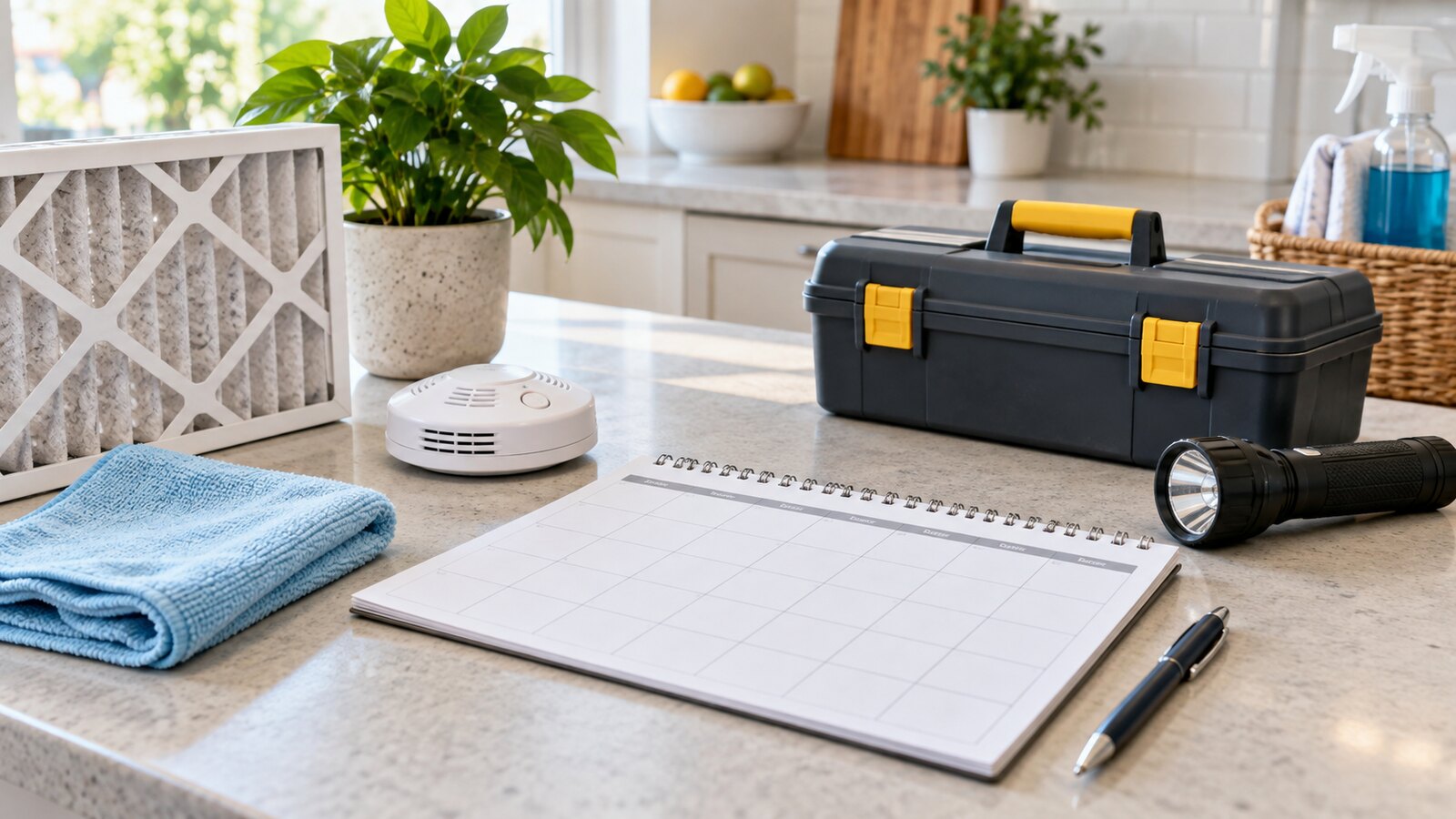
Use a shared phone calendar if your household already lives by digital reminders. Use a paper calendar if that is what gets noticed near the kitchen. Use a task app, spreadsheet, notebook, or notes document if that is where you plan weekly chores. Avoid building a beautiful system in a place you never open.
For each reminder, use plain language:
- Test alarms and check fire extinguisher.
- Look under sinks for leaks.
- Check HVAC or appliance filters.
- Walk around windows and damp corners.
- Update home records and receipts.
- Book service if the system is due.
Do not load every reminder with a long checklist. Put the details in a note or folder, then keep the calendar entry short enough to act on.
Review It Twice a Year
Your home changes. So should the calendar.
Review it after a major season, move, renovation, appliance purchase, new lease, new pet, new baby, accessibility change, storm, flood, pest issue, or repeated repair. Remove tasks that do not apply. Add reminders for problems you actually experienced. Change the month if the timing was wrong.
The goal is not to serve the calendar. The calendar serves the home.
Bottom Line
A home maintenance calendar works when it is specific, visible, and light enough to keep using.
Start with monthly safety and leak checks. Add seasonal tasks based on climate and equipment. Keep records as you go. Use internal links between routines: alarms, moisture, fire extinguishers, emergency documents, filters, and repairs all support the same outcome.
You do not need to remember everything. You need a simple system that reminds you before small problems become expensive, unsafe, or harder to explain.