A home first-aid kit should solve a very ordinary problem: when someone has a small cut, scrape, splinter, mild burn, headache, fever, or minor household mishap, you should not have to search five drawers while everyone gets more stressed.
The kit does not need to look dramatic. It does not replace emergency care, first-aid training, a clinician, or local emergency services. Its best job is simpler: keep basic supplies clean, visible, in date, and close enough that a calm adult can use them quickly.
That makes maintenance more important than buying the biggest box. A modest home first aid kit that gets checked twice a year is usually more useful than an expensive kit that disappears under towels, expired medicine, old receipts, and half-used adhesive tape.
Start With the Incidents Your Home Actually Has
Before shopping, think about the common situations your household needs to handle. Most homes need supplies for small cuts, scrapes, blisters, minor burns, splinters, headaches, mild fever, stomach upset, allergies, and short-term discomfort while deciding whether more help is needed.
Your checklist should also reflect who lives there:
- Children who may need age-appropriate medicines and child-safe storage.
- Older adults who may use blood thinners, mobility aids, or medical devices.
- People with allergies, asthma, diabetes, epilepsy, or other conditions.
- Pets, which should have separate supplies and veterinary contacts.
- People who cook often, use tools, garden, cycle, hike, or travel.
Do not turn the kit into a mini clinic. For condition-specific supplies, ask a health professional what belongs at home and what should be carried daily. The kit should support sensible first aid for minor problems and help you stay organized while seeking proper care when symptoms are serious.
Stock the Core Wound-Care Supplies
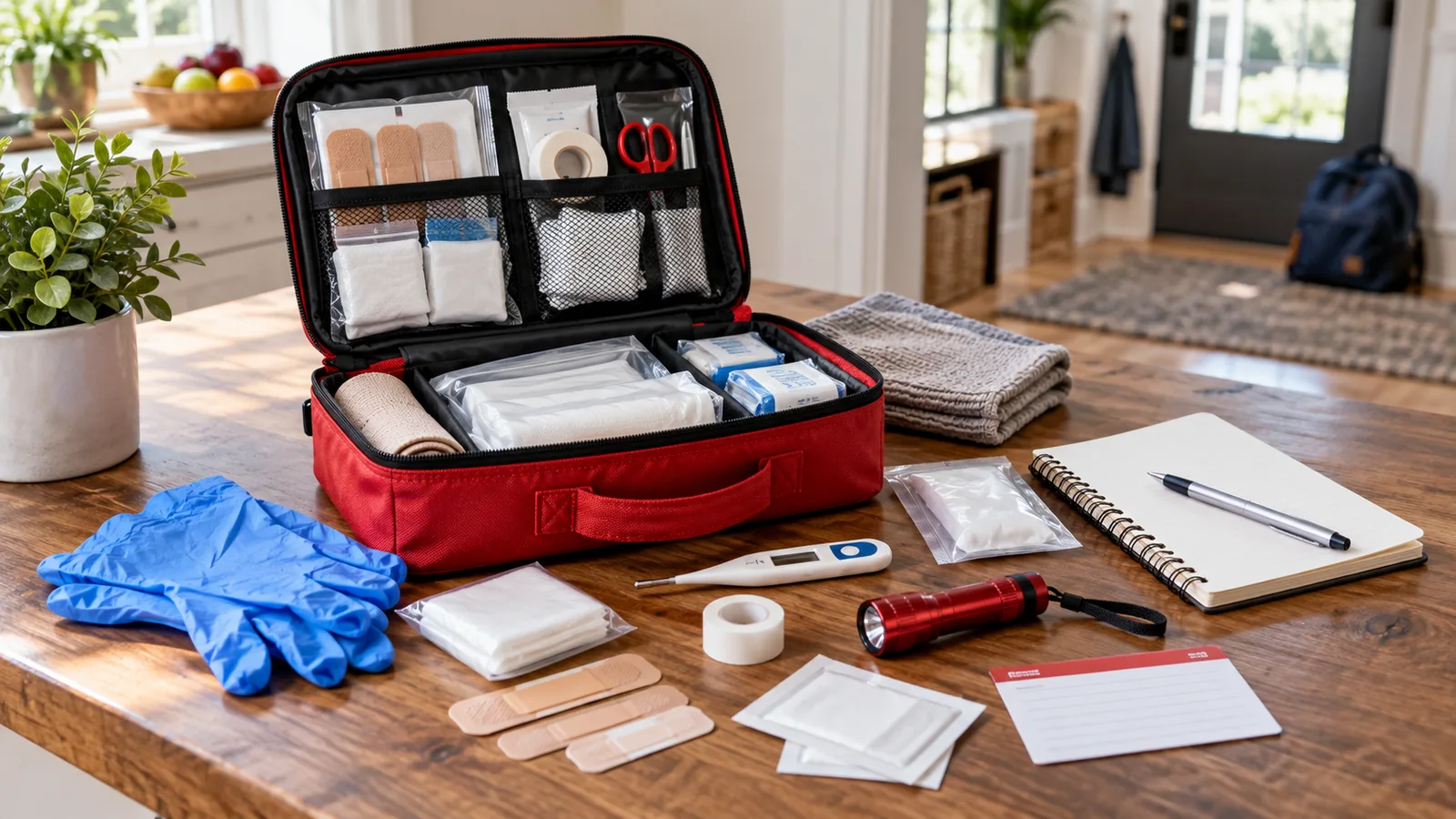
The American Red Cross recommends that household first-aid kits include a mix of dressings, bandages, tape, antiseptic wipes, gloves, a cold compress, a thermometer, tweezers, and first-aid instructions, with personal items added as needed. That is a good starting point because it focuses on common household needs rather than rare scenarios.
For a practical home kit, include:
- Adhesive bandages in several sizes.
- Sterile gauze pads in small and larger sizes.
- Absorbent compress dressings for bigger scrapes or bleeding.
- Roller bandages and triangular bandages.
- Adhesive cloth tape.
- Antiseptic wipes.
- Nonlatex disposable gloves.
- Tweezers for splinters or debris.
- Small scissors.
- Instant cold compress.
- Digital thermometer.
- A breathing barrier or face shield if someone is trained to use it.
- A compact first-aid reference card or booklet.
Keep these in sealed packets where possible. Loose gauze, old tape, opened ointment, and dusty bandages are harder to trust when you need something clean.
Add Medicines Carefully, Not Casually
Medicines are often the messiest part of a household kit. They can expire, be unsafe for children, interact with other medicines, or be wrong for someone with a particular condition.
Start with basic over-the-counter options only if they are appropriate for your household. Many families keep pain relievers, fever reducers, antihistamines, anti-diarrhea medicine, oral rehydration salts, antacids, or hydrocortisone cream. But “common” does not mean “safe for everyone.” Read labels, check age guidance, avoid duplicate active ingredients, and ask a pharmacist or clinician if anyone is pregnant, breastfeeding, taking regular medicine, managing chronic illness, or has allergies.
Keep prescription medicines separate unless a clinician has advised that a specific emergency medicine belongs in an accessible plan. If someone has an epinephrine auto-injector, rescue inhaler, glucose tablets, emergency seizure medicine, or another urgent-use item, the household should know where it is, who it is for, when to use it, and when to call emergency help.
If you keep a household medicine list, connect it to your first-aid routine. GDU’s guide to keeping a medication list for doctor visits explains the details worth recording, including names, doses, schedules, allergies, and recent changes.
Store the Kit Where Adults Can Find It
A first-aid kit should be easy for adults to reach and hard for young children to access. That can mean a clearly labeled box on a high shelf, a lidded container in a hall cupboard, or a small bag in a kitchen-adjacent cabinet. Avoid the bathroom if humidity damages supplies or labels.
Safe storage matters especially for medicine. CDC medication-safety guidance emphasizes keeping medicines up, away, and out of sight of young children. The U.S. Consumer Product Safety Commission also advises locked cabinets or high shelves for medicines and cleaners in homes where children may be present.
Good storage has four traits:
- Visible enough that adults and caregivers can find it quickly.
- Protected from heat, moisture, dust, and spills.
- Organized so urgent items are not buried.
- Secure enough for children, visitors, and vulnerable adults.
If the household includes babysitters, relatives, housemates, or short-term guests, tell responsible adults where the kit is. If someone in the home has specific emergency needs, write the plan clearly and keep emergency contact details nearby. GDU’s guide to building an emergency folder can help with documents, contacts, and medical information that should not be scattered during a stressful moment.
Make the Checklist Maintainable
The easiest first-aid checklist is one page. Put it inside the lid or in a clear sleeve. Divide it into sections:
- Wound care.
- Tools.
- Medicines.
- Personal medical items.
- Emergency contacts.
- Review dates.
Next to each item, write the quantity you want to keep. For example, “adhesive bandages: at least 20,” “nonlatex gloves: at least two pairs,” or “thermometer batteries: checked.” The point is not perfect inventory control. It is noticing when the kit has quietly lost the basics.
Add a small “replace soon” envelope or pouch. When someone uses the last sterile gauze pad or opens the final roll of tape, the empty wrapper or a note goes in that pouch. The next grocery or pharmacy trip becomes simple.
Review It Twice a Year
Set two recurring reminders a year, ideally tied to another household routine such as testing smoke alarms, changing seasonal supplies, reviewing insurance documents, or checking emergency contacts.
During the review:
- Remove expired medicines and damaged supplies.
- Check whether sterile packaging is torn, wet, dirty, or opened.
- Replace used bandages, gauze, tape, gloves, wipes, and cold packs.
- Confirm thermometer batteries work.
- Check that emergency contacts are current.
- Update personal medical items after medicine or diagnosis changes.
- Confirm adults know where the kit is stored.
The Red Cross advises checking kits regularly and replacing used or out-of-date contents. The FDA says the preferred way to dispose of most expired, unwanted, or unused medicines is through a drug take-back program; if one is not available, follow FDA guidance for household disposal and do not guess with medicines that require special handling.
Keep First Aid Separate From Disaster Supplies
A home first-aid kit is not the same as a full emergency supply kit. They can live near each other, but they solve different problems.
Ready.gov recommends broader disaster supplies such as water, food, a flashlight, radio, batteries, sanitation items, personal documents, prescription medicines, glasses, and supplies for infants or pets. First aid is one part of that larger preparedness picture, not a substitute for it.
For everyday life, keep the first-aid kit compact and easy to use. For emergencies that may disrupt power, water, transport, or access to shops, maintain a separate household emergency kit. Mixing everything into one huge bin can make the first-aid supplies harder to reach when someone just needs a clean dressing and tape.
Know When the Kit Is Not Enough
The kit is for minor incidents and temporary support. Seek urgent medical help for severe bleeding, trouble breathing, chest pain, signs of stroke, serious burns, deep wounds, suspected poisoning, major allergic reactions, loss of consciousness, head injury with concerning symptoms, broken bones, eye injuries, worsening infection signs, or any situation that feels unsafe or beyond your ability.
If you suspect poisoning or medication overdose, use your local poison-control service or emergency number immediately. Do not wait to see whether symptoms improve if the situation could be serious.
First-aid training is also worth considering. A kit is easier to use when someone understands basic wound care, choking response, CPR, burn care, and when to call for help. Supplies matter, but judgment matters more.
A Simple Starter Checklist
If you want a low-friction starting point, build this version first:
- Adhesive bandages, sterile gauze, compress dressings, roller bandage, tape.
- Antiseptic wipes, nonlatex gloves, tweezers, scissors, cold compress.
- Thermometer, first-aid instructions, emergency contact card.
- Household-appropriate medicines with labels and expiry dates checked.
- Personal emergency items recommended by a clinician.
- A twice-yearly review date.
After that, adapt. A household with toddlers, cyclists, gardeners, older adults, or chronic health needs will not have the same kit. The best home first-aid checklist is the one you can maintain, find, and update before the next small emergency asks for it.