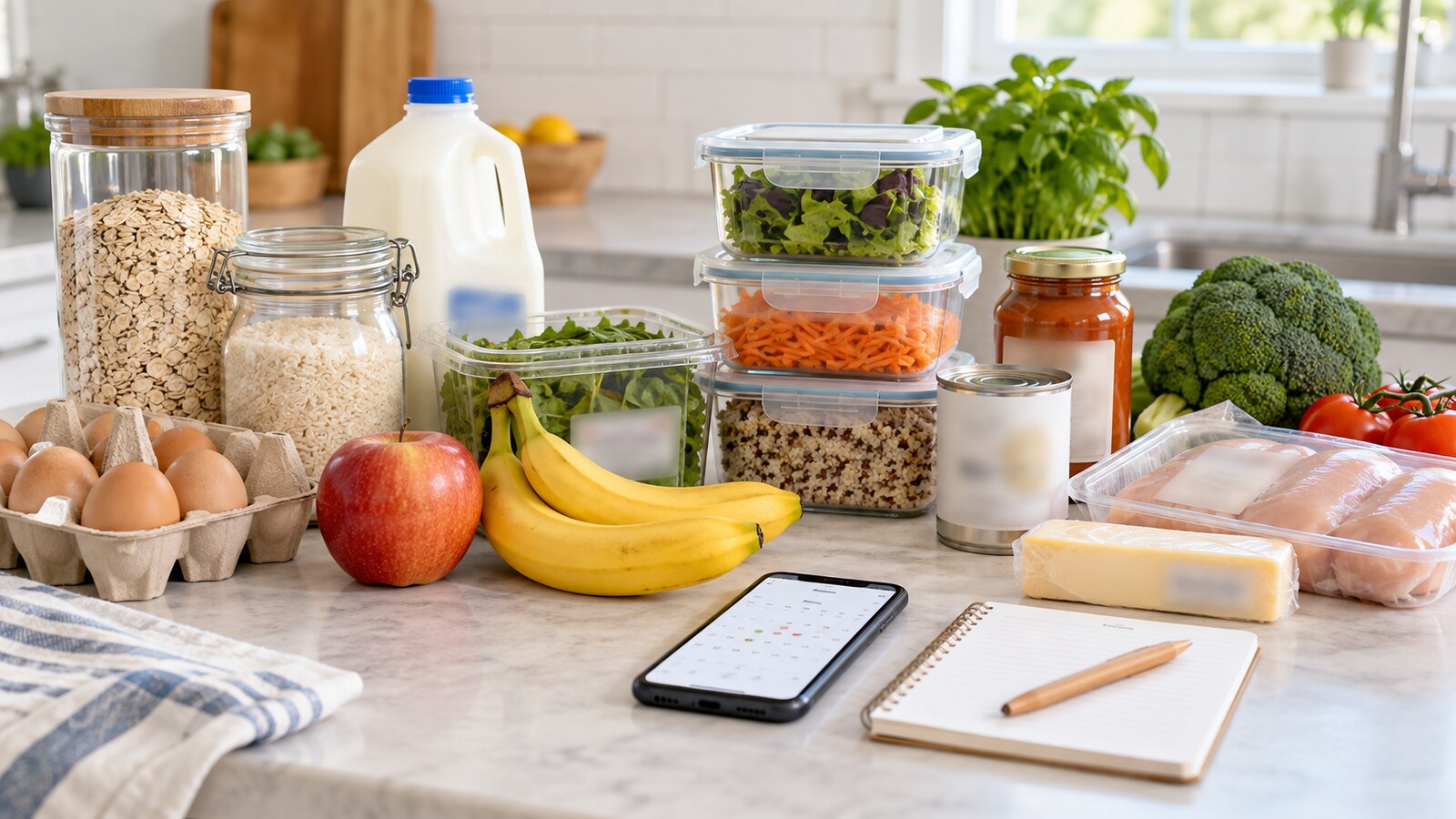
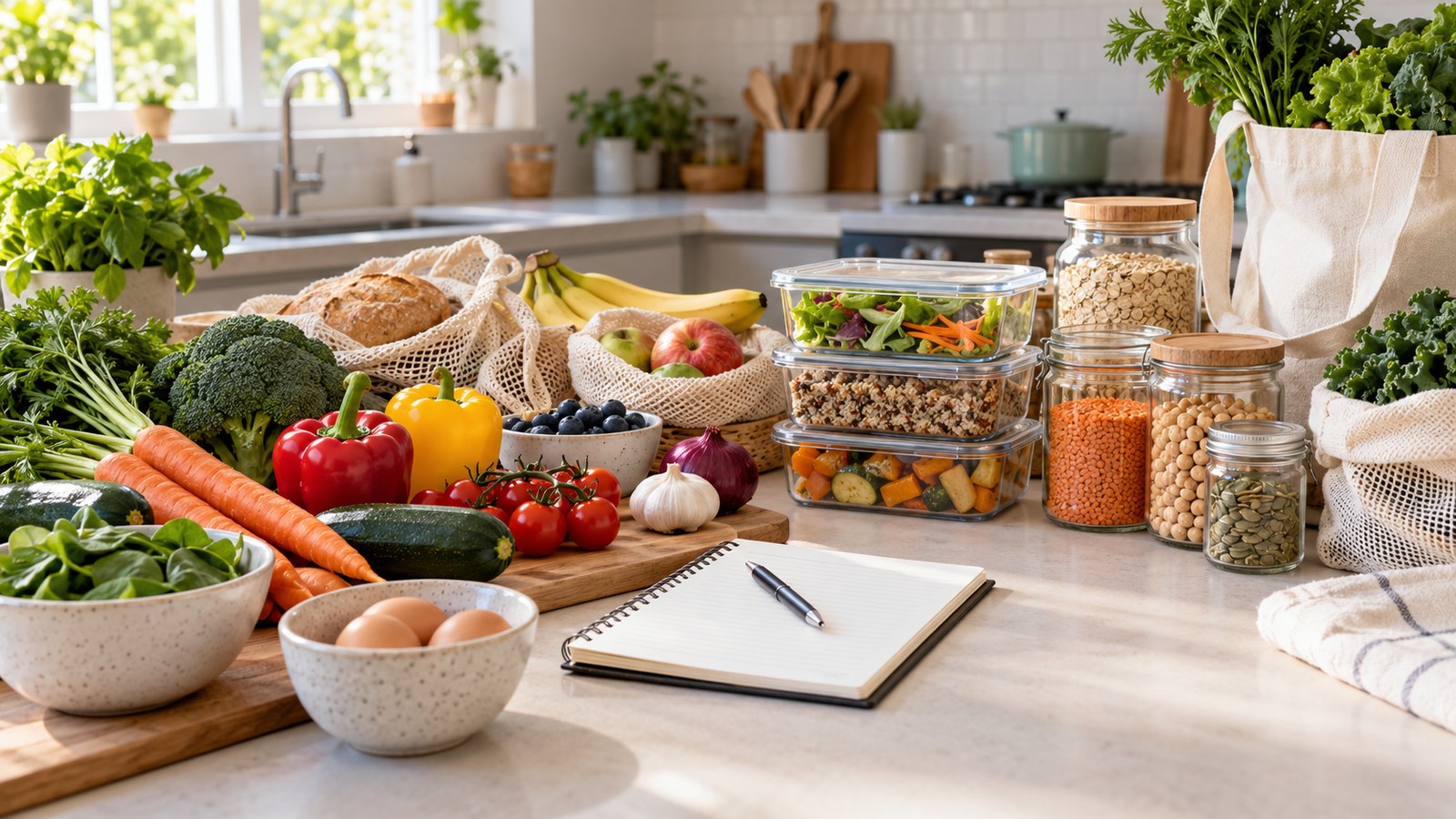
A grocery list can look responsible and still fail. It may include vegetables no one has time to cook, bulk packs that go stale, ingredients for ambitious dinners on a busy week, and duplicates of food already hiding in the freezer.
Good grocery list planning is about buying food that matches your real week: how many meals you will eat at home, what needs using first, how much energy you have to cook, what your storage can handle, and where your budget actually goes.
Quick Answer
Plan a grocery list by checking your fridge, freezer, and pantry first, choosing a few realistic meals, writing quantities instead of vague items, building in leftovers, and separating must-buy staples from flexible extras. Compare prices after the list is clear rather than letting discounts create the list for you.
Start With What You Already Have
The cheapest grocery item is often the one already in your kitchen. Before writing the list, check four places:
- Refrigerator shelves and drawers.
- Freezer bags, containers, and older prepared meals.
- Pantry staples such as grains, pasta, tins, spices, oils, and baking items.
- Countertop foods such as fruit, bread, onions, potatoes, or snacks.
Open the doors, move older items forward, and write down anything that should be used soon. Half a cabbage, cooked beans, frozen chicken, rice, onions, and yogurt near its date are the beginning of the list.
Choose Meals for the Week You Actually Have
Many grocery lists fail because they are written for an imaginary week. Real weeks include commutes, fatigue, social plans, small emergencies, and nights when toast feels like a meal.
Count the actual eating occasions:
- How many breakfasts will happen at home?
- How many packed lunches are realistic?
- Which dinners need to be fast?
- Which nights are likely to use leftovers?
- Are there visitors, travel days, late workdays, or events?
Choose meal types, not just recipes. A practical week might include one cooked dinner that creates leftovers, one quick assembly meal, one freezer meal, one flexible grain bowl, and one easy backup.
That approach gives the list structure without making the week brittle.
Build the List Around Ingredients That Work Twice
Food waste often starts when ingredients are bought for one recipe and then abandoned. A better list uses ingredients that can appear in more than one meal.
For example, spinach can go into eggs, soup, pasta, wraps, or a side salad. Carrots can become a snack, stew base, roasted vegetable, or stir-fry ingredient. Cooked rice can support dinner, lunch bowls, fried rice, or a simple soup.
If a recipe needs a special ingredient, ask whether it has a second job. If not, buy the smallest practical amount or save that meal for a week when you can use the rest.
Write Quantities, Not Just Names
“Tomatoes” is not a grocery plan. “Tomatoes for two dinners and one lunch” is closer. “Six tomatoes” is better.
Quantities protect both your budget and your fridge. They help you avoid buying a large bag because it looks cheaper, then throwing away half. They also make it easier to compare package sizes without being pulled into every promotion.
Use simple quantity cues: “salad greens for two lunches,” “eggs for four breakfasts,” “one tin of beans for soup,” “500 g oats,” or “fruit for three days, then buy more.”
For high-waste items such as leafy greens, berries, herbs, bread, fresh fish, and soft fruit, write the meal next to the item.
Add a Leftover Plan Before Shopping
Leftovers are easiest to use when they are planned before they exist. If one dinner makes four portions and only two people will eat it, decide whether the extra portions are tomorrow’s lunch, a freezer meal, or a later dinner.
Add that decision to the list. It may mean buying wraps for leftover chicken, vegetables for a rice bowl, or containers for freezing portions safely.
This also stops the list from overbuying. If Tuesday’s dinner becomes Wednesday’s lunch, Wednesday does not need a separate lunch plan.
For safety, cool and store cooked food promptly, label containers, and avoid keeping mystery leftovers too long. GDU’s guide to storing leftovers safely covers the timing and storage details.
Create Three Sections: Must Buy, Use First, Flexible
A list that is one long column treats every item as equally important. Grocery shopping is easier when the list has priority.
Use three sections:
| Section | What belongs there | Why it helps |
|---|---|---|
| Must buy | Ingredients for planned meals and truly empty staples | Keeps the week functional |
| Use first | Foods at home that should shape meals soon | Reduces waste before buying more |
| Flexible | Optional fruit, snacks, sale items, and substitutions | Leaves room for price and quality |
The “use first” section reminds you that the list is not only about the store. It is also about protecting food already paid for.
The flexible section keeps the list realistic. If berries are expensive, buy apples. If fresh fish is poor quality, use eggs, beans, tofu, lentils, or frozen fish instead. If a sale is useful, take it. If it creates storage pressure, leave it.
Shop Your Storage Capacity, Not Just the Price
Bulk buying and large packages can save money only when you can store and use the food. A larger bag of carrots, rice, onions, or frozen vegetables may be sensible. A large pack of soft herbs, salad greens, fresh bread, or short-dated dairy may become expensive waste.
Before choosing a bigger package, ask whether you have storage space, whether you can divide it properly, whether your household will eat it before quality drops, and whether the smaller pack is cheaper than throwing part of the larger one away.
Price per unit matters, but it is not the only measure of value. GDU’s guide to comparing unit prices at the grocery store is useful when paired with a realistic storage and cooking plan.
Keep a Small Backup Meal List
Every household needs a few meals that can survive a tired evening. Without them, people often buy extra takeaway, ignore perishable food, or shop again because nothing feels easy.
Backup meals should be simple, affordable, and based mostly on shelf-stable, frozen, or long-lasting ingredients: eggs with toast and vegetables, pasta with tinned tomatoes or beans, rice with frozen vegetables, soup from pantry staples, or wraps with leftovers.
Add the backup ingredients to your list only when they need replacing. The point is not to buy more food every week. It is to keep a small safety net that prevents panic shopping.
Use Store Promotions Carefully
Discounts are useful when they match the list. They are risky when they rewrite it.
Before accepting a deal, ask whether the item fits one of your planned meals, whether it can replace something on the list, or whether it stores well. A discount on a food you regularly use may be worth taking. A discount on a short-lived product you have no plan for is not savings yet.
Be especially careful with “buy one, get one,” large multipacks, loyalty-only deals, and attractive seasonal displays. Retailers design stores to encourage decisions in the moment. Your list is the quiet counterweight.
Review the List After Shopping
The list improves when you learn from it. After a week, take two minutes to notice what spoiled, what ran out early, which meal was too ambitious, which item was bought out of habit, and which quantity was wrong.
Adjust the next list. Buy fewer herbs. Choose sturdier vegetables. Add a freezer meal. Stop buying a snack no one eats. Repeat a breakfast that worked.
Small corrections matter more than a perfect system.
A Simple Grocery List Template
Use this structure as a starting point:
Use First at Home: Foods already in the fridge, freezer, pantry, or fruit bowl. Meals Planned: Three to six realistic meals, including leftovers and one backup meal. Must Buy: Ingredients needed for those meals, with quantities. Staples to Replace: Regular items that are genuinely low. Flexible Choices: Fruit, vegetables, snacks, proteins, or sale items that can change based on quality and price. Do Not Buy: Duplicates, overstocked items, or foods you keep wasting.
That last section can save real money. If you keep throwing away bagged salad, the answer may be smaller portions, sturdier greens, frozen vegetables, or salad only on weeks when you know it will be eaten.
The Bottom Line
Grocery list planning works best when it starts at home. Check what you already have, choose meals for the week you are actually living, write realistic quantities, plan leftovers, and leave space for flexible choices.
The list is not a promise to cook perfectly. It is a practical tool for buying food with a job, using more of what you paid for, and making the next meal easier.