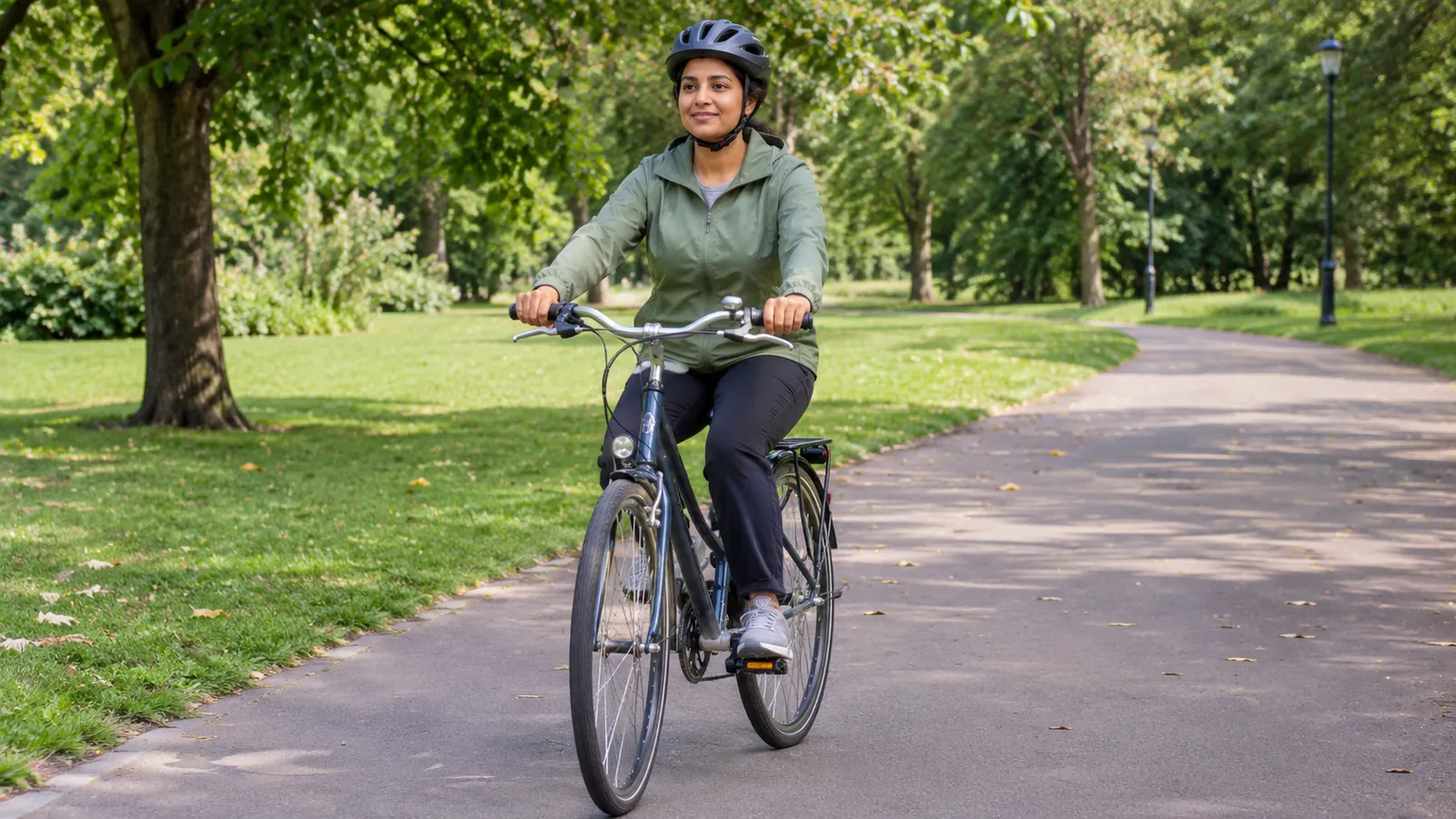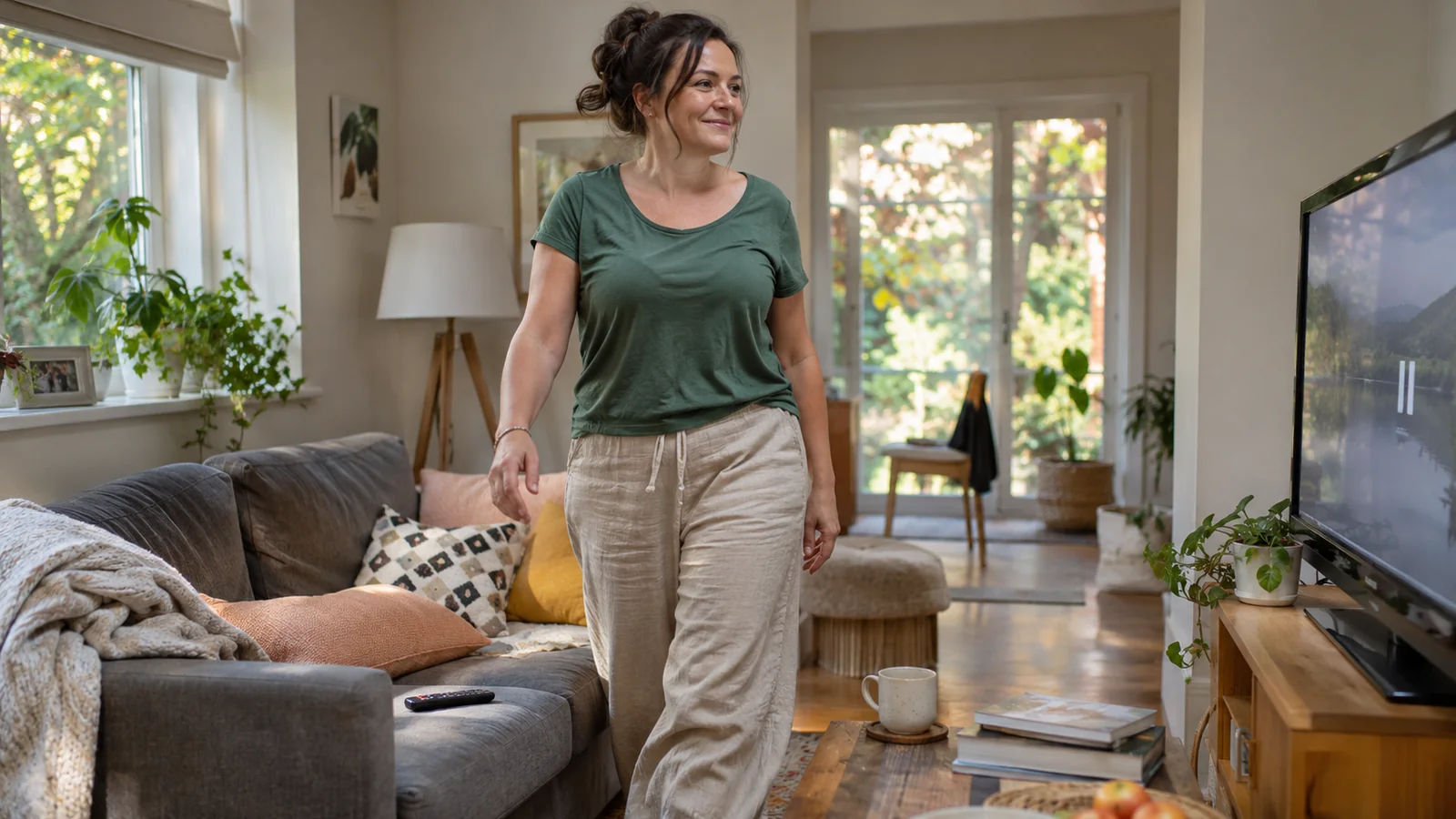
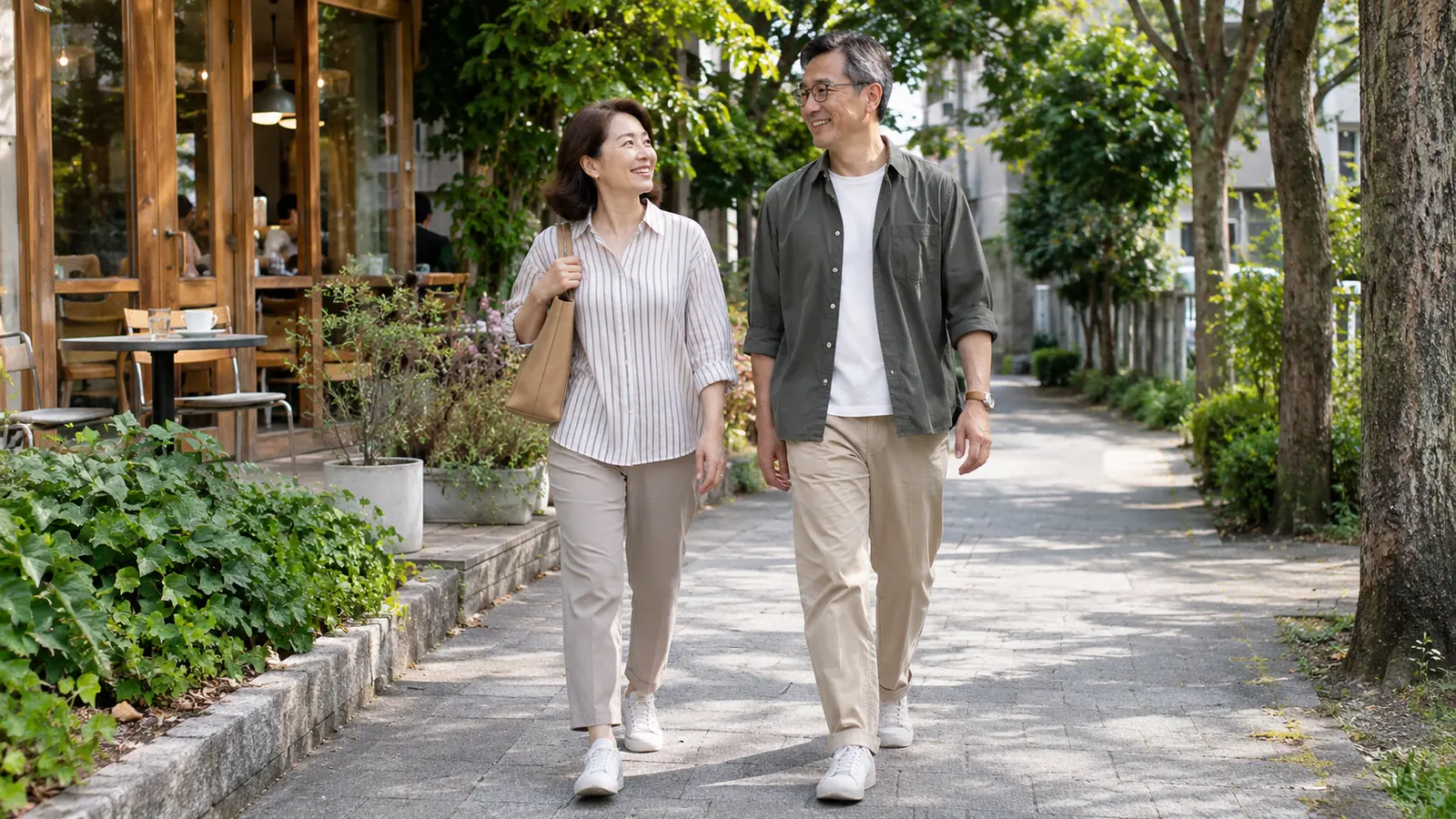
A gentle walk after eating can be as simple as a short, unhurried stroll when you feel comfortable moving. Choose an easy route, leave room to turn back and let the meal, your schedule and your own comfort guide the timing. There is no need to race out of the door or complete a set distance.
The useful question is whether a little movement would fit this particular moment. You might enjoy a change of scene after lunch, a quiet conversation after dinner or a few minutes away from your desk. None requires a workout plan, a step target or a promise about what the walk will do to your body.
Choose a comfortable moment rather than a deadline
Finishing a meal can be a convenient reminder to consider a stroll. It does not create an appointment you must keep. You can clear the table, finish a conversation or wait until you feel ready. If moving feels uncomfortable, postpone the walk or leave it for another time.
This is a different decision from preparing for a run or strenuous workout. An easy stroll should not quietly become hill intervals, a fast commute or a challenge to beat yesterday’s pace. Follow any individual advice you have received about meals and activity, especially after surgery or when managing a medical condition.
Meal size, symptoms and personal preference can make one day different from another. Rather than adopting a universal rule about an exact number of minutes after food, notice what is workable for you. Persistent or recurring discomfort deserves medical advice, not repeated experiments with walking schedules.
Consider lunch at work: you might have time for a short loop before returning to your desk, but only if the break allows it. On a rushed day, eating without hurrying may take the available time. There is no requirement to squeeze a walk into every meal break.
Keep the pace easy enough for the occasion
For this kind of walk, start at an unhurried pace that feels comfortable. You should not need to keep up with a faster companion or push through fullness to maintain a speed. Choose someone happy to match your pace, or go alone if that gives you more freedom to stop.
A gentle stroll and a brisk fitness walk are different levels of effort. NHS guidance describes brisk walking as faster than a stroll, using the ability to talk but not sing as a practical marker. You do not need to reach that intensity for an optional after-meal outing.
The World Health Organization encourages people to move more and reduce sedentary time. That broader message does not mean every slow stroll delivers the same benefits as moderate-intensity exercise, or that a few minutes after dinner replaces other activity needs. If you want to develop a wider exercise habit, our guide to starting a walking routine covers that separate goal.
Pick a route with an easy return
Start with somewhere familiar, level and close enough that turning back is straightforward. A short out-and-back path gives you more control than a large loop with no convenient exit. Avoid making the walk depend on reaching a shop before it closes or catching a particular bus.
Useful checks include:
- A stable surface, safe crossings and enough light to see hazards.
- Shoes that feel secure and comfortable, without rubbing.
- Weather that suits your clothing and the time available.
- A route without stairs or slopes you would rather avoid.
- A way to head home promptly if you want to stop.
A few minutes can be a trial rather than a prescription. Walk toward a nearby landmark, pause to decide whether you want to continue and return while the outing still feels manageable. The landmark is simply a planning aid; reaching it is optional.
If it is very hot, icy, smoky or otherwise unpleasant outside, choose another time or a suitable indoor space. Check local conditions rather than assuming a short walk makes them irrelevant. Our guide to checking air quality before outdoor activity explains that part of the decision.
Let the walk serve an ordinary purpose
An after-meal stroll can be a chance to talk, notice the neighbourhood or move away from a screen. Pick a purpose you actually like. If you spend the entire walk checking pace and calorie estimates, consider leaving those displays alone for this outing.
For example, after a shared evening meal, two people might decide to walk to the end of their street and back. One wants fresh air; the other wants to finish a conversation. They can return sooner if either feels uncomfortable. There is no need to turn their outing into a daily commitment.
Avoid treating walking as payment for food. You do not have to earn a meal, undo a dessert or compensate for a larger portion. Keeping food and movement out of that bargain makes it easier to decide whether a walk is something you want now.
Similarly, avoid promising that a particular stroll will fix digestion, guarantee a certain glucose response or produce weight loss. This comfort-focused suggestion is not a treatment plan. You can enjoy the outing without measuring a health result afterward.
Follow your own health guidance
If you have restrictions on activity, a fall risk or symptoms that affect walking, follow your clinician’s advice about what is appropriate. A familiar route and gentle pace do not remove those considerations. Use your usual mobility aid where needed; there is no reason to leave it behind for a short outing.
People using insulin or certain other diabetes medicines may need an individual plan for activity because blood glucose can fall during or after it. NIDDK advises discussing activity, monitoring and any necessary treatment adjustments with a health professional. Do not change medication or food intake based on a general walking article.
Stop if you feel unwell, dizzy, unusually breathless or in pain. Chest pain, fainting or severe breathing difficulty require urgent medical help through your local emergency service. Do not try to finish the route first. For recurring milder symptoms, seek advice rather than repeatedly walking through them.
Keep the next decision flexible
Afterward, ask a practical question: did that route, timing and pace feel comfortable? You might prefer a shorter outing, a later start or a different meal as the cue. You might also decide that walking elsewhere in the day suits you better.
Repeat the parts that worked without creating a streak to protect. An easy after-meal walk is most useful as an available option: a comfortable moment, a manageable route and permission to stop or skip it.