
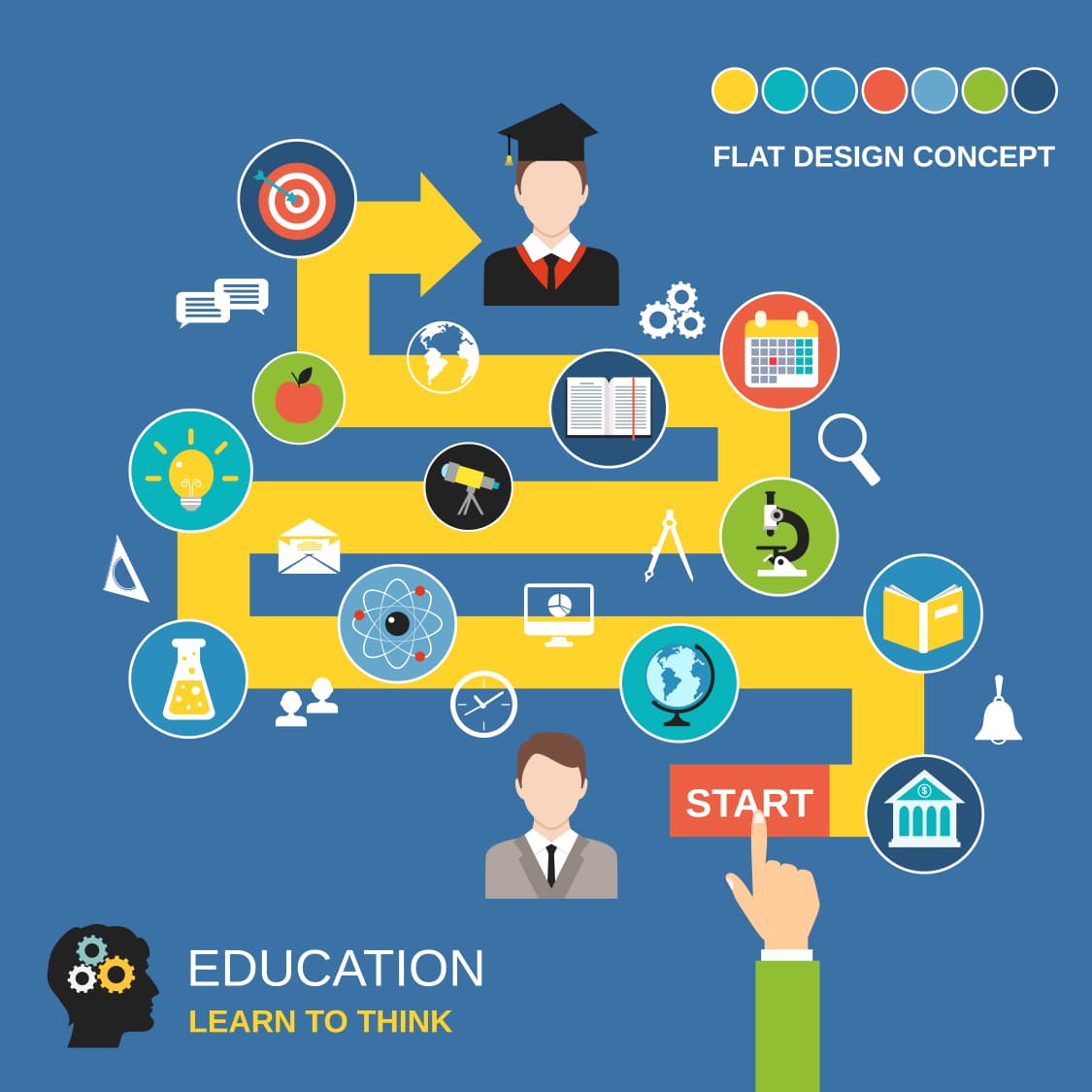
Why a roadmap matters
A roadmap mitigates arbitrary decision-making. Rather than selecting courses, jobs, or skills randomly, each choice can be aligned with overarching career objectives. This approach also facilitates a smoother transition from education to employment.
According to career education benchmarks, students benefit from support in self-awareness, exploring opportunities, making choices, and managing transitions into further learning and work.
A well-defined plan is particularly valuable in competitive job markets, where employers seek evidence of both academic achievement and workplace readiness. Skills such as communication, problem-solving, adaptability, and practical experience are considered equally important as formal qualifications.
Step One: Self-Assessment
The initial stage of career development involves self-assessment. Individuals must understand their interests, values, strengths, and preferred working styles before selecting a career path. Reflective questions, such as ‘Which subjects or tasks are most engaging?’ or ‘What type of work environment is most suitable?’ can clarify individual preferences. Evaluating the appeal of creative, technical, service-oriented, leadership, or analytical roles helps narrow career options and reduce uncertainty.
Self-awareness also involves identifying areas for improvement. For example, an individual may possess strong theoretical knowledge but lack proficiency in public speaking, teamwork, or time management. Recognizing these gaps early enables targeted development before entering the job market.
Step Two: Exploration of Opportunities
After gaining self-awareness, individuals should research careers that align with their profiles. This includes examining job descriptions, industry trends, salary ranges, entry requirements, and growth potential.
Exposure to various professions can be achieved by engaging with professionals, attending career fairs, shadowing employees, volunteering, or participating in internships to gain practical insights into workplace realities. Exploration helps prevent unrealistic expectations. While a career may appear appealing based on online information, understanding the actual workload, required qualifications, and workplace demands enables more informed decision-making.
Step Three: Development of Relevant Skills
Education is most valuable when it builds usable skills. Alongside academic knowledge, employers look for communication, digital literacy, teamwork, critical thinking, and problem-solving. It is also important to develop transferable skills, which are applicable across a wide range of careers.
Skills such as writing, research, customer service, data entry, presentations, and organization are valuable in fields including media, business, education, administration, and public relations .If a degree alone is insufficient, additional certifications, online courses, short training programs, or workshops can be pursued. These supplementary qualifications demonstrate initiative and enhance competitiveness in a saturated job market.
Step Four: Early Acquisition of Experience
A common mistake among students is postponing the pursuit of practical experience until after graduation. Actively seeking internships, attachments, freelance opportunities, volunteer roles, and part-time employment during academic studies enables the application of classroom knowledge in real-world contexts.
Gaining experience also fosters confidence. Prior exposure to deadlines, clients, teams, or industry-specific tools facilitates a smoother transition into full-time employment.Even small-scale projects are significant. Activities such as maintaining a blog, holding a campus leadership position, participating in student media projects, or undertaking volunteer assignments demonstrate responsibility and the ability to achieve results
.Step Five: Establishment of Career Goals
Career plans are most effective when goals are clearly defined. For instance, rather than the vague objective of ‘getting a good job,’ setting a goal such as ‘completing two internships and applying for five entry-level positions within six months’ provides actionable direction.
Effective goals should adhere to the SMART framework: specific, measurable, attainable, relevant, and time-bound. This structure ensures that career progress remains realistic and systematically organized.Career goals can be divided into short-term and long-term targets. Short-term goals may include passing a course, improving a curriculum vitae, or learning a software tool. Long-term goals may involve attaining a managerial position, starting a business, or earning a professional certification
.Step Six: Creation of a Career Action Pion Plan
A career roadmap becomes actionable when specific steps are documented. This includes identifying required courses, targeted skills for development, key contacts for advice or networking, and establishing deadlines for each task to ensure consistent progress.For example, a student pursuing a career in marketing might plan to complete a digital marketing course, develop a portfolio, volunteer for campus projects, apply for internships, and update a professional online profile monthly. Such structured planning transforms ambition into measurable progress.
A career action plan should maintain flexibility. Interests may evolve, job market conditions may change, and new opportunities may arise. An effective roadmap provides guidance without confining individuals to a single, inflexible trajectory.
Step Seven: Development of a Professional Identity
The transition from student to professional status also requires developing effective self-presentation skills. This includes updating the curriculum vitae, crafting tailored cover letters, organizing a portfolio, employing a professional tone in email communication, and maintaining a consistent online profile to influence employer perceptions. A professional identity encompasses more than appearance; it requires consistency.
Skills, experience, and personal branding should present a unified narrative across all documents and online platforms. Platforms such as LinkedIn, digital portfolios, and project samples showcase professional work and assist recruiters in evaluating candidates. Workplace readiness encompasses the habits necessary for effective functioning in professional environments, including punctuality, accountability, effective communication, adaptability, and adherence to deadlines.
The significance of soft skills in achieving workplace success is often underestimated. Reliability, the ability to ask questions, receptiveness to feedback, and effective stress management all contribute to professional growth. Practicing professional behavior prior to securing full-time employment is essential.
During internships, volunteer roles, and group projects, emphasis should be placed on punctuality, effective communication, receptiveness to feedback, meeting deadlines, and respectful collaboration to prepare for workplace expectations.
An example of a student roadmap includes the following:
- Year one involves identifying strengths, exploring career options, and joining clubs or activities to build confidence.
- Year two focuses on taking relevant electives, acquiring practical tools, and seeking volunteer or internship opportunities.
- Year three emphasizes building a portfolio, connecting with professionals, and gaining work experience through attachments or part-time roles.
- The final year involves refining the curriculum vitae, practicing interview skills, applying broadly, and preparing for the transition into employment or further study.
Such a roadmap is advantageous because it distributes progress throughout the academic journey, rather than concentrating all efforts in the final semester. The transition from student to professional is facilitated by treating it as a structured process rather than relying on chance. Initiating with self-awareness, exploring career options, developing relevant skills, gaining experience, and setting achievable goals enhances the likelihood of success. Ultimately, career development extends beyond securing employment. It involves cultivating the capacity to learn, adapt, and grow within an evolving professional landscape.