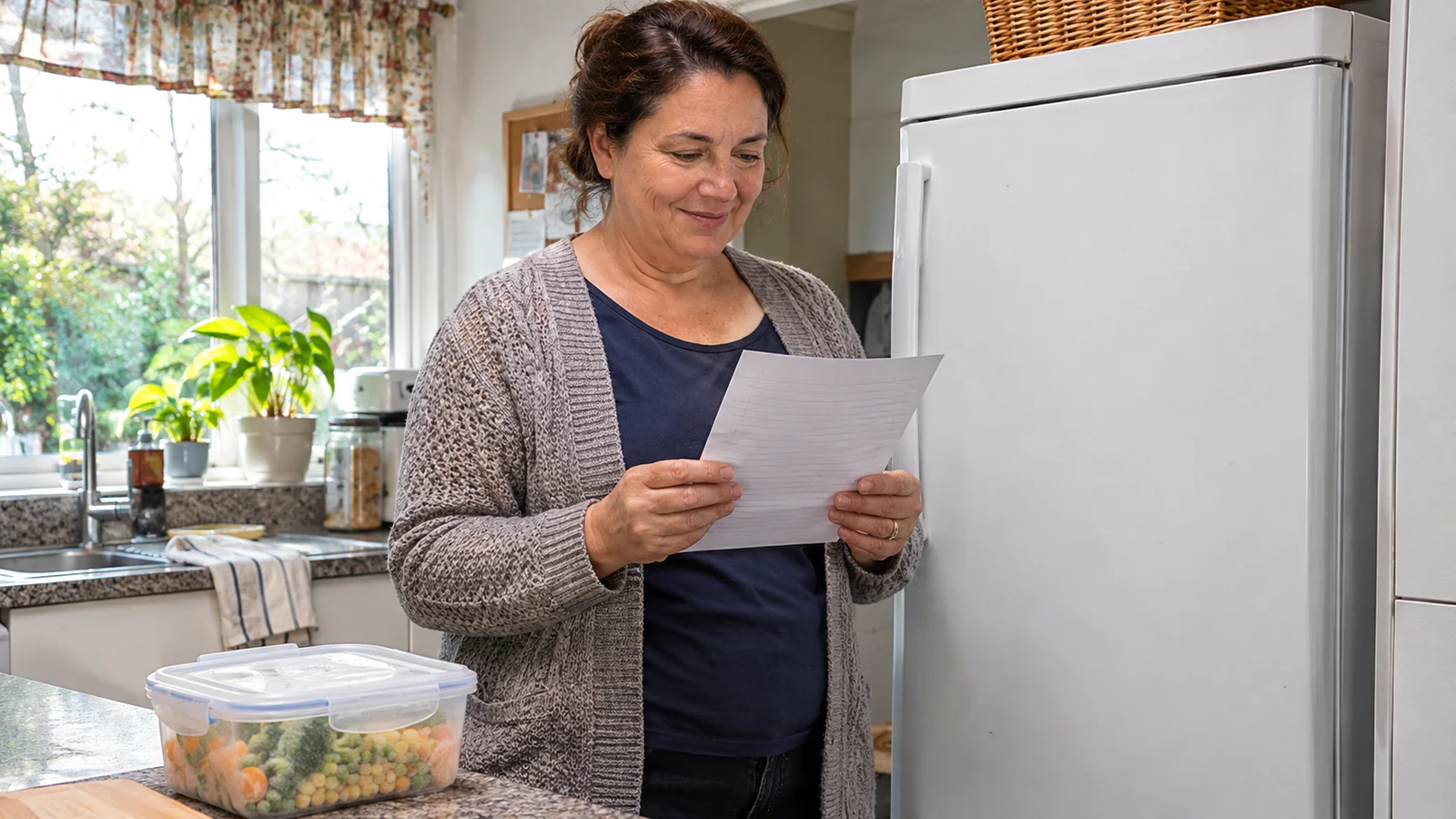
A freezer inventory list answers a small but useful question: what food is already here, and how much is left? Keep one visible record of the contents, amounts, dates and locations, then change it whenever food goes in or comes out. The best version is short enough to maintain while you are doing something else.
You do not need a new meal-preparation system or an app with dozens of fields. Start with the food you already have and build a record that helps you find a portion, choose something to use and avoid buying an unnecessary duplicate.
Choose One Place for the List
Use a sheet near the freezer, a notebook kept beside it or a shared digital note everyone can open. Choose the format that fits the people handling the food. Paper may be easiest when someone is standing at the appliance; a shared note can be convenient when checking supplies away from home.
Keep one main record. A photograph of a paper list can help during shopping, but it becomes an old snapshot as soon as somebody changes the contents. If you use both paper and a phone, decide which is current and when the copy gets refreshed.
Put a pen within reach if you choose paper. Position the sheet without covering appliance vents, controls or seals. Everyone who adds or removes food should know where the list is and what its quantities mean.
Build the First Record in Small Sections
Work through one accessible drawer or basket at a time rather than leaving the whole freezer open for a lengthy sorting session. Return food promptly and keep the door closed between checks. Follow your appliance instructions, and avoid turning an inventory into a complete defrosting project.
Use this sequence to create the first entries:
Identify the food. Read the existing label. Write a useful description such as cooked lentil soup or raw chicken pieces rather than a vague word such as dinner.
Count in a practical unit. Record two single-serving tubs, one unopened bag or six bread slices. A container count alone is unclear when the containers have different capacities.
Copy the known date. Use the freezing date where available and label what the date represents. A purchase date and a freezing date are different information.
Add a location. A short description such as upper drawer or vegetable basket is enough. There is no need to create a complicated shelf numbering scheme.
Match the pack and the entry. Make sure another person could connect the written description to the actual label before moving on.
Do not guess a missing date just to fill a blank. Write unknown and investigate any available packaging or household record. An inventory cannot establish whether unidentified food was handled safely, and tasting it is not a safe identification method.
Keep the Fields Useful
A basic entry needs the food, amount remaining, known freezing date and location. Add a short note only if it changes a decision, such as raw, cooked or reserved for a particular meal. Keep ingredient and allergy information with the food; a short list entry should not replace its original packaging or a proper label.
For example, an illustrative entry might read: lentil soup; three single-serving tubs; frozen 16 November 2026; upper drawer. After taking one tub out, change three to two. If you later add a different batch, give it a separate line with its own date rather than combining everything under soup.
For an opened bag, use an honest estimate such as about half a bag. You do not need to weigh vegetables after every use unless that detail serves a specific purpose. Consistent, understandable estimates are more useful than precise-looking numbers nobody updates.
Keep instructions for making and packaging meals elsewhere. The guide to freezing meals in portions covers that preparation work; this list records what remains after the packs have been stored.
Update the List at the Moment Food Moves
Make the update part of opening or closing the freezer, rather than a task to remember later. When adding food, label it and add its entry. When removing a pack for use, reduce the amount immediately. If you move a basket, change the location too.
Choose either a remaining-total system or a tally system. With remaining totals, change four packs to three. With tallies, cross off one mark from the starting quantity. Mixing both on the same line can lead to counting a removal twice.
When a row reaches zero, cross it out or archive it. Do not automatically turn every empty line into a shopping requirement. You may have stopped enjoying that food, changed your routine or already have an alternative. Replenishment is a separate decision.
If someone forgets an update, correct the record at the next convenient check. Keep the correction easy and neutral. A list that requires an explanation for every adjustment can discourage people from using it.
Use Dates to Plan, Without Treating Them as Safety Proof
Review the list before making your grocery shopping list. Choose a few suitable items to use and check what else they require. Where storage history is reliable, make older packs accessible instead of repeatedly covering them with newer purchases.
A freezing date supports stock rotation; it does not certify safety. Safe handling before freezing and a reliable freezer temperature still matter. A freezer should stay at −18°C/0°F or below, checked with an appliance thermometer. The refrigerator and freezer temperature guide explains the monitoring routine.
Food-specific freezer storage recommendations commonly describe quality rather than a universal safety deadline. Properly handled food kept continuously at that temperature can remain safe while its texture and flavour deteriorate. Follow product instructions and suitable food-specific guidance rather than assigning every row the same number of months.
If there has been a fault or power interruption, assess the food using current official time-and-temperature guidance. A tidy list, a recent date or a frozen appearance after power returns cannot reconstruct an unknown warming history.
Reset Only What Has Drifted
At a regular shopping or meal-planning check, compare a few entries with their locations. Correct an amount, remove an empty row and clarify any description you cannot recognise. If the record has fallen behind, restart with one drawer instead of abandoning it until you can organise everything.
Let repeated leftovers on the list inform future purchases. If a particular bag is always present, buy less of it or decide whether you actually want to use it. Keep the system focused on the next useful choice: a recognisable food, an honest quantity and an update when something changes.